

Nobody tells you quite how much changes. You prepared for the birth — researched, planned, attended classes. You prepared for the baby. But the ways your own body and intimate life shift in the weeks and months afterward? That part tends to arrive without a roadmap.
You might be six weeks postpartum, cleared at your check-up, and wondering why sex feels completely different — or why you have no interest in it at all. Or you might be several months in, still dealing with discomfort that nobody mentioned would persist this long, and starting to worry that something is wrong.
Nothing is wrong. But you deserve more than “it gets better” — you deserve to understand what is actually happening, why it happens, and what you can do about each specific part of it.
This guide covers everything you need to know about sex after birth: how long to wait, what affects your timeline, why postpartum sex can be painful, how to address vaginal dryness, what happens after a c-section, and how to navigate the shift in desire that catches so many new parents off guard.
Key Takeaways
- Most clinical guidelines recommend waiting at least six weeks after vaginal birth before resuming penetrative sex — not because of an arbitrary rule, but because the cervix takes approximately this time to close and tissues to heal.
- There is no universal timeline. Women who experienced perineal tears, episiotomy, or significant pelvic floor trauma may need considerably longer, and individual variation is wide.
- Postpartum vaginal dryness is extremely common — particularly in breastfeeding women — and is caused by the same estrogen suppression that prevents ovulation during lactation. It is addressable and temporary.
- An estimated 85–92% of women experience some sexual difficulty in the first three months postpartum, according to research published in the BJOG: An International Journal of Obstetrics and Gynaecology. Most improve significantly by six to twelve months.
- Low postpartum libido is physiologically driven, not a relationship signal. The hormonal environment of the postpartum period — particularly in breastfeeding women — is designed to suppress sexual interest. This is normal, expected, and temporary.
How Long After Birth Can You Have Sex
The standard clinical recommendation is to wait at least six weeks after vaginal birth before resuming penetrative sexual intercourse. This timeline exists for specific physiological reasons:
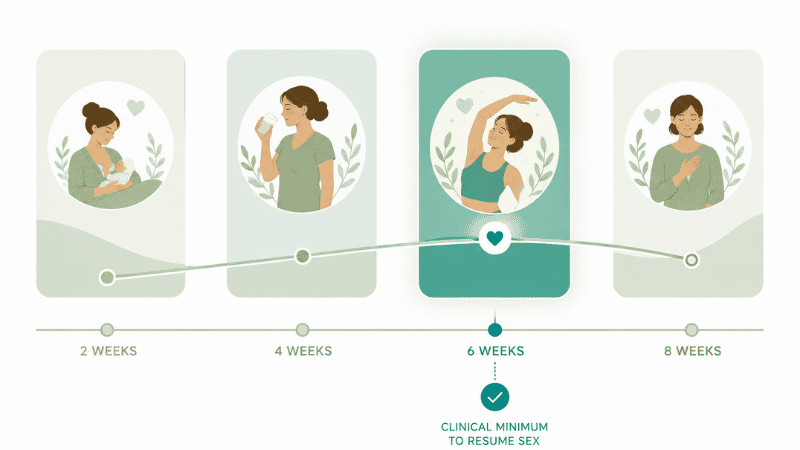
Cervical closure — After delivery, the cervix remains open to varying degrees. A partially open cervix significantly increases the risk of uterine infection if penetrative intercourse occurs before it has fully closed. This closure process takes approximately four to six weeks.
Tissue healing — Whether or not you experienced perineal tearing, episiotomy, or lacerations, the perineum and vaginal tissues undergo significant trauma during vaginal delivery and require time to heal. Attempting intercourse before healing is complete increases pain, risk of reopening wounds, and risk of infection.
Lochia cessation — Postpartum vaginal discharge (lochia) typically continues for four to six weeks. Its presence indicates that the uterine lining is still healing.
The six-week mark is a clinical minimum, not a clearance for immediate resumption. The six-week postpartum check-up is an opportunity to discuss readiness — but many providers do not routinely ask about sexual health at this appointment unless you raise it. If you have concerns, bring them up explicitly.
When Can You Have Sex After Birth: Individual Factors That Change Your Timeline
The six-week guideline applies to uncomplicated vaginal deliveries. Several factors extend the appropriate waiting period:
Perineal tears and episiotomy — First-degree tears (skin only) typically heal within two to three weeks. Second-degree tears (skin and muscle) may take four to six weeks or longer. Third and fourth-degree tears — which involve the anal sphincter — can take considerably longer to heal and may require physiotherapy before intercourse is appropriate. If you experienced a significant tear, discuss your specific healing timeline with your midwife or obstetrician.
Pelvic floor trauma — Significant pelvic floor strain during delivery — including prolonged pushing, instrumental delivery (forceps or ventouse), or large baby size — can affect the muscles involved in comfortable sexual activity. Pelvic floor physical therapy assessment is warranted before attempting intercourse if you experienced significant pelvic floor trauma.
Postpartum infection — If you experienced a postpartum infection, your timeline extends to full resolution of the infection and its treatment.
Emotional readiness — The six-week guideline is physiological. Emotional readiness is a separate and equally important consideration. There is no obligation to resume sexual activity at any particular point — readiness is individual and relational.
When Can You Have Sex After Birth: What “Ready” Actually Means
Being physically cleared at six weeks and feeling ready are not the same thing. For most women, multiple conditions need to be present simultaneously:
- Physical healing is sufficient that penetration would not be painful under normal circumstances
- Lochia has ceased
- You have adequate lubrication or access to appropriate products if dryness is present
- You feel emotionally present and willing — not obligated
The first attempt at intercourse after birth does not need to be a milestone. Going slowly, using generous lubrication, stopping if uncomfortable, and communicating openly with your partner about what you are experiencing are all appropriate and recommended — not concessions, but clinical good practice.
Postpartum Vaginal Dryness: Why It Happens and What to Do
Postpartum vaginal dryness is one of the most common and least discussed aspects of sex after birth. It affects the majority of postpartum women — and is particularly pronounced in women who are breastfeeding.
Why Postpartum Vaginal Dryness Occurs
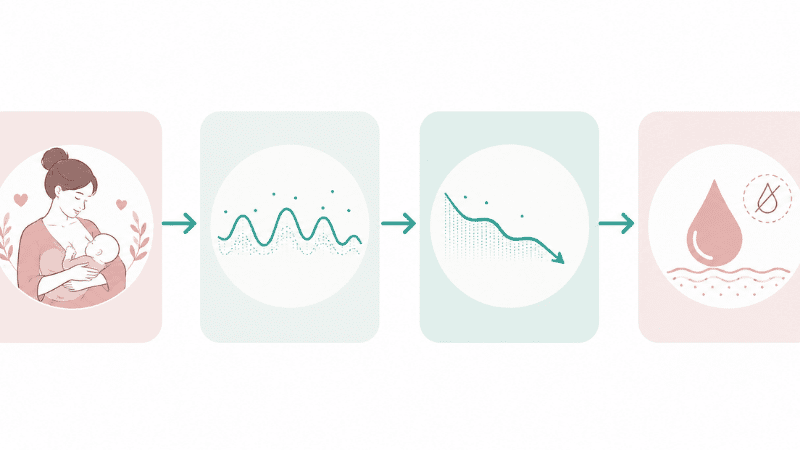
The mechanism is hormonal. Breastfeeding suppresses estrogen production through the same pathway that suppresses ovulation during lactation — elevated prolactin levels inhibit the hormonal cascade that would normally stimulate estrogen release from the ovaries.
Estrogen is the primary hormone responsible for maintaining vaginal lubrication, tissue elasticity, and the thickness of the vaginal lining. When estrogen levels are low — as they are in most breastfeeding women, and to a lesser extent in formula-feeding women in the early postpartum weeks — the vaginal tissue becomes drier, thinner, and more sensitive to friction.
This is the same physiological mechanism responsible for vaginal dryness during perimenopause and menopause — the difference being that the postpartum version is temporary, resolving as breastfeeding reduces or ceases and estrogen levels normalise.
What to Do About Postpartum Vaginal Dryness
Vaginal lubricants — used during sexual activity — are the most immediate and effective approach. Water-based lubricants are compatible with condoms and safe postpartum. Use generously — postpartum dryness is often more significant than pre-pregnancy dryness, and insufficient lubrication is the most common reason postpartum sex is painful when it does not need to be.
Vaginal moisturizers — used two to three times per week independently of sexual activity — maintain vaginal tissue hydration over time. Hyaluronic acid-based formulations have the strongest evidence base among non-hormonal options. Regular use produces meaningful tissue improvement within four to six weeks.
Low-dose vaginal estrogen — for women experiencing significant postpartum vaginal dryness that is affecting quality of life, low-dose vaginal estrogen is safe during breastfeeding. Because it is applied locally, systemic absorption is minimal. Current guidance supports its safety for breastfeeding women when clinically indicated. Discuss with your obstetric provider or GP.
If you only have 10 minutes: Purchase a water-based lubricant and use it generously at any attempt at postpartum sexual activity. This single step prevents the majority of avoidable postpartum pain during sex.
Why Is Sex Painful After Birth
Pain during sex after birth (postpartum dyspareunia) affects an estimated 40–60% of women in the first three months and remains a significant concern for many women up to twelve months postpartum and beyond. It has several overlapping causes:
Incomplete tissue healing — attempting intercourse before full healing of tears, episiotomy, or general perineal trauma is the most common cause of postpartum pain. If healing is incomplete, the appropriate response is more time — not persisting through pain.
Vaginal dryness — as described above, insufficient lubrication creates friction that causes pain even on fully healed tissue. Vaginal lubricant use resolves most dryness-related pain.
Pelvic floor tension and vaginismus — following the physical trauma and psychological experience of childbirth, the pelvic floor muscles may become hypertonic (chronically tense). This involuntary muscle tension can cause pain during penetration that is distinct from tissue healing — it involves the muscle response, not the tissue state. Pelvic floor physical therapy is the evidence-based treatment for postpartum hypertonic pelvic floor.
Scar tissue sensitivity — perineal scars from tears or episiotomy can be tender to pressure, particularly in the months immediately following delivery. Gentle scar massage — introduced by a pelvic floor physiotherapist — can significantly reduce scar tissue sensitivity over time.
Cervical or uterine discomfort — some women experience deep pelvic discomfort during penetration in the early postpartum period, related to uterine position or sensitivity. This typically resolves as the uterus returns to its pre-pregnancy position.
If pain persists beyond six months postpartum: A referral to a pelvic floor physiotherapist is appropriate. Persistent postpartum dyspareunia is a recognised clinical condition with effective treatments — it is not something to accept or continue managing privately.
Sex After C-Section: Specific Considerations
For women who delivered by caesarean section, the external perineum is intact — but this does not mean recovery is straightforward or that the six-week guideline does not apply.
A caesarean section is major abdominal surgery involving incision through seven layers of tissue, including the uterine wall. Internal healing takes considerable time regardless of how the external incision heals.
Specific considerations after c-section:
The standard six-week minimum applies. Some providers recommend eight weeks for c-section recovery to allow adequate internal healing time.
Positions that put pressure on the abdominal incision may be uncomfortable for several months. Finding positions that do not stress the scar is an appropriate adaptation — not a permanent limitation.
The scar itself — both the external skin scar and the internal uterine scar — can develop adhesions that affect surrounding tissue. Pelvic floor physiotherapy for c-section scar management can address this and is underutilized as a postpartum resource.
Women who delivered by c-section may still experience postpartum vaginal dryness, low libido, and pelvic floor changes — these are not exclusively vaginal delivery concerns.
Postpartum Sex Drive: Why Libido Disappears and When It Returns
Postpartum low libido is one of the most universal postpartum experiences and one of the least openly discussed. The physiological explanation is direct:
Estrogen and testosterone are both suppressed in the postpartum period — particularly during breastfeeding. Both hormones contribute to sexual desire. Their suppression is the biological mechanism that evolved to direct maternal energy toward infant care rather than reproduction.
Prolactin — the hormone that drives milk production — has direct libido-suppressing effects. Elevated prolactin during breastfeeding is a consistent contributor to reduced sexual interest.
Physical exhaustion exhausts the neurological and hormonal resources that support desire. Sleep deprivation — which is ubiquitous in the newborn period — measurably reduces testosterone levels and suppresses the motivational systems that generate sexual interest.
Psychological factors — including the transition to parenthood, the shift in body image, the demands of infant care, and in some cases postpartum depression or anxiety — interact with hormonal changes to compound libido reduction.
What this means in practice: Low libido in the postpartum period is not a relationship problem or a sign that something is wrong with you or your partnership. It is a predictable physiological response. For most women, libido begins to recover as breastfeeding reduces or ceases, sleep improves, and the hormonal environment of the postpartum period normalises.
When low postpartum libido warrants clinical attention: If low libido persists beyond the cessation of breastfeeding, is accompanied by persistent low mood, or is causing significant personal or relational distress, a clinical evaluation including hormonal assessment is appropriate.
Postpartum Intimacy and Your Partner: Navigating the Transition Together
The postpartum period reshapes intimate relationships in ways that extend well beyond the physical. Both partners are navigating significant adjustment simultaneously — the new parent who delivered is managing physical recovery and hormonal shifts; their partner is adjusting to new parenthood without the same biological context for the changes they are observing.
Open communication about what is changing and why helps prevent the most common postpartum relational dynamic: one partner interpreting reduced intimacy as personal rejection, while the other is genuinely managing physical and hormonal realities they may not have the language to explain.
Useful framings for these conversations:

Name what is happening physiologically. Low libido during breastfeeding is not a relationship statement — it is a hormonal condition with a documented biological mechanism. Sharing this understanding with a partner removes the personal interpretation.
Redefine intimacy temporarily. Physical closeness, affection, and connection do not require sexual intercourse. Identifying other ways to maintain relational intimacy during the postpartum period reduces pressure and supports the relationship without requiring physical readiness that may not yet be present.
Set realistic expectations about timeline. The postpartum period is not a brief interruption to normal life — it is a genuine transition that takes months, not weeks. Partners who understand this navigate it significantly better than those who do not.
→ Related: How to Communicate in a Relationship: A Practical Guide
Warning Signs: When to Seek Clinical Support
The following warrant clinical evaluation rather than continued self-management:
- Pain during intercourse that is severe, worsening, or has not improved after six to eight weeks of using adequate lubrication
- Any unusual postpartum discharge — changes in color, odor, or consistency — particularly if accompanied by fever or pelvic pain, which may indicate infection
- Persistent pain at the episiotomy or tear scar site beyond eight to ten weeks
- Inability to achieve comfortable penetration beyond three to four months postpartum despite adequate lubrication and healing time
- Low libido or sexual discomfort persisting significantly beyond cessation of breastfeeding
- Postpartum depression or anxiety that is affecting your well-being, your relationship, or your capacity to care for yourself or your baby
- Any concern about pelvic floor function — including urinary leakage, pelvic pressure, or difficulty with bowel control — which may benefit from pelvic floor physiotherapy
Frequently Asked Questions
How long after birth can you have sex? The standard clinical minimum is six weeks after vaginal delivery — the time required for the cervix to close and perineal tissues to heal. This is a minimum, not a target. Women with significant perineal tears, episiotomy, or c-section delivery may need longer. Physical and emotional readiness are both relevant, and there is no obligation to resume sexual activity at any specific point.
Why is sex painful after birth? The most common causes are postpartum vaginal dryness (from estrogen suppression, particularly during breastfeeding), incomplete tissue healing, pelvic floor tension or vaginismus, and scar tissue sensitivity at the episiotomy or tear site. Generous lubricant use resolves most dryness-related pain; persistent pain beyond six months warrants pelvic floor physiotherapy assessment.
How long does postpartum vaginal dryness last? In breastfeeding women, postpartum vaginal dryness typically persists throughout the breastfeeding period — it is driven by the same estrogen suppression that prevents ovulation during lactation. It usually improves significantly within one to three months of reducing or stopping breastfeeding, as estrogen levels normalise. Vaginal lubricants and moisturizers are effective in managing symptoms during this period.
When does postpartum libido return? Most women notice gradual improvement in libido as breastfeeding reduces or ceases, sleep improves, and the hormonal environment of the postpartum period normalises. For breastfeeding women, this may mean libido remains low for the duration of breastfeeding. For non-breastfeeding women, the recovery is often faster but still variable. If libido does not return after breastfeeding ends, a hormonal evaluation is appropriate.
Is sex after c-section different? The internal healing after c-section takes at least six weeks, and many providers recommend eight weeks. The external perineum is intact, but abdominal incision healing affects position comfort for several months. C-section scar adhesions can develop internally and affect surrounding tissue — pelvic floor physiotherapy for c-section scar management is an effective and underutilised resource.
Can postpartum low libido affect the relationship long-term? Postpartum low libido is a physiological response, not a relational one — but it can create relational tension if partners do not understand its basis. Open communication about the hormonal and physical causes of postpartum libido changes, combined with finding alternative ways to maintain intimacy during the recovery period, consistently produces better relational outcomes than unexplained withdrawal from physical closeness.
When should I see a pelvic floor physiotherapist postpartum? Pelvic floor physiotherapy is beneficial for most postpartum women — particularly those who experienced significant perineal trauma, prolonged pushing, instrumental delivery, or c-section. A referral is specifically appropriate if you experience persistent pain during sex, urinary leakage, pelvic pressure, or any pelvic floor concern. Ideally, a pelvic floor assessment is part of routine postpartum care, but this varies by healthcare setting.
The Bottom Line
Sex after birth changes — sometimes temporarily, sometimes in ways that require active management, and almost always in ways that nobody adequately prepares new parents for. The experiences described in this guide — the dryness, the pain, the disappeared libido, the self-consciousness about a changed body — are not signs of something wrong. They are the predictable consequences of a major physiological event, navigated in the context of sleep deprivation, a new relationship dynamic, and a body that is still healing.
How long after birth can you have sex is a question with a clinical minimum — six weeks — and a highly individual answer beyond that. What matters more than the timeline is understanding what you are experiencing, having the tools to address it, and feeling equipped to communicate with both your partner and your healthcare provider about what you need.
Your postpartum sexual health deserves the same attention and care as any other dimension of your recovery. It is not a luxury concern — it is a legitimate part of feeling like yourself again.
References
- McDonald EA, Gartland D, Small R, Brown SJ. Dyspareunia and childbirth: a prospective cohort study. BJOG: An International Journal of Obstetrics and Gynaecology. 2015;122(5):672–679.
- Brubaker L, et al. Sexual function 6 months after first delivery. Obstetrics & Gynecology. 2008;111(5):1040–1044.
- American College of Obstetricians and Gynecologists. Optimizing Postpartum Care. Committee Opinion No. 736. May 2018.
- National Health Service (UK). Sex After Giving Birth. Last reviewed January 2024. https://www.nhs.uk/pregnancy/labour-and-birth/after-the-birth/sex-after-giving-birth/
- The Menopause Society. Genitourinary Syndrome of Menopause — Postpartum Considerations. https://menopause.org
Related Articles on PureInti
- Vaginal Dryness: Causes, Natural Remedies, and When to Seek Treatment
- Weak Pelvic Floor Symptoms: Signs, Causes and Exercises
- Low Libido in Women: Causes, Hormones, and Evidence-Based Solutions
- Pain During Sex: Causes, When to Seek Help, and Evidence-Based Solutions
- How to Communicate in a Relationship: A Practical Guide