

It starts with something small. Maybe you leak a little urine when you sneeze or laugh. Maybe sex has become uncomfortable in a way you cannot quite explain. Maybe you have been experiencing persistent low back pain or a vague sensation of pressure in your pelvis that your doctor has not been able to attribute to anything specific.
These are not random, unrelated complaints. They are some of the most recognizable weak pelvic floor symptoms — and they are also among the most consistently under-reported, under-diagnosed, and under-treated issues in adult health.
The pelvic floor is a group of muscles that most people have never been taught to think about. Yet these muscles support the bladder, bowel, uterus, and prostate, coordinate urination and bowel movements, and play a direct role in sexual function in both women and men. When they weaken or become dysfunctional, the effects can be wide-ranging — and when they are appropriately trained and rehabilitated, the improvement can be equally significant.
This guide covers how to recognize weak pelvic floor symptoms, what causes pelvic floor dysfunction, and how to approach pelvic floor exercises for beginners with confidence and clinical accuracy.
Key Takeaways
- Weak pelvic floor symptoms affect both women and men, though they present somewhat differently across sexes. Leaking urine, pelvic pressure, low back pain, and changes in sexual function are among the most common signs.
- Pelvic floor dysfunction is estimated to affect up to one in three women at some point in their lives, according to the National Institutes of Health — and is significantly underreported in men.
- Pelvic floor exercises (also called Kegel exercises) have a strong evidence base for improving bladder control, reducing pelvic pain, and enhancing sexual function in both women and men.
- Pelvic floor physical therapy — treatment by a specialist physiotherapist — is the gold standard for pelvic floor rehabilitation and is more effective than unsupervised exercise alone for moderate to severe dysfunction.
- Doing pelvic floor exercises incorrectly is common and can be counterproductive. Learning to identify the correct muscles — and to both contract and relax them — is the foundation of effective training.
What Is the Pelvic Floor and Why Does It Matter
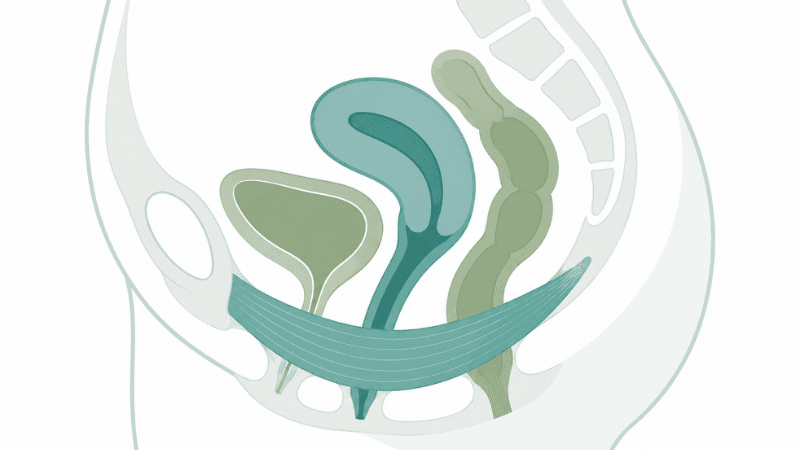
The pelvic floor is a layered group of muscles, ligaments, and connective tissue that forms the base of the pelvis. Think of it as a hammock of muscle spanning from the pubic bone at the front to the tailbone at the back, supporting the organs above it — the bladder, bowel, and in women, the uterus.
These muscles serve multiple overlapping functions. They maintain continence by keeping the urethra and anus closed at rest. They coordinate the controlled release of urine and stool. They support the pelvic organs against the downward pressure of standing, lifting, coughing, and physical activity. And they play a direct role in sexual function — in women, contributing to arousal, lubrication, and the muscular contractions of orgasm; in men, contributing to erectile function, ejaculation control, and prostate health.
When the pelvic floor is functioning well, most people are entirely unaware of it. When it is not — whether because the muscles are too weak, too tight, or poorly coordinated — the effects are difficult to ignore.
Weak Pelvic Floor Symptoms: How to Recognize Them
Weak pelvic floor symptoms vary depending on which muscles are affected and how significantly. The following are the most clinically recognized signs in both women and men.
Weak Pelvic Floor Symptoms in Women
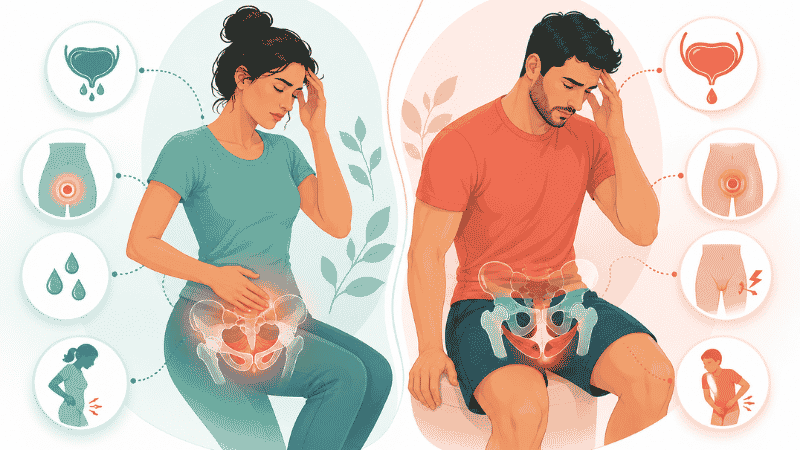
- Stress urinary incontinence — leaking urine during physical activities that increase intra-abdominal pressure, including coughing, sneezing, laughing, jumping, or lifting. This is the most commonly reported symptom and frequently dismissed as “normal,” particularly after pregnancy. It is not normal — it is a sign of pelvic floor weakness that responds well to treatment.
- Urgency urinary incontinence — a sudden, intense urge to urinate that is difficult to delay, sometimes accompanied by leakage before reaching the bathroom.
- Pelvic organ prolapse symptoms — a sensation of heaviness, dragging, or pressure in the pelvic region; a feeling that something is “falling out” of the vagina. Prolapse occurs when pelvic organs descend into or beyond the vaginal canal due to insufficient pelvic floor support.
- Pain during sexual intercourse (dyspareunia) — pelvic floor dysfunction can cause either insufficient muscle tone (contributing to reduced sensation and support) or excessive muscle tension (contributing to pain and restricted penetration). Both are forms of pelvic floor dysfunction.
- Reduced sensation during sexual activity — often associated with decreased muscle tone and poor neuromuscular coordination of the pelvic floor.
- Unexplained low back or pelvic pain — the pelvic floor muscles are part of the core muscle system and interact directly with the lumbar spine. Dysfunction in these muscles frequently contributes to chronic low back and pelvic girdle pain.
Weak Pelvic Floor Symptoms in Men
Pelvic floor dysfunction in men is significantly underrecognized — partly because awareness of the pelvic floor in men is low, and partly because the clinical conversation has historically focused almost entirely on women.
- Urinary leakage after urination — dribbling urine after finishing at the toilet is a common sign of poor pelvic floor coordination in men, particularly after prostate surgery.
- Difficulty controlling urgency — a sudden, intense urge to urinate with limited ability to delay.
- Erectile difficulties — the bulbocavernosus and ischiocavernosus muscles of the male pelvic floor play a direct role in achieving and maintaining erection. Weakness or poor coordination of these muscles contributes to erectile dysfunction independently of vascular or hormonal factors.
- Premature ejaculation — pelvic floor muscle tension and poor voluntary control are recognized contributors to premature ejaculation. Targeted pelvic floor exercises for men have an evidence base for improving ejaculatory control.
- Chronic pelvic pain — persistent pain in the perineum, rectum, or lower abdomen without a structural cause is frequently associated with pelvic floor muscle dysfunction.
- Low back and hip pain — as in women, the male pelvic floor is integral to core stability and lumbar support.
What Causes Pelvic Floor Weakness
Pelvic floor dysfunction does not have a single cause. The following factors are most commonly associated with weakening or impaired coordination of the pelvic floor muscles:
Pregnancy and childbirth — vaginal delivery places significant mechanical stress on the pelvic floor. Prolonged labor, assisted delivery (forceps or ventouse), and perineal tears or episiotomies all increase the risk of pelvic floor weakness. Symptoms may be immediate or may emerge gradually over years.
Chronic straining — repeatedly straining during bowel movements over years creates sustained downward pressure on the pelvic floor, weakening the muscles and their connective tissue support over time.
Sedentary lifestyle — the pelvic floor is part of the deep core muscle system. Extended periods of sitting and physical inactivity contribute to deconditioning of the pelvic floor alongside other core muscles.
Aging — muscle mass and tone naturally decline with age across the body, including the pelvic floor. This process accelerates in women after menopause due to declining estrogen, which affects the tissue quality of both the pelvic floor muscles and the vaginal and urethral tissues they support.
Pelvic surgery — procedures including hysterectomy, prostatectomy, and other pelvic surgeries can affect the nerves and muscles of the pelvic floor, sometimes resulting in temporary or persistent dysfunction.
Chronic high-impact activity — paradoxically, high-intensity exercise involving repeated heavy lifting, jumping, or impact can contribute to pelvic floor dysfunction if the muscles are not trained to coordinate with this load.
Psychological stress and anxiety — chronic stress is associated with increased muscle tension throughout the body, including the pelvic floor. Hypertonic (overly tight) pelvic floor muscles are a form of pelvic floor dysfunction distinct from weakness — and can produce symptoms including pain during sex and incomplete bladder emptying.
Pelvic Floor Exercises for Beginners: How to Start Correctly
Pelvic floor exercises — commonly referred to as Kegel exercises — are the first-line evidence-based intervention for mild to moderate pelvic floor weakness. They work by strengthening the muscles that have become deconditioned and improving the neuromuscular coordination needed for continence and sexual function.
The most common reason pelvic floor exercises fail to produce results is incorrect technique. Many people inadvertently contract their buttocks, thighs, or abdominal muscles instead of — or in addition to — the pelvic floor. Learning to isolate the correct muscles is the necessary first step.
How to Find Your Pelvic Floor Muscles
For women: Imagine you are trying to stop the flow of urine midstream — the muscles you engage to do this are your pelvic floor. You can also imagine lifting a small object internally, drawing it upward from the vaginal opening. The movement should be subtle and internal — you should not be visibly tensing your abdomen, buttocks, or inner thighs.
For men: The sensation is similar — imagine trying to stop urination midstream, or trying to prevent passing gas. You should feel a lifting and squeezing sensation in the perineum (the area between the scrotum and anus). The abdomen, buttocks, and thighs should remain relaxed.
Do not use the midstream test as a regular exercise. Interrupting urination repeatedly can interfere with normal bladder function. Use it only once to locate the muscles, then practice the contractions separately.
The Basic Pelvic Floor Exercise Routine
Once you have identified the correct muscles, the following routine provides a starting point:
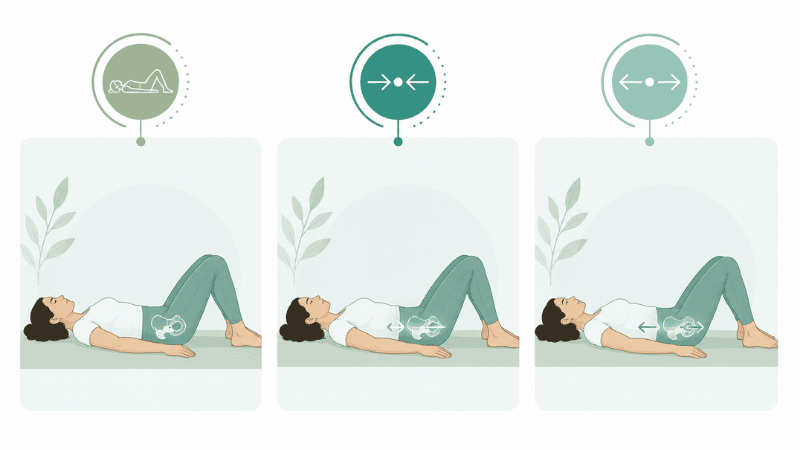
Short contractions: Contract the pelvic floor muscles firmly, hold for three seconds, then release completely. Rest for three seconds. Repeat ten times. The release phase is as important as the contraction — many people with pelvic floor dysfunction have difficulty fully relaxing these muscles.
Long contractions: Contract the pelvic floor muscles and hold for eight to ten seconds, breathing normally throughout. Release fully. Repeat five to eight times.
Functional contractions: Practice contracting the pelvic floor just before and during activities that increase intra-abdominal pressure — coughing, sneezing, lifting, or standing up. This is called “the knack” technique and is particularly effective for stress urinary incontinence.
Perform this routine three times per day. Most people begin to notice improvement within four to six weeks of consistent practice, though full benefit may take three to six months.
If you only have 10 minutes: One complete set of short and long contractions takes approximately five minutes. One consistent session per day produces meaningful benefit — do not let the perfect schedule prevent you from starting.
Pelvic Floor Exercises for Men: A Targeted Approach
Pelvic floor exercises for men are clinically validated for urinary incontinence (particularly following prostate surgery), erectile dysfunction, and premature ejaculation — yet awareness of this remains low among both men and healthcare providers.
A 2019 systematic review published in Sexual Medicine Reviews found that pelvic floor muscle training significantly improved erectile function in men with erectile dysfunction, with results comparable in some measures to phosphodiesterase-5 inhibitors (medications commonly used for ED). A separate body of research supports pelvic floor training as an effective intervention for premature ejaculation, improving voluntary control over the ejaculatory reflex.
The technique for men is identical in principle to that described above — the difference lies in consistency and in understanding why these muscles matter for specifically male health concerns. Men who have had prostate surgery are particularly encouraged to begin pelvic floor rehabilitation under the guidance of a pelvic floor physiotherapist before and immediately after the procedure.
Pelvic Floor Exercises for Women: Key Considerations
For women, pelvic floor exercises for beginners are most commonly introduced in the context of pregnancy, postpartum recovery, or urinary incontinence. Their benefits extend considerably further — including improvements in sexual sensation, orgasmic function, and pelvic organ prolapse management.
Postpartum women are encouraged to begin gentle pelvic floor contractions within days of delivery, once comfortable. However, women who have sustained significant perineal trauma, or who are experiencing pain with pelvic floor engagement, should seek pelvic floor physiotherapy assessment before beginning self-directed exercise.
One important nuance for women: not all pelvic floor problems are caused by weakness. Hypertonic pelvic floor dysfunction — in which the muscles are chronically overtight rather than weak — produces different symptoms (including pain during sex and incomplete bladder emptying) and requires a different therapeutic approach. Standard Kegel exercises can worsen hypertonic dysfunction. A pelvic floor physiotherapist can differentiate between these presentations and direct treatment accordingly.
If Exercises Aren’t Working: When to Seek Professional Support
If you have been doing pelvic floor exercises consistently for eight to twelve weeks and have seen no improvement, this is a signal that self-directed exercise alone is insufficient for your situation — not that the approach is wrong.
Pelvic floor physical therapy — conducted by a physiotherapist with specialist training in this area — is the gold standard for pelvic floor rehabilitation. It involves an internal and external assessment of muscle tone, strength, and coordination, followed by a tailored treatment programme that may include manual therapy, biofeedback, electrical stimulation, and progressive exercise.
Many people experience meaningful improvement within six to twelve weeks of specialist treatment for conditions that have not responded to years of self-managed Kegel exercises.
Warning Signs: When to Seek Medical Attention
The following symptoms warrant clinical evaluation rather than self-management:
- Urinary or fecal incontinence that is affecting daily life or preventing activities you would otherwise engage in
- A visible bulge at the vaginal opening, or a sensation of pelvic organ prolapse
- Persistent pain in the pelvic region, perineum, or lower back without a clear explanation
- Pain during sexual intercourse that is new, worsening, or consistent
- Inability to control the urge to urinate, particularly if this represents a change from your baseline
- Erectile difficulties or ejaculatory concerns in men that are persistent and causing distress
- Any urinary symptoms following pelvic surgery
A pelvic floor physiotherapist, gynecologist, urologist, or colorectal specialist can provide assessment and treatment referral as appropriate.
Frequently Asked Questions
What are the most common weak pelvic floor symptoms in women? The most commonly reported symptoms include leaking urine during coughing, sneezing, laughing, or exercise (stress urinary incontinence); a sudden, intense urge to urinate; pelvic pressure or heaviness; pain or discomfort during sexual intercourse; and reduced sensation during sexual activity. Low back pain without a clear musculoskeletal cause is also frequently associated with pelvic floor dysfunction.
Can men have a weak pelvic floor? Yes. Pelvic floor dysfunction affects men as well as women, though it is significantly underrecognized in men. Common presentations in men include urinary leakage (particularly after prostate surgery), urgency incontinence, erectile difficulties, premature ejaculation, and chronic pelvic pain. Pelvic floor exercises for men are clinically validated for all of these conditions.
How long does it take to see results from pelvic floor exercises? Most people notice initial improvement within four to six weeks of consistent daily practice. More significant changes — including meaningful reduction in urinary incontinence and improvement in sexual function — typically emerge over three to six months. Results are closely dependent on technique accuracy and consistency of practice.
Can I do pelvic floor exercises if I have pelvic pain? It depends on the cause of the pain. If pelvic floor dysfunction is hypertonic (muscles too tight rather than too weak), standard Kegel exercises can worsen symptoms. Pelvic floor physiotherapy assessment is strongly recommended before beginning self-directed exercises if pelvic pain is present, to determine whether strengthening or relaxation-focused treatment is appropriate.
What is the difference between pelvic floor exercises and Kegel exercises? They are the same thing. “Kegel exercises” is the common name for pelvic floor muscle training, named after Dr. Arnold Kegel who developed the technique in the 1940s. “Pelvic floor exercises” is the broader clinical term. Both refer to the practice of contracting and relaxing the pelvic floor muscles to improve strength and coordination.
Can weak pelvic floor muscles affect sexual health? Yes, significantly. In women, pelvic floor dysfunction can contribute to pain during sex (dyspareunia), reduced sensation, and difficulty reaching orgasm. In men, pelvic floor weakness is associated with erectile difficulties and poor ejaculatory control. Strengthening and rehabilitating the pelvic floor has a documented positive effect on sexual function in both sexes.
When should I see a pelvic floor physiotherapist rather than doing exercises alone? If you have moderate to severe symptoms, if your symptoms are affecting daily life, if self-directed exercises have not produced improvement after eight to twelve weeks, or if you are experiencing pelvic pain — specialist assessment is appropriate. Pelvic floor physiotherapy is more effective than unsupervised exercise alone for most presentations of pelvic floor dysfunction.
The Bottom Line
Weak pelvic floor symptoms are common, often go unrecognized for years, and respond well to appropriate treatment. The pelvic floor is not a niche concern for postpartum women — it is a functional muscle group that affects bladder control, bowel function, and sexual health in both women and men across all adult decades.
Recognizing the symptoms, understanding the causes, and beginning evidence-based pelvic floor exercises are steps that most adults can take without needing to wait for a diagnosis. For those whose symptoms are more significant or have not responded to self-directed exercise, pelvic floor physiotherapy offers a highly effective and evidence-based path to recovery.
Your pelvic floor health is a legitimate and important dimension of your overall well-being. It deserves the same attention as any other muscle group — and the same willingness to seek professional support when it needs it.
References
- National Institutes of Health, Office on Women’s Health. Pelvic Floor Disorders. https://www.womenshealth.gov/a-z-topics/pelvic-floor-disorders
- Cleveland Clinic. Pelvic Floor Dysfunction: What It Is, Symptoms & Treatment. Updated January 2024. https://my.clevelandclinic.org/health/diseases/14459-pelvic-floor-dysfunction
- Dorey G, et al. Pelvic floor exercises for erectile dysfunction. BJU International. 2005;96(4):595–597.
- Pastore AL, et al. Pelvic floor muscle rehabilitation for patients with lifelong premature ejaculation. Journal of Sexual Medicine. 2014;11(6):1800–1807.
- National Institute of Diabetes and Digestive and Kidney Diseases. Kegel Exercises. https://www.niddk.nih.gov/health-information/urologic-diseases/kegel-exercises