

You might have found out through a routine Pap smear. Or a partner may have told you. Or perhaps you noticed something unfamiliar and started searching quietly, not quite sure what you were looking for. However you arrived here, the experience of learning you may have been exposed to HPV — or that you have it — tends to produce a specific kind of quiet anxiety that most people carry alone.
That anxiety is almost always larger than the medical reality warrants. HPV is the most common sexually transmitted infection in the world, and the vast majority of people who contract it never develop any symptoms, never know they had it, and clear it from their bodies without any intervention at all.
But “most people” is not the same as “everyone.” And the gap between what HPV usually does and what it can do in a minority of cases is exactly where clear, accurate information matters most.
This guide covers what HPV actually is, what symptoms in women and men look like — and why most people have none — how long it lasts, whether it goes away on its own, and what you can do to protect your health.
Key Takeaways
- HPV (human papillomavirus) is the most common sexually transmitted infection globally. According to the CDC, nearly all sexually active people will be infected with HPV at some point in their lives.
- Most HPV infections produce no symptoms and clear on their own within one to two years as the immune system controls the infection.
- HPV symptoms in women are rarely obvious — the infection is most commonly detected through routine cervical screening (Pap smear and HPV co-test), not through symptoms.
- There are more than 200 strains of HPV. High-risk strains (particularly types 16 and 18) cause approximately 70% of cervical cancers worldwide, according to the World Health Organization. Low-risk strains may cause genital warts but do not cause cancer.
- The HPV vaccine is highly effective at preventing the strains most commonly linked to cancer and genital warts, and is recommended for adolescents and young adults up to age 26.
What Is HPV and Why Is It So Common
Human papillomavirus (HPV) is a group of more than 200 related viruses, transmitted primarily through intimate skin-to-skin contact — including vaginal, anal, and oral sexual activity. It does not require penetrative sex to be transmitted. Condoms reduce the risk of transmission but do not eliminate it entirely, because HPV can be present on skin not covered by a condom.
The reason HPV is so common is straightforward: it is easily transmitted, often produces no symptoms, and most people do not know they have it. The CDC estimates that approximately 13 million Americans become newly infected with HPV each year. The World Health Organization notes that HPV causes an estimated 690,000 cancers worldwide annually — the majority of which are cervical cancers in women.
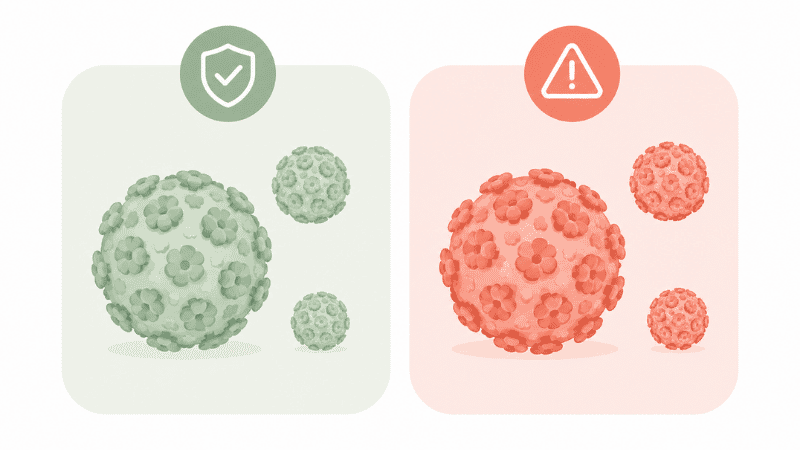
The critical distinction within HPV is between low-risk and high-risk strains. Low-risk strains — most commonly types 6 and 11 — can cause genital warts but do not cause cancer. High-risk strains — most significantly types 16 and 18 — do not typically cause visible symptoms, but persistent infection with these strains is the primary cause of cervical cancer and is associated with other HPV-related cancers.
HPV Symptoms in Women: What to Look For — and What You Won’t See
The most important thing to understand about HPV symptoms in women is that, in the majority of cases, there are none. High-risk HPV strains — the ones that carry cancer risk — typically produce no noticeable symptoms at all. This is precisely why routine cervical screening exists: to detect cellular changes caused by HPV before they become visible or symptomatic.
When HPV Does Produce Symptoms in Women
When HPV does cause visible symptoms, they are most commonly associated with low-risk strains and present as genital warts — soft, flesh-colored growths that may appear on the vulva, vagina, cervix, or around the anus. They can be flat or raised, single or in clusters, and may or may not cause discomfort. Genital warts are not a sign of cancer risk — they indicate infection with low-risk HPV strains that are distinct from the high-risk strains associated with cervical cancer.
High-risk HPV in women produces no warts and no early symptoms. The cellular changes it causes on the cervix — known as cervical dysplasia — are detectable only through cervical screening. Left undetected and untreated over many years, these changes can progress toward cervical cancer, which may eventually produce symptoms such as abnormal vaginal bleeding, pelvic pain, or unusual discharge. But these are late-stage symptoms of a cancer that could have been intercepted years earlier through routine screening.
How HPV in Women Is Actually Detected
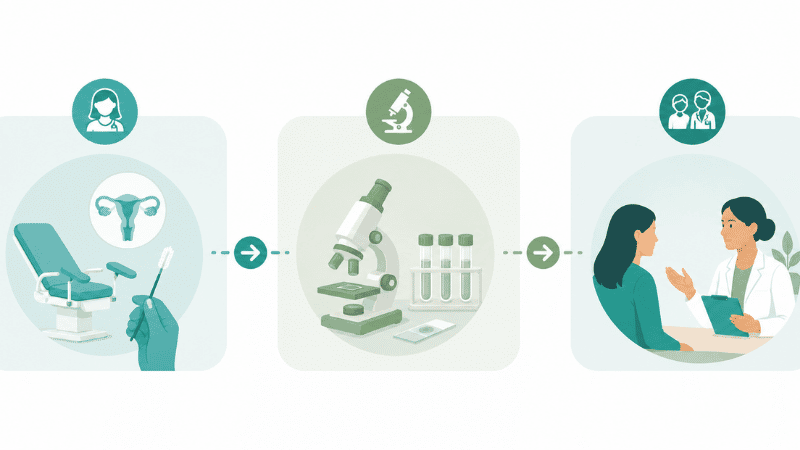
The answer is not through symptoms — it is through scheduled cervical screening. A Pap smear detects abnormal cervical cells. An HPV co-test detects the presence of high-risk HPV strains directly. Current guidelines recommend Pap smears beginning at age 21, with HPV co-testing typically beginning at age 30. The frequency of testing depends on your results and your age.
If your Pap smear or HPV test returns an abnormal result, this does not mean you have cervical cancer. It means your provider will recommend follow-up — which may include a repeat test, a colposcopy (a closer examination of the cervix), or monitoring over time depending on the specific findings.
If you have not had a cervical screening in more than three years and are sexually active, scheduling one is the most actionable step you can take for your HPV-related health right now.
HPV Symptoms in Men: Why It Is Even Less Visible
HPV symptoms in men are less common and less researched than in women, partly because there is currently no approved HPV screening test for most men, and partly because the consequences of HPV infection are statistically less severe in men than in women — though not absent.
Most men who are infected with HPV will clear the infection without any symptoms or health consequences. Low-risk HPV strains may cause genital warts on the penis, scrotum, or anal area. High-risk strains may increase the risk of penile, anal, or oropharyngeal (throat) cancers, though these are significantly less common than HPV-related cancers in women.
The absence of a routine HPV screening test for men means that most male HPV infections are not detected unless warts are present or an HPV-related cancer develops. This has implications not only for men’s own health but for their partners — HPV is transmitted bidirectionally, and an unvaccinated man can transmit high-risk strains to a female partner even without knowing he is infected.
The HPV vaccine is recommended for boys and men up to age 26 for this reason — it protects against the strains most likely to cause cancer and genital warts, and reduces the likelihood of transmission to sexual partners.
Can HPV Go Away on Its Own
Yes — and in most cases, it does.
According to the National Cancer Institute, most HPV infections resolve on their own within one to two years as the immune system successfully controls the virus. For people under 30, this clearance rate is particularly high. The CDC notes that approximately 90% of HPV infections clear within two years without any treatment.
What determines whether HPV clears or persists is primarily the strength and responsiveness of the immune system. Factors associated with persistent HPV infection — which carries a higher cancer risk than transient infection — include smoking, immunosuppression (including HIV infection), and infection with multiple HPV strains simultaneously.
It is also worth noting that “going away” in the context of HPV means the immune system has suppressed the virus below detectable levels — not necessarily that the virus has been entirely eliminated from the body. In some cases, HPV can reactivate later in life, particularly if immune function declines. This is one reason why continued cervical screening is recommended throughout a woman’s life, not just until a certain age.
How Long Does HPV Last
For most people, an HPV infection lasts between one and two years before the immune system clears it. Transient infections — those that resolve within this timeframe — do not cause cancer, regardless of the HPV strain involved.
Persistent HPV infection — defined as the continued presence of the same high-risk HPV strain over multiple years — is the primary risk factor for HPV-related cancers. The transition from persistent HPV infection to precancerous cervical changes, and from precancerous changes to cancer, typically takes many years. This is what makes regular cervical screening so effective: it provides multiple opportunities to detect and treat cellular changes long before cancer develops.
For women who test positive for high-risk HPV on a cervical screening, follow-up protocols are designed precisely to monitor whether the infection persists and whether any cellular changes are developing — allowing intervention at the earliest possible stage.
Is HPV Curable
There is currently no antiviral treatment that eliminates HPV from the body. However, “no cure” does not mean “no treatment” — the distinction matters.
The conditions caused by HPV are treatable. Genital warts can be removed through several clinical methods, including topical treatments, cryotherapy, or minor surgical procedures. Abnormal cervical cells detected through screening can be treated before they progress to cancer. HPV-related cancers, when detected early, respond well to treatment.
The most important clinical tool is not a cure for HPV itself — it is the combination of vaccination before exposure and regular screening to detect and treat any changes the infection may cause.
HPV Transmission: How It Spreads and How to Reduce Risk
HPV is transmitted through intimate skin-to-skin contact with an infected person. This includes vaginal, anal, and oral sexual activity, as well as genital-to-genital contact without penetration. It cannot be transmitted through casual contact such as touching doorknobs, sharing towels, or kissing.
Because HPV can be present on skin not covered by a condom, consistent condom use reduces but does not eliminate transmission risk. The CDC confirms that condoms lower the chance of HPV transmission, but cannot provide complete protection.
The most effective prevention strategies are:
HPV vaccination — The HPV vaccine (Gardasil 9 in the United States) is highly effective against the nine HPV strains most commonly associated with cancer and genital warts, including the two highest-risk strains (types 16 and 18). The CDC recommends routine vaccination at age 11 or 12, with catch-up vaccination available up to age 26. Adults aged 27 to 45 may discuss vaccination with their provider, though its benefit is more limited in people who have already been sexually active.
Regular cervical screening — For women, routine Pap smears and HPV co-testing remain the most reliable method of detecting HPV-related cervical changes before they progress. No equivalent routine screening currently exists for men.
Consistent condom use — Reduces transmission risk, though does not eliminate it.
Limiting the number of sexual partners — Reduces overall exposure risk, though HPV can be transmitted by a single partner.
Warning Signs: When to Seek Medical Attention
The following situations warrant a clinical evaluation or urgent follow-up:
- You have received an abnormal Pap smear or HPV co-test result and have not yet had a follow-up appointment
- You notice new growths, warts, or unexplained skin changes in the genital area
- You experience abnormal vaginal bleeding — including bleeding between periods, after sex, or after menopause
- You have persistent pelvic pain without a clear explanation
- You are due for cervical screening and have not had one in more than three years
- You are unsure whether you have been vaccinated against HPV and are under 26
None of these warrant panic. All of them warrant a medical appointment.
Frequently Asked Questions
What are the most common HPV symptoms in women? Most women with HPV have no symptoms at all. High-risk HPV strains, which carry cancer risk, produce no visible symptoms — they are detected through cervical screening. Low-risk strains may produce genital warts. The most common way women discover they have HPV is through an abnormal Pap smear or HPV co-test result during routine gynecological care.
Can HPV go away on its own without treatment? Yes. Approximately 90% of HPV infections clear within two years as the immune system controls the virus, according to the CDC. Most people who are infected with HPV will clear it without any symptoms or health consequences. Persistent infection with high-risk strains over many years is what carries cancer risk — not transient infection.
How long does HPV last in women? Most HPV infections resolve within one to two years. Persistent infection — the same high-risk strain remaining detectable over multiple years — is less common but is the primary risk factor for cervical cancer. This is why ongoing cervical screening is recommended even after a negative result: it monitors whether any infection is persisting and causing cellular changes.
Is HPV curable? There is no antiviral treatment that eliminates HPV from the body. However, the conditions HPV can cause — genital warts and precancerous cervical changes — are both treatable. The HPV vaccine prevents infection with the most dangerous strains. Regular cervical screening detects any changes early, when treatment is most effective.
Can you have HPV without symptoms? Yes — and this is the norm rather than the exception. The majority of HPV infections, particularly those involving high-risk strains, produce no noticeable symptoms. This is why HPV can be transmitted between partners who are both unaware they are infected, and why routine screening is the only reliable detection method for women.
Should I tell my partner if I have HPV? This is a personal decision that involves both medical and relational considerations. From a health standpoint, your partner may already be infected — HPV is extremely common and transmission can occur without either party knowing. A clinical conversation with your provider can help you understand your specific situation, and open communication with a partner about sexual health is generally supported by research as beneficial for both relational and health outcomes.
Is the HPV vaccine worth getting if I am already sexually active? The vaccine provides the most protection when given before any sexual activity begins. However, it can still offer partial protection to people who are already sexually active, as it is unlikely that you have been exposed to all nine strains the vaccine covers. The CDC recommends vaccination up to age 26 for people not previously vaccinated, and adults between 27 and 45 can discuss potential benefit with their provider.
The Bottom Line
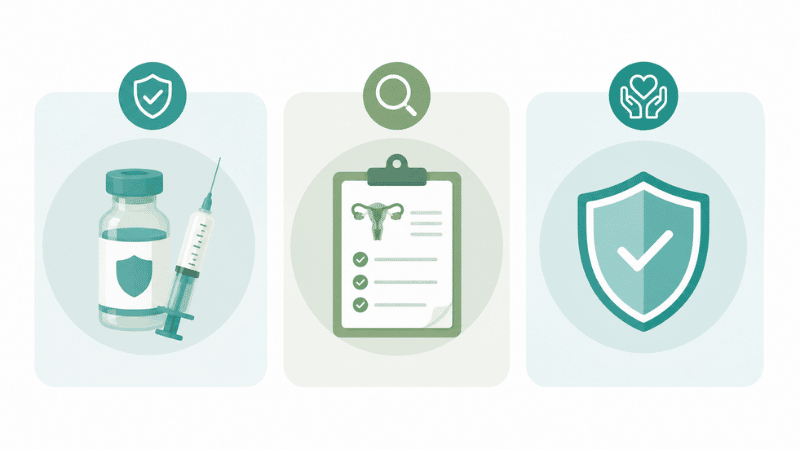
HPV is extraordinarily common, usually asymptomatic, and in the vast majority of cases resolves on its own. The gap between what it usually does — nothing noticeable — and what it can do in a minority of persistent, high-risk cases — contribute to cervical cancer — is bridged by two straightforward clinical tools: vaccination before exposure and regular cervical screening afterward.
HPV symptoms in women are rarely the way the infection is detected. Routine screening is. If you are due for a Pap smear or HPV co-test and have been postponing it, that appointment is the single most important action you can take for your HPV-related health. The conversation is routine. The process is quick. And what it protects against is entirely preventable.
References
- Centers for Disease Control and Prevention. Basic Information about HPV and Cancer. Updated February 2025. https://www.cdc.gov/cancer/hpv/basic-information.html
- Centers for Disease Control and Prevention. Cervical Cancer Risk Factors. https://www.cdc.gov/cervical-cancer/risk-factors/index.html
- World Health Organization. Human Papillomavirus and Cancer. Updated March 2024. https://www.who.int/news-room/fact-sheets/detail/human-papilloma-virus-and-cancer
- National Cancer Institute. Cervical Cancer Causes, Risk Factors, and Prevention. https://www.cancer.gov/types/cervical/causes-risk-prevention
- National Library of Medicine, NCBI Bookshelf. Human Papillomaviruses: How Can You Be Infected and What Consequences Can That Have? Updated March 2025. https://www.ncbi.nlm.nih.gov/books/NBK279260/