

Syphilis has a reputation as a disease of the past — something treated by historical medicine, not a concern for modern adults. That reputation is dangerously outdated.
Syphilis rates in the United States have increased by more than 80% since 2018, according to the CDC. In 2022, over 207,000 cases were reported — the highest number since 1950. The infection is rising fastest among adults aged 20–34, and a parallel surge in congenital syphilis — passed from pregnant women to their unborn children — represents one of the most serious ongoing public health concerns in the country.
Understanding syphilis matters precisely because it is so easily missed. Its early stages are often painless and may go unnoticed entirely. It progresses through distinct stages that can span years, each with different symptoms and different implications for health. And it is fully curable with appropriate antibiotic treatment — but only if it is detected.
This guide covers the syphilis stages and their symptoms, what syphilis looks like at each stage, how it is tested and treated, and what happens if it goes untreated.
Key Takeaways
- Syphilis is caused by the bacterium Treponema pallidum and progresses through four stages: primary, secondary, latent, and tertiary. Each stage has distinct symptoms and clinical implications.
- The primary stage sore (chancre) is typically painless, which means many people do not notice it — making routine testing the most reliable means of early detection.
- Syphilis rates in the United States increased by over 80% between 2018 and 2022, according to CDC surveillance data, with adults aged 20–34 among the most affected groups.
- Early-stage syphilis (primary and secondary) is curable with a single intramuscular injection of penicillin G benzathine. Later-stage syphilis is still treatable but requires more intensive regimens.
- Congenital syphilis — transmission from a pregnant woman to her fetus — has increased dramatically and can cause stillbirth, severe neurological damage, and death. Prenatal syphilis testing is a standard component of antenatal care.
What Is Syphilis and How Does It Spread
Syphilis is a bacterial STI caused by Treponema pallidum. It is transmitted through direct contact with a syphilis sore (chancre) during vaginal, anal, or oral sexual activity. It can also be transmitted from a pregnant woman to her fetus during pregnancy or delivery — congenital syphilis.
Syphilis cannot be transmitted through casual contact — toilet seats, doorknobs, shared utensils, swimming pools, or clothing do not transmit the bacteria.
The infection is particularly insidious because its primary stage sore is frequently painless and may be located in areas not easily visible — inside the vagina, on the cervix, inside the rectum, or in the mouth. This means many people are unaware they have been infected and can transmit the bacteria without knowing.
Syphilis Stages and Symptoms: A Stage-by-Stage Guide
Understanding the syphilis stages is the foundation of recognizing the infection early, when treatment is most straightforward and complications are entirely preventable.
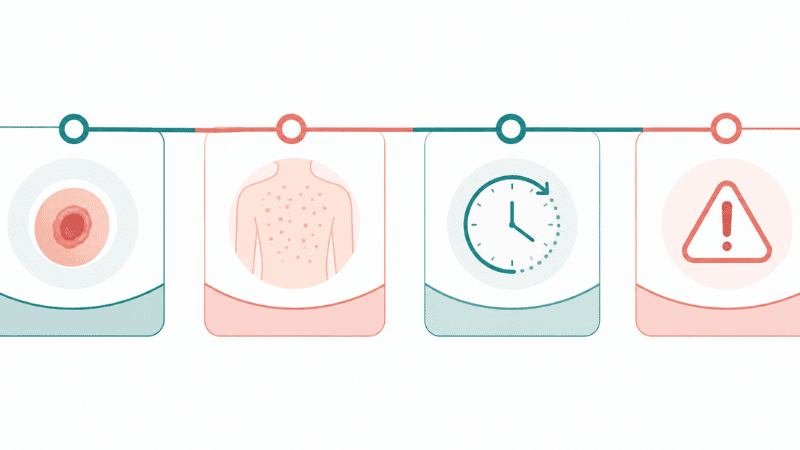
Primary Stage: The Sore That Is Easy to Miss
The primary stage begins when the bacterium enters the body through a break in the skin or mucous membrane. Within ten to ninety days of exposure — on average, three weeks — a sore called a chancre appears at the site of infection.
What the primary stage sore looks like:
- Single, firm, round, and typically painless ulcer
- Usually between 1–2 centimeters in diameter
- May appear on the genitals, anus, rectum, lips, or inside the mouth
- In women, frequently located inside the vagina or on the cervix — not externally visible without examination
The chancre is painless in most cases, which is why it is so frequently unnoticed. It heals on its own within three to six weeks, creating a dangerous false reassurance — the disappearance of the sore does not mean the infection has resolved. Without treatment, the bacteria remain in the body and the infection progresses to the secondary stage.
If the primary stage is treated with appropriate antibiotics at this point, the infection is cured and does not progress further.
Secondary Stage: The Stage Most Likely to Be Recognized
The secondary stage typically begins two to eight weeks after the primary sore appears — sometimes while the chancre is still healing. This is the stage most likely to produce noticeable symptoms, though they are often non-specific enough to be attributed to other causes.
What the secondary stage looks like:
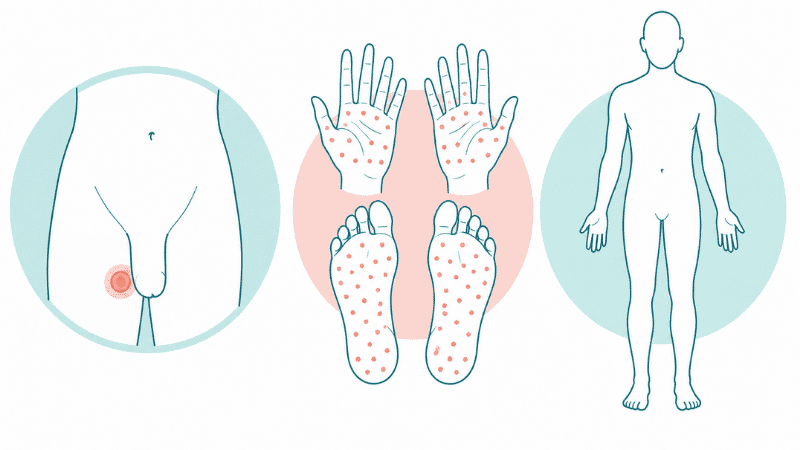
The most characteristic feature is a rash that can appear on any part of the body, but classically appears on the palms of the hands and soles of the feet — a distribution that is relatively unusual for other skin conditions and should prompt clinical evaluation.
The rash is typically:
- Rough, red, or reddish-brown in appearance
- Present on palms and soles, trunk, or elsewhere on the body
- Usually not itchy — which distinguishes it from many other rashes
- Sometimes so faint it is barely noticeable
Additional secondary stage symptoms may include:
- Fever and fatigue
- Swollen lymph nodes, particularly in the groin, armpit, and neck
- Sore throat
- Patchy hair loss
- Headaches and muscle aches
- Flat, wart-like growths in warm, moist areas (condyloma lata) — highly infectious
The secondary stage symptoms also resolve without treatment. This is the second dangerous false reassurance that syphilis produces — the symptoms disappearing does not mean the infection has cleared. Without treatment, the infection enters the latent stage.
Latent Stage: Silent but Not Gone
The latent stage is a period during which syphilis produces no visible symptoms. The infection is still present in the body, still detectable by blood test, and still potentially transmissible — but the person shows no outward signs of illness.
The latent stage is divided into:
Early latent — infection acquired within the past year. The person may still be infectious during this period, as the secondary stage symptoms can recur.
Late latent — infection present for more than one year. Transmission risk is lower but not absent. The infection can remain in the latent stage for years or even decades.
Without treatment at any point during the latent stage, some people — approximately one-third — progress to tertiary syphilis.
Tertiary Stage: The Most Serious and Preventable Outcome
Tertiary syphilis develops in a proportion of people who do not receive treatment during the earlier stages. It typically occurs ten to thirty years after the initial infection and can affect multiple organ systems.
Gummatous syphilis — the formation of soft, granulomatous tissue tumors (gummas) that can develop in any organ, including skin, bone, and liver.
Cardiovascular syphilis — affecting the aorta and other major blood vessels, causing aneurysm formation, aortic valve insufficiency, and potentially fatal cardiovascular events.
Neurosyphilis — affecting the brain and nervous system. This can occur at any stage of syphilis, not only in the tertiary stage, and produces symptoms including severe headache, changes in mental status, vision problems, hearing loss, dementia, and in untreated cases, death.
Tertiary syphilis is entirely preventable through treatment at any of the earlier stages. It is included in this guide not to alarm, but to illustrate why routine testing and prompt treatment are so clinically important.
What Does Syphilis Look Like: Stage by Stage
The visual presentation of syphilis changes significantly across stages, and understanding what to look for at each stage helps clarify when to seek clinical evaluation.
Primary stage: A single (or occasionally multiple) firm, painless, round ulcer at the site of infection. In men, this is typically visible on the penis or scrotum. In women, it is frequently inside the vagina or on the cervix and may not be visible without examination. In both sexes, it can appear on the anus, rectum, lips, or inside the mouth.
Secondary stage: A non-itchy rash, classically on the palms and soles, which may also be present on the trunk and elsewhere. The rash is reddish-brown and rough in texture. Flat, moist growths (condyloma lata) may appear in warm, moist areas. These growths are highly infectious.
Latent stage: No visible symptoms.
Tertiary stage: Variable depending on the organ system affected. Gummas may appear as soft nodules or ulcerations on the skin or other tissues. Neurological symptoms are not visible externally but produce measurable changes in cognition, sensation, and behavior.
Syphilis Symptoms in Women: Specific Considerations
Syphilis symptoms in women follow the same stage-based pattern as in men, but with important anatomical differences that affect how — and whether — symptoms are noticed.
The primary chancre in women is most commonly located inside the vagina or on the cervix. Because it is painless and not externally visible, it is rarely self-detected. Women with a primary stage sore may be entirely unaware of it unless a gynecological examination is performed during the infectious period.
The secondary stage rash is equally present in women, and may be noticed on the palms, soles, or trunk. However, the non-specific nature of secondary stage symptoms — fatigue, mild fever, rash — means they are frequently attributed to other causes.
Syphilis during pregnancy carries specific and serious risks. Transmission to the fetus can cause:
- Stillbirth
- Premature delivery
- Severe developmental abnormalities
- Neonatal death
This is why syphilis testing is a standard component of prenatal care, and why prompt treatment of syphilis during pregnancy is both urgent and highly effective — treated early in pregnancy, congenital syphilis is preventable.
How Syphilis Is Diagnosed and Tested
Syphilis is diagnosed through blood tests that detect antibodies to Treponema pallidum. Two types of tests are used in combination:
Non-treponemal tests (VDRL, RPR) — detect antibodies produced in response to cellular damage caused by the syphilis bacteria. These tests are used for initial screening and for monitoring treatment response. They can produce false positives in some circumstances, which is why a positive result is confirmed with a second test.
Treponemal tests (FTA-ABS, TP-PA) — detect antibodies specifically directed against T. pallidum. These tests confirm a positive non-treponemal result and remain positive for life even after successful treatment.
For neurosyphilis, cerebrospinal fluid (CSF) analysis is required, typically obtained through lumbar puncture.
The CDC recommends syphilis testing for:
- All pregnant women at the first prenatal visit
- Adults with new or multiple sexual partners
- Men who have sex with men — at least annually, every three to six months if higher risk
- People with HIV — at least annually
- Anyone who has been notified of potential exposure
If you only have 10 minutes: Use the CDC’s GetTested tool at gettested.cdc.gov to find a free or low-cost testing location near you. A syphilis blood test is included in most comprehensive STI panels. The test takes seconds; results return within a few days.
Syphilis Treatment: What to Expect
Syphilis is curable with antibiotics at every stage, though the treatment regimen and the outcomes differ depending on how long the infection has been present.
Primary, secondary, and early latent syphilis — a single intramuscular injection of penicillin G benzathine (2.4 million units) is the standard treatment and is highly effective. For people with penicillin allergy, doxycycline taken orally for fourteen days is the recommended alternative.
Late latent and tertiary syphilis — three weekly injections of penicillin G benzathine are required. Neurosyphilis and ocular syphilis require intravenous penicillin G for fourteen days.
During pregnancy — only penicillin is effective for preventing congenital syphilis. Pregnant women with penicillin allergy should be desensitized to penicillin and then treated with it.
After treatment: A follow-up blood test at six months, twelve months, and — for neurosyphilis — longer intervals is required to confirm treatment success, as measured by declining antibody levels (non-treponemal test titers). Sexual contact should be avoided until treatment is complete and any partners have also been evaluated and treated.
Partner notification is clinically essential. All sexual partners from the relevant period — sixty days for primary stage, six months for secondary stage, one year for early latent — should be notified, tested, and treated if necessary.
Syphilis Prevention: What Works
Consistent condom use significantly reduces the risk of syphilis transmission, though it does not eliminate it entirely — the syphilis sore may be located on areas not covered by a condom.
Regular STI testing is the most important preventive measure. Because syphilis is frequently asymptomatic in early stages, testing is the only reliable means of detection. The CDC recommends at least annual testing for sexually active adults with new or multiple partners, and more frequent testing for higher-risk groups.
Prompt treatment of diagnosed syphilis interrupts transmission and prevents progression to later stages.
Doxycycline post-exposure prophylaxis (doxy-PEP) — taking doxycycline within seventy-two hours of sexual exposure — has shown effectiveness in reducing syphilis transmission in clinical trials and is now recommended by the CDC as a prevention option for certain high-risk populations, including men who have sex with men.
Warning Signs: When to Seek Urgent or Prompt Clinical Attention
- Any new genital, anal, or oral sore or ulcer — even if painless — warrants clinical evaluation and syphilis testing
- A non-itchy rash on the palms or soles, particularly in combination with other secondary stage symptoms
- Any neurological symptoms — severe headache, visual changes, hearing loss, confusion — in someone with a history of or risk for syphilis
- Notification that a sexual partner has been diagnosed with syphilis
- Pregnancy — any pregnant woman who has not been tested for syphilis should be tested at her first prenatal appointment
Frequently Asked Questions
What are the four stages of syphilis? Primary, secondary, latent, and tertiary. The primary stage produces a painless sore at the infection site. The secondary stage produces a characteristic rash and flu-like symptoms. The latent stage produces no symptoms but the infection remains in the body. The tertiary stage — which develops in untreated cases — can affect the heart, brain, and other organ systems.
Is syphilis curable? Yes. Syphilis is fully curable with penicillin antibiotics at every stage. Early-stage syphilis requires a single injection; later stages require longer treatment. Treatment cures the infection but does not reverse damage caused by tertiary-stage complications.
Can you have syphilis without symptoms? Yes. The primary sore is often painless and may be in a location not easily visible. The latent stage produces no symptoms at all. Many people with syphilis are unaware of their infection, which is why routine testing is recommended for sexually active adults.
What does the syphilis rash look like? The secondary stage rash typically appears as rough, reddish-brown spots on the palms of the hands and soles of the feet. It may also be present on the trunk and other areas of the body. It is characteristically non-itchy. The rash resolves without treatment but the infection does not.
How long does syphilis last without treatment? Without treatment, syphilis does not clear on its own. The sores and rashes of the primary and secondary stages resolve spontaneously, but the infection persists in the body. The latent stage can last for years or decades. Without treatment, approximately one-third of people with latent syphilis progress to tertiary syphilis over ten to thirty years.
How is syphilis different from other STIs? Syphilis is distinctive for its stage-based progression with different symptoms at each stage, its characteristic painless sore, its ability to remain dormant for years in the latent stage, and its potential to cause serious cardiovascular and neurological complications if untreated. It is caused by bacteria and is fully curable with antibiotics — unlike viral STIs such as herpes and HPV.
The Bottom Line
Syphilis is experiencing a significant resurgence, and its reputation as a disease of the past is one of the reasons it continues to spread — people do not think to test for it, and they do not recognize its early symptoms when they occur.
The syphilis stages progress through a predictable sequence, each with different symptoms and different implications. Early-stage syphilis is cured with a single antibiotic injection. Late-stage complications are serious but entirely preventable through timely detection and treatment.
If you are sexually active with new or multiple partners and have not been tested for syphilis in the past year, adding it to your next STI panel is a straightforward step that can genuinely protect your long-term health.
References
- Centers for Disease Control and Prevention. About Syphilis. Updated January 2025. https://www.cdc.gov/syphilis/about/index.html
- Centers for Disease Control and Prevention. STI Surveillance Report 2022. https://www.cdc.gov/sti-statistics/annual/summary.html
- Workowski KA, et al. Sexually Transmitted Infections Treatment Guidelines, 2021. MMWR Recommendations and Reports. 2021;70(4):1–187.
- Centers for Disease Control and Prevention. Syphilis Treatment and Care. https://www.cdc.gov/syphilis/treatment/index.html
- Molina JM, et al. On-demand doxycycline to prevent sexually transmitted infections. New England Journal of Medicine. 2024;390(14):1293–1302.