

Finding out you may have been exposed to chlamydia — or receiving a positive result — tends to produce a particular kind of private panic. Questions arrive quickly and feel urgent: How long have I had it? Did I pass it on? How serious is this? Why didn’t I have any symptoms?
These are exactly the right questions. The problem is that most people search for answers alone, late at night, and find clinical information that answers some of what they need to know but none of what they actually feel.
This guide is written to do both. Chlamydia is the most commonly reported sexually transmitted infection in the United States — with over 1.6 million cases reported to the CDC annually, and the actual number estimated to be considerably higher. It is curable with a single course of antibiotics. It is frequently asymptomatic. And the most significant harm it causes comes not from the infection itself, but from leaving it undetected and untreated.
Here is what you need to know.
Key Takeaways
- Chlamydia is caused by the bacterium Chlamydia trachomatis and is fully curable with antibiotics — typically a single dose of azithromycin or a seven-day course of doxycycline.
- Approximately 70–95% of women and 50% of men with chlamydia have no noticeable symptoms, making routine testing the only reliable means of detection.
- How long chlamydia lasts without treatment depends on the individual immune response — some infections clear spontaneously, but this cannot be predicted or relied upon. Untreated chlamydia can persist for months to years.
- Left untreated, chlamydia can lead to pelvic inflammatory disease (PID) in women, epididymitis in men, and — in both sexes — increased risk of infertility and susceptibility to other STIs including HIV.
- The CDC recommends annual chlamydia screening for all sexually active women under 25, and for older women and men with new or multiple partners.
What Is Chlamydia and How Does It Spread
Chlamydia is a bacterial STI caused by Chlamydia trachomatis. Unlike viral STIs such as herpes or HPV, bacterial infections are fully curable with appropriate antibiotic treatment — meaning a confirmed chlamydia infection, treated promptly, carries no long-term health consequences in the vast majority of cases.
The bacteria is transmitted through sexual contact — vaginal, anal, and oral sex. It can be transmitted without penetration or ejaculation, through the exchange of genital fluids or direct mucous membrane contact. It cannot be transmitted through casual contact such as sharing toilets, towels, or utensils.
Chlamydia can infect the cervix, urethra, rectum, and throat. Rectal and throat infections are frequently asymptomatic and are only detected through site-specific testing — which is why comprehensive STI testing for people with multiple types of sexual contact should include swabs from relevant sites, not just urine testing.
Chlamydia Symptoms in Women: Why Most People Don’t Know They Have It
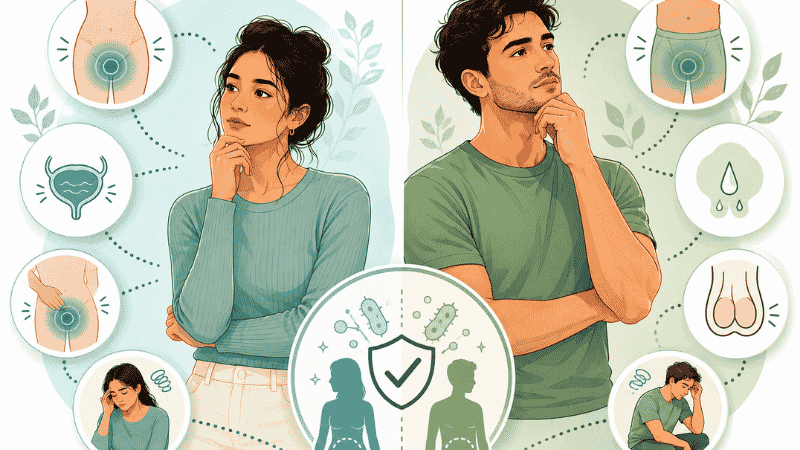
Chlamydia symptoms in women are absent in an estimated 70–95% of cases. This is not a statistical anomaly — it is the defining clinical characteristic of the infection, and the primary reason it spreads so effectively and goes undetected for so long.
When chlamydia symptoms do occur in women, they typically appear one to three weeks after exposure and may include:
- Unusual vaginal discharge — often increased in volume or changed in character
- Burning or discomfort during urination
- Pelvic or lower abdominal pain
- Pain or bleeding during or after sexual intercourse
- Bleeding between periods
These symptoms are non-specific — they overlap with many other conditions including bacterial vaginosis, urinary tract infections, and other STIs. This means that symptom-based diagnosis is unreliable, and a test is required for accurate diagnosis.
A particularly important point: the absence of symptoms does not indicate the absence of infection. Many women who test positive for chlamydia report no symptoms at all, and have had no reason to suspect infection. Regular screening is the only reliable mechanism of detection.
Chlamydia Symptoms in Men: Also Frequently Silent
Chlamydia symptoms in men are absent in approximately 50% of cases — less frequently silent than in women, but still asymptomatic in half of all infections. When symptoms occur, they typically include:
- Discharge from the penis — often clear or cloudy
- Burning or pain during urination
- Discomfort, pain, or swelling in the testicles
- Rectal pain or discharge (in rectal infection)
Symptoms in men, when present, typically appear within one to three weeks of exposure. The testicle-related symptom — epididymitis, or inflammation of the epididymis — is one of the more serious complications of untreated chlamydia in men and warrants prompt medical evaluation when present.
As with women, the absence of symptoms cannot be interpreted as a negative result. Testing is required.
How Long Can You Have Chlamydia Without Knowing
This is one of the most commonly searched questions about chlamydia — and one of the most clinically significant.
The straightforward answer: indefinitely. Because chlamydia is frequently asymptomatic, a person can carry an active infection for months or years without being aware of it. The infection does not resolve by producing symptoms that prompt testing — it simply persists, potentially causing progressive damage while remaining undetected.
The window period — the time between infection and a reliable positive test result — is typically one to two weeks. Testing performed within this window may return a false negative. If you have had a potential exposure and are testing promptly, a follow-up test after the window period has elapsed is advisable.
In terms of natural history: some chlamydia infections do clear spontaneously without treatment, as the immune system contains the infection. However, this is unpredictable and cannot be relied upon clinically. The rate of spontaneous clearance varies considerably between individuals, and clearance does not prevent reinfection. Waiting for spontaneous resolution rather than seeking treatment is not a clinically appropriate approach.
The practical implication: if you have been sexually active with new or multiple partners and have not been tested in the past twelve months, you may have had chlamydia without knowing. Annual screening is the mechanism through which this is identified.
How Long Does Chlamydia Last
How long chlamydia lasts depends critically on whether it receives treatment.
With treatment: Chlamydia clears within seven to fourteen days of completing a full course of appropriate antibiotics. Symptoms, where present, typically begin to improve within a few days of starting treatment. A test of cure — a follow-up test to confirm clearance — is recommended three months after treatment, as reinfection (rather than treatment failure) is common.
Without treatment: Chlamydia can persist for an extended and unpredictable period. Studies tracking untreated chlamydia infections have found that some infections clear within twelve months, while others persist for considerably longer. There is no reliable way to predict whether a given infection will clear spontaneously or persist — and the progressive damage that untreated chlamydia can cause makes waiting clinically unreasonable.
The distinction matters because some people delay seeking treatment after a positive result, hoping the infection will resolve on its own. It may — but the risk of complications during that time is real, the certainty of clearance is absent, and treatment is simple, effective, and typically free at sexual health clinics.
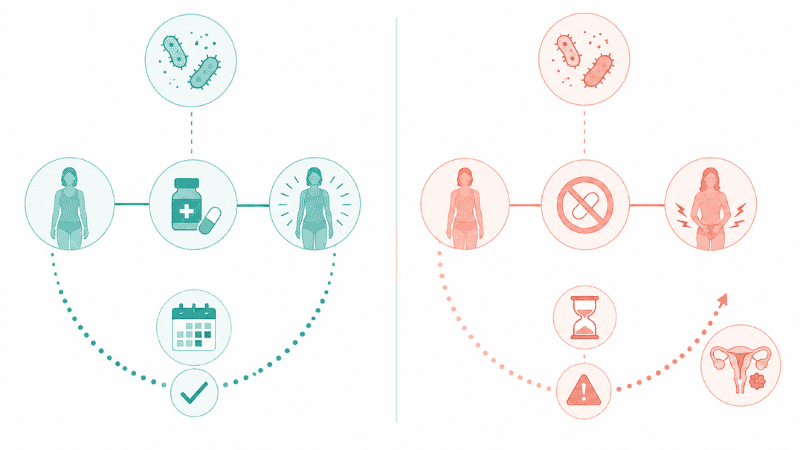
What Happens If Chlamydia Is Left Untreated
This is the question that most clearly illustrates why chlamydia deserves clinical attention despite its often-silent presentation.
In women, untreated chlamydia can ascend from the cervix to the upper reproductive tract, causing pelvic inflammatory disease (PID). PID is a serious infection of the uterus, fallopian tubes, and ovaries that can cause chronic pelvic pain, ectopic pregnancy, and — in cases of significant fallopian tube scarring — infertility. The CDC estimates that up to 15% of women with untreated chlamydia will develop PID.
Untreated chlamydia during pregnancy increases the risk of premature delivery and can be transmitted to the newborn during delivery, causing neonatal eye infection and pneumonia.
In men, untreated chlamydia can cause epididymitis — inflammation of the tube that carries sperm — which produces testicular pain and, in severe cases, can affect fertility.
In both sexes, untreated chlamydia increases susceptibility to other STIs, including HIV, by causing inflammation in mucosal tissue that makes transmission easier. It also increases the risk of reactive arthritis — joint inflammation triggered by the immune response to infection.
The critical clinical point: none of these complications are inevitable, and all are preventable through timely testing and treatment. The harm from chlamydia comes primarily from the delay between infection and treatment — not from the infection itself.
Chlamydia Prevention: What Actually Works
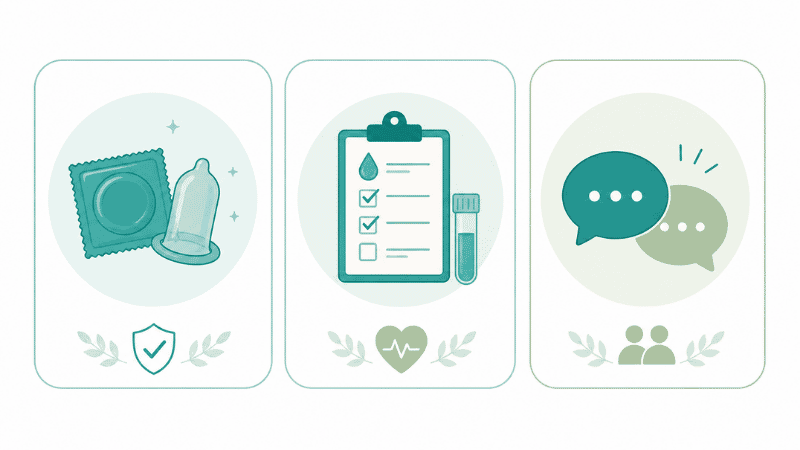
Consistent condom use is the most effective behavioral intervention for reducing chlamydia transmission risk. Male condoms used correctly and consistently reduce transmission risk significantly, though they do not eliminate it entirely — chlamydia can be transmitted from areas not covered by a condom.
Regular STI testing is the most important preventive measure for sexually active adults. Testing does not prevent transmission directly, but it interrupts transmission chains by identifying infections before they are unknowingly spread to additional partners. Annual testing for all sexually active adults with new or multiple partners is the CDC recommendation; more frequent testing (every three to six months) is recommended for men who have sex with men.
Partner notification — informing recent sexual partners of a positive diagnosis — allows them to access testing and treatment. This is a clinically important step that significantly reduces onward transmission. Sexual health clinics can assist with anonymous partner notification if direct contact feels difficult.
Avoiding sex during treatment — specifically, avoiding unprotected sexual contact until a full course of treatment has been completed and any partners have also been treated — prevents reinfection. Reinfection following treatment is common and is the most frequent reason a follow-up test returns positive.
If you only have 10 minutes right now: Use the CDC’s GetTested tool at gettested.cdc.gov to locate a free or low-cost testing site near you. The appointment itself takes under 30 minutes. The result takes a few days. If positive, treatment is a single prescription. The entire process from concern to resolution can happen within a week.
Warning Signs: When to Seek Urgent Care
While chlamydia itself typically warrants a prompt but non-urgent clinical appointment, the following circumstances require more immediate attention:
- Significant pelvic or lower abdominal pain in women — particularly if accompanied by fever or abnormal discharge — which may indicate pelvic inflammatory disease requiring urgent treatment
- Severe testicular pain or swelling in men — which may indicate epididymitis requiring prompt evaluation
- Symptoms in a newborn following birth to a mother with untreated chlamydia — including eye discharge or respiratory symptoms — requiring immediate pediatric evaluation
- Any concern about exposure to HIV alongside chlamydia, which warrants discussion of PEP (post-exposure prophylaxis) within 72 hours of exposure
Frequently Asked Questions
How long does chlamydia last without treatment? Without treatment, chlamydia can persist for months to years. Some infections clear spontaneously within twelve months through immune response, but this cannot be reliably predicted. Waiting for natural clearance rather than seeking treatment risks progressive complications including PID and epididymitis, and risks unknowing transmission to partners during that period. Treatment clears the infection within seven to fourteen days.
Can you have chlamydia without any symptoms? Yes — this is the norm rather than the exception. Approximately 70–95% of women and 50% of men with chlamydia have no symptoms. This is the primary reason routine screening is recommended rather than symptom-triggered testing. Feeling well is not a reliable indicator of negative status.
What are the symptoms of chlamydia in women? When symptoms occur — which is in a minority of cases — they may include unusual vaginal discharge, burning during urination, pelvic or lower abdominal pain, pain or bleeding during sex, and bleeding between periods. These symptoms are non-specific and overlap with other conditions, making laboratory testing the only reliable means of diagnosis.
What happens if chlamydia goes untreated for a long time? Untreated chlamydia can progress to pelvic inflammatory disease (PID) in women, causing chronic pelvic pain, ectopic pregnancy risk, and potential infertility through fallopian tube scarring. In men, it can cause epididymitis. In both sexes, it increases susceptibility to other STIs. These complications are preventable through timely diagnosis and treatment.
How is chlamydia treated? Chlamydia is treated with antibiotics — typically a single dose of azithromycin or a seven-day course of doxycycline. Both are highly effective. Sexual contact should be avoided until treatment is complete and any partners have also been treated. A follow-up test three months after treatment is recommended to rule out reinfection.
Do I need to tell my partner if I test positive for chlamydia? Clinically, yes — any sexual partners from the past sixty days should be notified and encouraged to test and treat. This interrupts transmission and prevents reinfection. If direct notification feels difficult, sexual health clinics can provide anonymous partner notification services. Many areas also have online partner notification tools that allow you to send an anonymous notification.
Can chlamydia come back after treatment? Chlamydia does not recur from the same infection after successful treatment — but reinfection from a partner who was not treated, or from a new exposure, is common. This is why a follow-up test three months after treatment is recommended, and why partners must be treated simultaneously.
The Bottom Line
Chlamydia is the most common bacterial STI in the United States — common enough that being tested and treated for it is an ordinary event in sexual health care, not an exceptional one. It is fully curable. Its most serious consequences are entirely preventable through timely testing and treatment.
How long chlamydia lasts is directly related to whether it is treated. With treatment, it clears within two weeks. Without treatment, it persists — silently, in most cases — for an unpredictable period, with the risk of complications increasing over time.
The only way to know your status is to test. The only way to prevent complications is to treat promptly. Both of those steps are straightforward, accessible, and worth taking.
References
- Centers for Disease Control and Prevention. Chlamydia — CDC Detailed Fact Sheet. Updated April 2024. https://www.cdc.gov/std/chlamydia/stdfact-chlamydia-detailed.htm
- Centers for Disease Control and Prevention. STI Surveillance Report 2022. https://www.cdc.gov/std/statistics/2022/default.htm
- Cleveland Clinic. Chlamydia: Causes, Symptoms, Treatment and Prevention. Updated February 2023. https://my.clevelandclinic.org/health/diseases/4023-chlamydia
- Geisler WM. Duration of untreated, uncomplicated Chlamydia trachomatis genital infection and factors associated with chlamydia resolution. Sexually Transmitted Diseases. 2010;37(2 Suppl):S11–S13.
- World Health Organization. Chlamydia. https://www.who.int/news-room/fact-sheets/detail/chlamydia