

Most of us received some version of sexual health education at some point. And most of us, if we are honest, received a version that was incomplete — focused narrowly on reproduction, risk, and the things to avoid, while leaving unaddressed the far larger question of what sexual health actually looks like when it is present, rather than merely when it is absent.
This guide exists to provide what most education did not: a clear, science-based, judgment-free overview of sexual health as a genuine dimension of human well-being — one that encompasses physical health, hormonal balance, emotional life, relationships, and the practical knowledge needed to take care of yourself across a lifetime.
Whether you are looking for foundational information, navigating a specific concern, or simply trying to understand what good sexual health looks like at your age and life stage, this is where that understanding begins.
Key Takeaways
- The World Health Organization defines sexual health as a state of physical, emotional, mental, and social well-being in relation to sexuality — not merely the absence of disease or dysfunction.
- A 2024 systematic review in the Bulletin of the World Health Organization found strong, consistent associations between positive sexual health and lower depression and anxiety, higher quality of life, and greater life satisfaction across all adult age groups and relationship types.
- Sexual health is not static — it changes meaningfully across different life stages, hormonal shifts, relationships, and life circumstances, and deserves ongoing attention rather than a one-time evaluation.
- The most significant barriers to good sexual health are not biological. They are the reluctance to seek information, discomfort with clinical conversations, and the normalization of symptoms that are in fact treatable.
- Routine sexual health care — including STI testing, gynecological screening, and open communication with healthcare providers — is a standard component of adult preventive health, not a response reserved for when something goes wrong.
What Sexual Health Actually Means
The most widely cited definition comes from the World Health Organization, which describes sexual health as a state of physical, emotional, mental, and social well-being in relation to sexuality. Critically, the definition specifies that sexual health is not merely the absence of disease, dysfunction, or infirmity.
This distinction matters more than it might initially appear. A definition built around absence — no infection, no dysfunction, no pain — sets a floor, not a standard. It defines the minimum, not the meaningful. The WHO definition, by contrast, describes sexual health affirmatively: as a positive and respectful approach to sexuality and sexual relationships, including the possibility of pleasurable and safe sexual experiences free from coercion, discrimination, and violence.
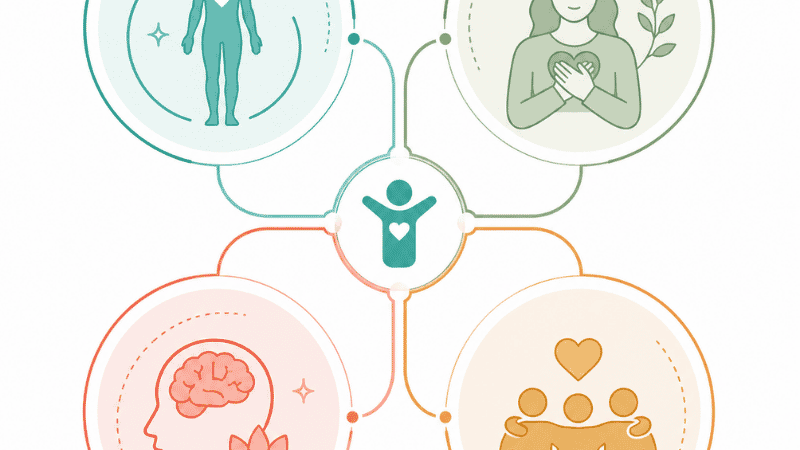
In practical terms, this means sexual health encompasses:
- Understanding how your body functions and changes across time
- Being free from sexually transmitted infections, or managing them appropriately if present
- Having access to effective contraception aligned with your reproductive goals
- Being able to engage in sexual activity without pain or significant physical difficulty
- Feeling equipped to communicate openly with partners about health, needs, and boundaries
- Having the emotional and psychological resources to navigate intimacy in ways that feel safe and fulfilling
Sexual health is not a fixed destination. It is a dynamic state that shifts with age, health status, relationships, stress levels, hormonal changes, and life circumstances. Taking care of it is an ongoing practice, not a one-time achievement.
Why Sexual Health Matters for Your Overall Well-being
Sexual health does not exist in isolation from the rest of your health — it is woven into it in ways that are increasingly well-documented.
A systematic review published in the Bulletin of the World Health Organization in 2024, analyzing 63 studies across diverse populations, found consistent strong associations between positive sexual health indicators and lower rates of depression and anxiety, higher quality of life, and greater life satisfaction. These associations held across age groups, genders, and relationship structures.
The mechanisms are multiple and interconnected:
Sexual health reflects cardiovascular health. Erectile function in men, for example, is a direct indicator of vascular health — difficulties in this area frequently precede cardiovascular diagnoses by years, making them a meaningful early signal worth investigating rather than accepting.
Sexual health is tied to hormonal health. Estrogen, testosterone, thyroid hormones, and cortisol all interact with sexual function. Changes in libido, physical comfort, or arousal are often among the first noticeable effects of hormonal shifts — including those related to stress, thyroid dysfunction, perimenopause, or low testosterone.
Sexual health affects mental health, and vice versa. Depression reduces libido and sexual satisfaction. Anxiety contributes to performance difficulties and pain during sex. Chronic stress suppresses the hormonal pathways that support desire. These relationships are bidirectional — addressing sexual health concerns often improves mental health outcomes, and vice versa.
Sexual health is central to relationship well-being. Research consistently shows that couples who communicate openly about sexual health report greater relationship satisfaction, emotional intimacy, and overall connection. Conversely, unaddressed sexual health concerns are among the most commonly cited contributors to relationship dissatisfaction.
Taking sexual health seriously is not a peripheral concern — it is a legitimate dimension of caring for yourself comprehensively.
Sexual Health for Men: What Changes and What to Watch
Men’s sexual health encompasses physical function, hormonal balance, STI prevention, and the emotional dimensions of intimacy — and changes predictably across different decades of life.
Testosterone levels decline gradually after age 30 at approximately 1–2% per year. Most men notice meaningful changes in their 40s: shifts in arousal, longer refractory periods, and sometimes changes in desire. These are normal — what matters is distinguishing gradual age-related variation from symptoms that indicate an underlying, treatable condition.
Erectile difficulties in men under 50 are increasingly recognized as potential early indicators of cardiovascular disease, making them worth investigating rather than dismissing as psychological. Premature ejaculation affects an estimated 20–30% of men at some point and responds well to evidence-based behavioral and clinical interventions.
Regular STI testing, attention to cardiovascular health, adequate sleep, and stress management are the foundational components of men’s sexual health maintenance — none of which require dramatic lifestyle changes, but all of which produce meaningful results with consistent attention.
→ For a complete guide to men’s sexual health across all life stages, see: Men’s Sexual Health: A Complete Guide for Adults
Sexual Health for Women: Hormones, Cycles, and Life Stages
Women’s sexual health is shaped by a hormonal landscape that changes cyclically throughout the month and significantly across decades — from the reproductive years through perimenopause and beyond.
Estrogen and progesterone govern the menstrual cycle, vaginal tissue health, libido, and physical comfort during sexual activity. When estrogen declines — whether from hormonal contraception, breastfeeding, perimenopause, or menopause — the effects can include vaginal dryness, reduced desire, and changes in the physical comfort of sexual activity.
Women’s reproductive health encompasses far more than pregnancy and contraception. It includes understanding your own cycle and what changes from your baseline are worth attention, recognizing the symptoms of conditions including endometriosis and polycystic ovary syndrome (PCOS) that frequently go undiagnosed for years, and maintaining the routine cervical screening that detects HPV-related cervical changes before they can progress.
Low libido is the most commonly reported female sexual health concern — affecting an estimated 10–15% of women — and is almost always multifactorial, involving hormonal, psychological, relational, and lifestyle contributors that benefit from systematic rather than generic approaches.
→ See: Women’s Reproductive Health: A Complete Guide for Adults → See: Low Libido in Women: Causes, Hormones, and Evidence-Based Solutions
Common Sexual Health Concerns: What Is Normal and What Warrants Attention
Many of the most common sexual health concerns are managed privately for months or years before being raised with a healthcare provider — not because they are not significant, but because they feel too sensitive, too minor, or too embarrassing to mention. The clinical reality is that these conversations happen in medical practice every day, and most concerns have identifiable causes and effective treatments.
Pain during sex (dyspareunia) affects an estimated 10–20% of women and is one of the most consistently underreported concerns. It has multiple identifiable causes — including vaginal dryness, vaginismus, endometriosis, and pelvic floor dysfunction — most of which respond well to appropriate treatment.
Vaginal dryness affects women of all ages, not only those in menopause. Hormonal contraception, breastfeeding, antidepressants, and stress are all common contributors. Vaginal moisturizers and lubricants are effective first-line approaches; low-dose vaginal estrogen addresses the hormonal cause in perimenopausal and postmenopausal women.
Pelvic floor dysfunction — whether weakness or excessive tension — affects both women and men and contributes to urinary incontinence, pain during sex, and in men, erectile and ejaculatory difficulties. Pelvic floor physical therapy has a strong evidence base and produces significant improvement in most cases.
→ See: Pain During Sex: Causes, When to Seek Help, and Evidence-Based Solutions → See: Vaginal Dryness: Causes, Natural Remedies, and When to Seek Treatment → See: Weak Pelvic Floor Symptoms: Signs, Causes and Exercises
STI Prevention and Testing: The Foundation of Sexual Health Protection
Sexually transmitted infections are common — more common than most people realize. Chlamydia alone accounts for over 1.6 million reported cases per year in the United States, with the actual number estimated considerably higher. HPV is present in the majority of sexually active adults at some point. Many STIs produce no symptoms, meaning that feeling well is not a reliable indicator of negative status.
Routine STI testing is a standard component of adult preventive healthcare — not a response reserved for high-risk situations or symptomatic presentations. The CDC recommends annual chlamydia and gonorrhea screening for all sexually active women under 25, HIV testing for everyone aged 13–64 at least once, and more frequent testing for individuals with multiple partners or specific risk factors.
HPV — the most common sexually transmitted infection overall — is detected through routine cervical screening in women (Pap smear and HPV co-test) rather than a blood test. High-risk strains of HPV are responsible for approximately 70% of cervical cancers worldwide, making cervical screening one of the most impactful preventive health interventions available.
Chlamydia, the most commonly reported bacterial STI, is frequently asymptomatic in both women and men and fully curable with a single course of antibiotics when detected. Left untreated, it can cause pelvic inflammatory disease and affect fertility — consequences that are entirely preventable through timely testing and treatment.
→ See: STI Testing: When to Get Tested and What to Expect → See: HPV Symptoms in Women and Men: A Complete Guide → See: Chlamydia Symptoms, Testing, and Treatment: What You Need to Know
Birth Control and Contraception: Informed Choice as a Sexual Health Foundation
Contraception is one of the most consequential ongoing health decisions sexually active adults make — affecting hormones, cycle regularity, libido, vaginal health, and long-term reproductive options. Yet it is frequently approached as a one-time decision rather than one that can and should be revisited as circumstances change.
The most effective reversible contraceptive methods — the hormonal and copper IUD, and the implant — have typical use effectiveness rates above 99% and function independently of daily user behavior. Hormonal methods produce side effects in a significant subset of users, including mood changes, reduced libido, and vaginal dryness — effects that are worth raising with a prescribing provider and that often resolve with a change in method or formulation.
No method other than male and female condoms provides meaningful STI protection. For individuals who are not in mutually monogamous tested relationships, combining a highly effective contraceptive method with consistent condom use — “dual protection” — is the recommended clinical approach.
→ See: Birth Control Methods: A Complete Guide to Options, Effectiveness, and Side Effects
Sexual Health in Relationships: Communication as Care
Sexual health does not exist in isolation from relationship context. Research consistently demonstrates that couples who communicate openly about sexual health — including STI testing history, contraceptive preferences, changes in desire or physical comfort, and any concerns that arise — report better sexual outcomes and greater relationship satisfaction.
These conversations are not easy by default. Many adults find sexual health topics more difficult to discuss with partners than with healthcare providers, particularly when a topic has been avoided for some time. The skills involved — choosing the right moment, using first-person language, listening to understand rather than to respond, and setting and receiving boundaries clearly — are learnable and practiced.
Open communication about sexual health is not a mark of distrust or dysfunction. It is a component of the mutual care that characterizes healthy intimate relationships, and one of the most consistently supported predictors of sexual and relational well-being in the research literature.
→ See: How to Communicate in a Relationship: A Practical Guide to Talking Openly and Building Trust
How to Maintain Sexual Health: Evidence-Based Priorities
The following are the most consistently supported practices for maintaining sexual health across adult life — none dramatic, all meaningful when applied with consistency.
Attend routine sexual health screenings. Cervical screening for women, annual STI testing for sexually active adults with new or multiple partners, and HIV testing as a baseline for everyone. These are not crisis responses — they are preventive care.
Prioritize cardiovascular health. Erectile function in men and vaginal tissue health in women both depend on healthy blood flow. Regular aerobic exercise, not smoking, and managing blood pressure and cholesterol protect sexual health as directly as they protect heart health.
Take sleep seriously as a hormonal health issue. Testosterone production occurs primarily during deep sleep. Chronic sleep deprivation measurably reduces testosterone levels, increases cortisol, and suppresses sexual desire. Seven or more hours of consistent, quality sleep is a sexual health investment.
Address stress as a physiological concern. Chronic stress elevates cortisol, which directly suppresses the hormonal signaling involved in sexual desire and function. Stress management is not optional self-care — it is a biological necessity with measurable hormonal consequences.
Communicate openly with healthcare providers. The most significant barrier to good sexual health care is not access to treatment — it is the reluctance to raise concerns. Healthcare providers have these conversations every day. If your current provider does not make this easy, finding one who does is a legitimate and worthwhile investment.
Communicate openly with partners. Needs, concerns, preferences, and health status all change over time. Keeping the conversation current — rather than assuming — maintains the relational foundation that sexual health depends on.
When to Seek Professional Support
The following are signals that a clinical conversation is appropriate rather than continued self-management:
- Any pain during sexual activity that is new, persistent, or worsening
- A significant change in sexual desire lasting more than four to six weeks without an obvious explanation
- Unusual genital symptoms — discharge, sores, burning during urination, or unexplained lumps
- Concerns about STI exposure, even without symptoms
- Menstrual irregularity, particularly if accompanied by pelvic pain or other symptoms
- Any postmenopausal vaginal bleeding
- Erectile difficulties or ejaculatory concerns causing persistent distress
- Psychological distress — including anxiety, depression, or past trauma — that is affecting sexual or relational well-being
A family physician, gynecologist, urologist, or sexual health specialist can address any of these concerns. These conversations are routine in clinical practice. The discomfort of raising them is almost always temporary; the benefit of addressing them is lasting.

A Note on This Platform
PureInti exists to provide the sexual health education that most people never received — science-based, judgment-free, and written with the understanding that these topics matter deeply to quality of life even when they are difficult to discuss.
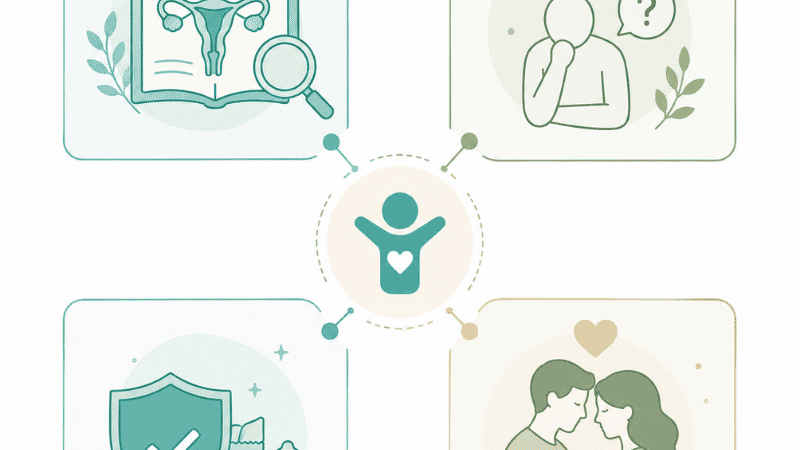
The articles on this platform are organized around four core areas that together constitute a comprehensive approach to adult sexual health:
Sexual Health Basics — foundational knowledge about how the body works, what changes across life stages, and what constitutes good sexual health for men and women.
Common Concerns — medically accurate, practically useful guides to the sexual health concerns that most affect adults in the 18–40 age range, including low libido, vaginal dryness, pain during sex, and pelvic floor health.
Prevention and Protection — evidence-based guidance on STI prevention and testing, contraception, HPV, chlamydia, and the practical decisions that protect long-term sexual health.
Relationship and Intimacy Health — research-supported guidance on communication, consent, and the relational dimensions of sexual well-being.
Every article is written to be accurate, accessible, and free of the judgment that has historically made sexual health topics difficult to approach. You deserve that standard of information. This is where it lives.
References
- World Health Organization. Sexual Health. https://www.who.int/health-topics/sexual-health
- Bulletin of the World Health Organization. Sexual health and well-being: a systematic review. 2024. https://cdn.who.int/media/docs/default-source/bulletin/online-first/blt.24.291565.pdf
- Bulletin of the World Health Organization. Sexual health and well-being across the life course: call for papers. 2024;102(1):77–78. https://pmc.ncbi.nlm.nih.gov/articles/PMC10680117/
- Centers for Disease Control and Prevention. Sexually Transmitted Infections Surveillance, 2022. https://www.cdc.gov/std/statistics/2022/default.htm
- Journal of Education and Health Promotion. Communication and sexual skills in marital functioning. 2024;13:202.
Explore All Sexual Health Topics on PureInti
Sexual Health Basics
- Men’s Sexual Health: A Complete Guide for Adults
- Women’s Reproductive Health: A Complete Guide for Adults
- Weak Pelvic Floor Symptoms: Signs, Causes, and Exercises
Common Concerns
- Low Libido in Women: Causes, Hormones, and Evidence-Based Solutions
- Vaginal Dryness: Causes, Natural Remedies, and When to Seek Treatment
- Pain During Sex: Causes, When to Seek Help, and Evidence-Based Solutions
Prevention and Protection
- STI Testing: When to Get Tested and What to Expect
- HPV Symptoms in Women and Men: A Complete Guide
- Birth Control Methods: A Complete Guide to Options and Side Effects
- Chlamydia Symptoms, Testing, and Treatment: What You Need to Know