

You have probably been told, at some point, which birth control method to use. Perhaps a doctor prescribed the pill at your first gynecological appointment and it has simply been the default ever since. Or perhaps you have been quietly dealing with side effects — mood changes, reduced libido, irregular bleeding — and wondering whether what you are experiencing is normal, whether there are other options, and who to ask.
For many adults, contraception is one of the most consequential healthcare decisions they make — affecting hormones, mood, libido, cycle regularity, and long-term health — yet it is often approached as a one-time decision rather than an ongoing one that can and should be revisited as life circumstances change.
This guide covers the full range of birth control methods available to adults in 2025, their effectiveness rates, their most clinically documented side effects, and the factors that help distinguish which method is most appropriate for different health profiles and life circumstances. It is not a recommendation — it is the information you need to have an informed conversation with your healthcare provider.
Key Takeaways
- According to the CDC’s 2024 contraceptive guidance, no single birth control method is ideal for every person. The most important factors in choosing a method are effectiveness, safety relative to individual health history, side effects, reversibility, and ease of use.
- Effectiveness rates vary significantly between “perfect use” and “typical use.” Most method failures occur with typical use — meaning real-world use with occasional human error — rather than method failure itself.
- Birth control side effects are real, documented, and deserve to be taken seriously. Mood changes, reduced libido, headaches, and changes in vaginal lubrication are among the most commonly reported effects of hormonal contraception.
- Non-hormonal birth control options have expanded considerably. The copper IUD is the most effective non-hormonal method, with a failure rate of less than 1% and no hormonal side effects.
- Most birth control methods do not protect against STIs. Condoms — male or female — remain the only contraceptive methods that provide meaningful STI protection.
Understanding Effectiveness: Perfect Use vs Typical Use
Before comparing methods, it is essential to understand how effectiveness is measured — because the numbers are frequently misunderstood.
Perfect use refers to the method being used correctly and consistently every time, exactly as directed. Typical use reflects real-world conditions, accounting for human error — missed pills, inconsistent timing, or incorrect technique.
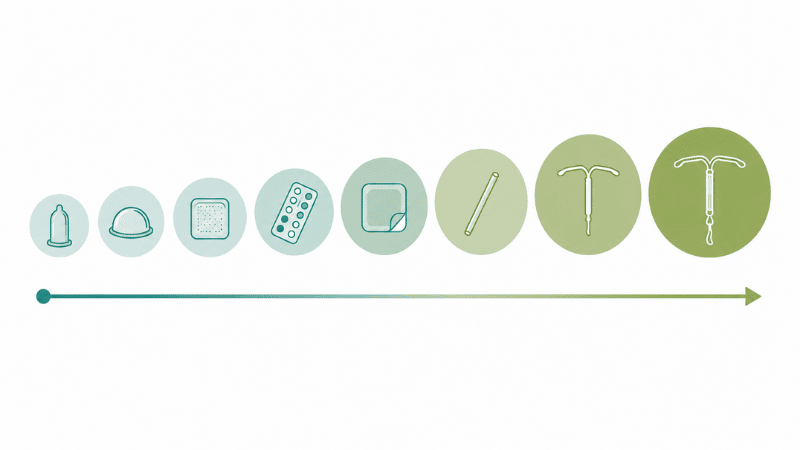
The gap between these two figures is significant for user-dependent methods and negligible for provider-administered ones. An implant or IUD functions regardless of daily user behavior, which is why long-acting reversible contraceptives (LARCs) have typical use effectiveness rates nearly identical to their perfect use rates.
The figures below use typical use unless otherwise specified, as these better reflect real-world outcomes.
Hormonal Birth Control Methods
Hormonal contraceptives work by using synthetic versions of estrogen, progestogen, or both to prevent ovulation, thicken cervical mucus to impede sperm, or alter the uterine lining to prevent implantation.
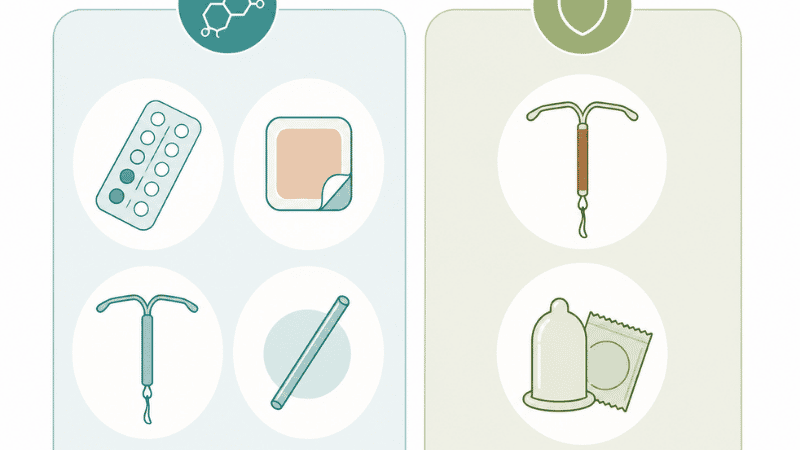
Combined Oral Contraceptive Pill
The most widely used hormonal method worldwide. Combined pills contain both synthetic estrogen and progestogen, taken daily for 21 or 28 days in a cycle.
Effectiveness: 91% with typical use; 99% with perfect use.
Non-contraceptive benefits: Reduced menstrual pain and flow, improvement in acne, lower risk of ovarian and endometrial cancers, management of endometriosis symptoms, and reduction of PMS symptoms.
Common birth control side effects: Nausea (particularly in the first one to three months), headaches, breast tenderness, spotting between periods, and mood changes. Reduced sexual desire and vaginal dryness are reported by a clinically significant subset of users — an effect linked to the pill’s reduction of free testosterone and increase in sex hormone-binding globulin (SHBG).
Important considerations: The combined pill is contraindicated for women with a history of blood clots, stroke, certain types of migraine with aura, or uncontrolled high blood pressure, and for smokers over 35. It does not protect against STIs and must be taken at approximately the same time each day to maintain effectiveness.
Progestogen-Only Pill (Mini-Pill)
Contains only progestogen and is taken daily without a hormone-free interval. It is often recommended for women who cannot take estrogen — including breastfeeding women and those with estrogen-related contraindications.
Effectiveness: 91% with typical use; 99% with perfect use. Some formulations require a strict three-hour daily timing window, making consistency critical.
Common birth control side effects: Irregular bleeding or spotting is the most frequently reported effect and is the primary reason for discontinuation. Some women experience no bleeding at all, which some find welcome and others find disconcerting.
Hormonal IUD (Intrauterine Device)
A small T-shaped device inserted into the uterus by a healthcare provider, releasing a low continuous dose of progestogen locally. Several brands are available with durations ranging from three to eight years.
Effectiveness: Greater than 99% — one of the most effective methods available.
Common birth control side effects: Irregular spotting in the first three to six months following insertion, which typically resolves. Most users experience significantly lighter periods or no periods at all after the first year. Insertion can be uncomfortable or painful, particularly for women who have not given birth.
Advantages: Long-acting, fully reversible, highly effective, and — because the hormone is released locally — associated with lower systemic hormonal side effects than oral methods.
Hormonal Implant
A small flexible rod inserted under the skin of the upper arm by a healthcare provider, releasing progestogen continuously for up to three years.
Effectiveness: Greater than 99% — among the highest of all available methods.
Common birth control side effects: Irregular, unpredictable bleeding is the most commonly reported effect and the primary reason for early removal. Some users experience no bleeding; others experience frequent spotting. Mood changes and headaches are reported by some users.
Advantages: Fully reversible, long-acting, and highly effective with no daily user action required.
Hormonal Injection (Depo-Provera)
An injection of progestogen administered every three months by a healthcare provider.
Effectiveness: 94% with typical use.
Common birth control side effects: Irregular bleeding, weight changes, and mood changes are the most reported effects. A notable consideration is the delay in return of fertility after discontinuation — it can take six to twelve months or longer for menstrual cycles and fertility to fully normalize after stopping the injection.
Considerations: Not ideal for women who anticipate wanting to conceive within one to two years of discontinuation.
Contraceptive Patch and Vaginal Ring
Both deliver combined estrogen and progestogen hormones transdermally (patch) or locally (ring). The patch is changed weekly for three weeks, followed by a patch-free week. The ring is inserted for three weeks and removed for one week.
Effectiveness: 91% with typical use; comparable to the combined pill.
Birth control side effects: Similar profile to the combined pill — nausea, mood changes, breast tenderness — with the addition of local skin irritation (patch) or vaginal discomfort (ring) in some users.
Birth Control Without Hormones
Non-hormonal birth control has expanded significantly as options have improved. This category is appropriate for women who cannot or prefer not to use hormonal methods.
Copper IUD
A non-hormonal T-shaped device inserted into the uterus. The copper creates an environment that is toxic to sperm, preventing fertilization. It is also the most effective form of emergency contraception when inserted within five days of unprotected sex.
Effectiveness: Greater than 99% — the most effective non-hormonal method available, with effectiveness comparable to surgical sterilization.
Common side effects: Heavier menstrual periods and increased cramping, particularly in the first three to six months. These effects are the primary reason for early removal. For women who already experience heavy or painful periods, this may not be the optimal choice.
Advantages: Lasts up to ten years, fully reversible at any time, no hormonal effects on libido, mood, or vaginal lubrication, and immediately effective upon insertion.
Barrier Methods
Barrier methods physically prevent sperm from reaching the egg. They include male condoms, female (internal) condoms, diaphragms, cervical caps, and contraceptive sponges.
Male condoms: 85% effective with typical use; 98% with perfect use. The only contraceptive method that also provides significant protection against STIs. Latex-free options are available for those with latex sensitivity.
Female (internal) condoms: 79% effective with typical use; 95% with perfect use. Provide STI protection and can be inserted up to eight hours before sex, offering more user control than male condoms.
Diaphragm and cervical cap: Must be used with spermicide and inserted before sex. Effectiveness ranges from 71% to 88% with typical use depending on the method and whether the user has given birth. Require fitting by a healthcare provider.
Fertility Awareness-Based Methods
These methods involve tracking the menstrual cycle, basal body temperature, cervical mucus, or a combination of these indicators to identify fertile days and avoid unprotected sex during those windows.
Effectiveness: 77–98% with typical use, depending on the specific method and the consistency of tracking. Effectiveness is highly dependent on user commitment and regularity of cycles.
Advantages: No hormones, no devices, no ongoing cost. Suitable for couples whose religious or personal beliefs preclude other methods.
Limitations: Require significant daily attention, are less reliable with irregular cycles, and provide no STI protection.
Birth Control Methods for Men
Contraceptive responsibility has historically fallen disproportionately on women. Male birth control options currently available are limited but meaningful.
Male condoms remain the most effective and widely available male-controlled contraceptive method, with the added benefit of STI protection.
Vasectomy is a surgical procedure that permanently prevents sperm from being released during ejaculation. It is greater than 99% effective and considered permanent — reversal is possible but not guaranteed. It is appropriate for men who are confident they do not want future biological children.
Withdrawal (pull-out method) is 78% effective with typical use — significantly less effective than most other methods, but meaningfully better than no contraception. It requires precise timing and awareness of pre-ejaculate, which may contain sperm.
Research into additional male contraceptive methods — including hormonal options and non-hormonal compounds — is ongoing, though none have yet received regulatory approval as of 2025.
Most Effective Birth Control: A Summary by Category
| Method | Typical Use Effectiveness | Hormonal | Reversible |
|---|---|---|---|
| Implant | >99% | Yes | Yes |
| Hormonal IUD | >99% | Yes | Yes |
| Copper IUD | >99% | No | Yes |
| Vasectomy | >99% | No | Permanent |
| Tubal ligation | >99% | No | Permanent |
| Injection | 94% | Yes | Yes (delayed) |
| Combined pill | 91% | Yes | Yes |
| Mini-pill | 91% | Yes | Yes |
| Patch/Ring | 91% | Yes | Yes |
| Male condom | 85% | No | N/A |
| Female condom | 79% | No | N/A |
| Withdrawal | 78% | No | N/A |
| Fertility awareness | 77–98% | No | N/A |
How to Choose the Right Birth Control Method
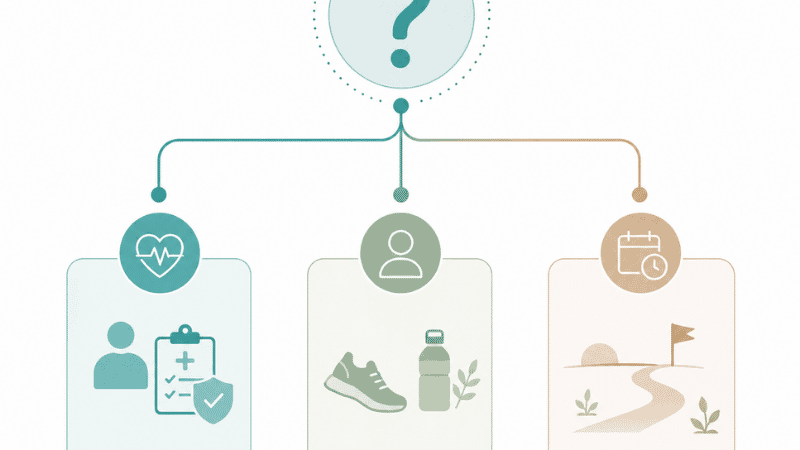
The CDC’s 2024 contraceptive guidance identifies several key factors in method selection. No single method is universally ideal — the best choice depends on the intersection of your health history, lifestyle, relationship context, and reproductive plans.
Questions worth considering:
- How important is maximum effectiveness to you, versus the ability to control the method yourself?
- Do you have health conditions that contraindicate estrogen — such as a history of blood clots, certain migraines, or cardiovascular risk factors?
- Are you or might you be breastfeeding?
- Do you need STI protection in addition to pregnancy prevention?
- How do you typically manage daily tasks — would remembering a daily pill fit naturally into your routine, or would a long-acting method be more reliable for you?
- What is your timeline for future pregnancy?
- How have you responded to hormonal contraceptives in the past?
If you’ve tried a method and experienced side effects: This is a legitimate clinical reason to switch methods or formulations. Birth control side effects that affect quality of life — including mood changes, reduced libido, headaches, or changes in vaginal lubrication — are worth raising with your provider. There is almost always an alternative approach worth considering.
If you only have 10 minutes: Make a note of the specific side effects you have been experiencing and when they started. This information is the most useful thing you can bring to a conversation with your provider about adjusting or switching your method.
Warning Signs: When to Seek Medical Attention
The following warrant prompt clinical evaluation rather than waiting for your next scheduled appointment:
- Severe abdominal pain, which may indicate a rare IUD complication
- Sudden severe headache, vision changes, or chest pain while using combined hormonal contraceptives — seek urgent care immediately as these can indicate serious cardiovascular events
- Signs of pregnancy despite contraceptive use
- Irregular bleeding that is heavy, prolonged, or accompanied by pain
- Any symptoms of infection following IUD insertion, including fever, chills, or pelvic pain
- Significant mood changes, including depression, that developed or worsened after starting a hormonal method
Frequently Asked Questions
What are the most common birth control side effects? The most commonly reported side effects of hormonal birth control include irregular bleeding or spotting, nausea, headaches, breast tenderness, and mood changes. A clinically significant subset of users also report reduced libido and vaginal dryness — effects linked to hormonal changes in testosterone availability and vaginal tissue. These side effects vary considerably between methods and formulations, and switching to a different progestogen type or delivery method often resolves them.
What is the most effective birth control method? The implant, hormonal IUD, and copper IUD all have typical use effectiveness rates above 99% — comparable to surgical sterilization. These long-acting reversible contraceptives (LARCs) are considered the most effective reversible options available because they function independently of daily user behavior.
What birth control is available without hormones? Non-hormonal options include the copper IUD (the most effective non-hormonal method), male and female condoms, diaphragm, cervical cap, contraceptive sponge, and fertility awareness-based methods. The copper IUD is particularly appropriate for women who need highly effective contraception without hormonal effects on mood, libido, or vaginal lubrication.
Does birth control affect libido? For some users, yes. Combined oral contraceptives increase sex hormone-binding globulin (SHBG), which reduces the availability of free testosterone — a hormone that contributes to sexual desire in both women and men. This effect varies between individuals and between formulations. If reduced libido developed after starting hormonal contraception, discussing alternative methods or formulations with your provider is clinically appropriate.
Is birth control safe long-term? Most contraceptive methods have been studied extensively and are considered safe for long-term use in healthy adults without contraindications. The combined pill is associated with a small increased risk of blood clots and, in certain populations, cardiovascular events — risks that are why a thorough health history review is part of appropriate prescribing. Fertility returns promptly after stopping most methods, with the exception of the injectable contraceptive, which may delay return of fertility by six to twelve months.
Do I need birth control if I am not sexually active? Contraception is not necessary for pregnancy prevention if you are not sexually active. However, some hormonal methods are prescribed for non-contraceptive reasons — including management of endometriosis, PCOS, painful or heavy periods, or acne — regardless of sexual activity status.
What birth control protects against STIs? Only condoms — both male and female — provide meaningful protection against sexually transmitted infections. All other contraceptive methods prevent pregnancy but do not protect against STIs. For people who are not in a mutually monogamous, tested relationship, combining a highly effective contraceptive method with consistent condom use (“dual protection”) is the recommended approach.
The Bottom Line
Birth control is not a one-time decision — it is an ongoing aspect of reproductive health that can and should be revisited as your health, relationship, and life circumstances change. The method you started at 20 may not be the best choice at 30 or 35.
Birth control side effects that are affecting your quality of life — including mood, libido, or physical comfort — deserve clinical attention. There is a wide range of methods available, and finding the one that fits your health profile and your life is worth the conversation.
Your contraceptive choices are a legitimate and important component of your overall health. You deserve accurate information to make them well.
References
- Centers for Disease Control and Prevention. Contraception and Birth Control Methods. Updated 2024. https://www.cdc.gov/contraception/about/index.html
- Centers for Disease Control and Prevention. U.S. Selected Practice Recommendations for Contraceptive Use, 2024. https://www.cdc.gov/contraception/hcp/usspr/index.html
- American College of Obstetricians and Gynecologists. Combined Hormonal Birth Control: Pill, Patch, and Ring. Updated 2025. https://www.acog.org
- Cleveland Clinic. Birth Control Pills: Types, Side Effects and Effectiveness. Updated July 2023. https://my.clevelandclinic.org/health/treatments/3977-birth-control-the-pill
- Office on Women’s Health, U.S. Department of Health & Human Services. Birth Control Methods. Updated 2025. https://www.womenshealth.gov/a-z-topics/birth-control-methods