

Gonorrhea and chlamydia are frequently mentioned together — and for good reason. They are the two most commonly reported bacterial sexually transmitted infections in the United States. They share several important characteristics: both are transmitted through sexual contact, both are frequently asymptomatic, both can cause serious complications if left untreated, and both are fully curable with antibiotics.
But they are not the same infection, and understanding the differences matters — for recognizing symptoms, for knowing which tests to request, and for understanding why treatment protocols differ between them.
If you have recently tested positive for one or both, or if you are trying to understand what your symptoms might mean, this guide provides the medically accurate, judgment-free information you need to take the right next steps.
Key Takeaways
- Gonorrhea and chlamydia are the two most commonly reported bacterial STIs in the United States. In 2022, the CDC recorded over 1.6 million chlamydia cases and 648,000 gonorrhea cases — and both figures are likely underestimates due to underreporting.
- Both infections are frequently asymptomatic. Chlamydia produces no symptoms in approximately 70–95% of women and 50% of men. Gonorrhea produces no symptoms in a significant proportion of women, though it is more likely to cause noticeable symptoms in men.
- Co-infection with both gonorrhea and chlamydia occurs in an estimated 10–40% of cases. Healthcare providers often test and treat for both simultaneously.
- Gonorrhea tends to progress more rapidly and has significantly higher antibiotic resistance than chlamydia — making prompt treatment and follow-up more critical.
- Both infections are fully curable with appropriate antibiotic treatment. Left untreated, both can cause pelvic inflammatory disease, ectopic pregnancy risk, and infertility.
What Is Gonorrhea
Gonorrhea is a bacterial STI caused by Neisseria gonorrhoeae. It is transmitted through vaginal, anal, and oral sexual contact and can infect the urethra, cervix, rectum, throat, and — in rare cases — the eyes. It cannot be transmitted through casual contact.
Gonorrhea rates in the United States have increased by 98% between 2009 and 2022, according to research published in the Annals of Family Medicine, making it one of the fastest-growing STIs in the country. The increase is partly attributed to rising antibiotic resistance, which has made treatment more complex and reinfection more common.
What Is Chlamydia
Chlamydia is a bacterial STI caused by Chlamydia trachomatis. It is the most commonly reported STI in the United States — with over 1.6 million cases reported annually — and is transmitted through the same routes as gonorrhea: vaginal, anal, and oral sex.
Unlike gonorrhea, chlamydia has not developed the same pattern of antibiotic resistance, making it more straightforwardly treatable. However, its exceptionally high rate of asymptomatic infection means it spreads easily and often goes undetected for extended periods.
Gonorrhea vs Chlamydia: Key Differences
| Gonorrhea | Chlamydia | |
|---|---|---|
| Causative bacteria | Neisseria gonorrhoeae | Chlamydia trachomatis |
| Asymptomatic rate (women) | High — many cases produce no symptoms | Very high — 70–95% asymptomatic |
| Asymptomatic rate (men) | Lower — symptoms more commonly present | ~50% asymptomatic |
| Symptom onset | 2–5 days after exposure (when present) | 1–3 weeks after exposure (when present) |
| Most common symptom | Discharge (often yellow-green), burning urination | Mild discharge, burning urination |
| Antibiotic resistance | Significant and increasing | Rare |
| Standard treatment | Single IM injection of ceftriaxone | Azithromycin (single dose) or doxycycline (7 days) |
| Speed of complications | Can develop within weeks if untreated | May take months to years untreated |
| Co-infection rate | 10–40% co-infected with chlamydia | 10–40% co-infected with gonorrhea |
Gonorrhea Symptoms: What to Look For
Gonorrhea is more likely to produce noticeable symptoms than chlamydia — particularly in men — but still presents asymptomatically in a significant proportion of people, especially women.
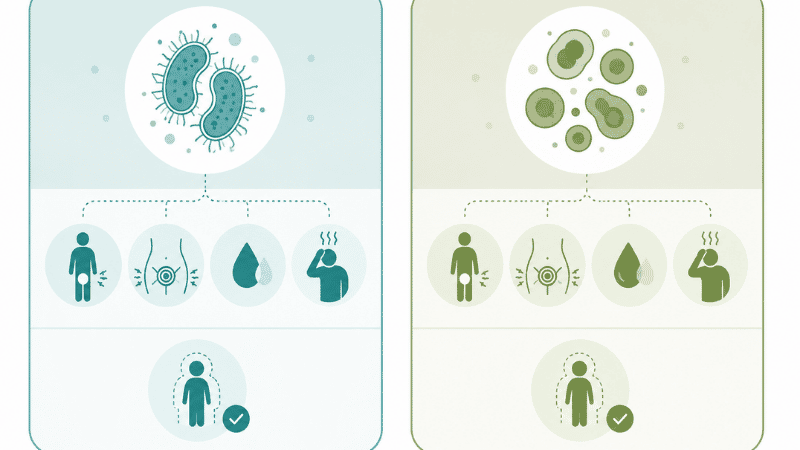
Gonorrhea Symptoms in Women
Most women with gonorrhea experience no noticeable symptoms. When symptoms do occur, they may include:
- Increased or unusual vaginal discharge — often yellow or green in color
- Burning or pain during urination
- Pelvic or lower abdominal pain
- Spotting between periods or after sexual activity
- Rectal discharge or discomfort (in rectal infection)
Because these symptoms overlap substantially with other conditions including bacterial vaginosis, urinary tract infections, and chlamydia, laboratory testing is the only reliable means of diagnosis.
Gonorrhea Symptoms in Men
Men are more likely than women to notice gonorrhea symptoms. When present, they typically appear two to five days after exposure and include:
- Discharge from the penis — often white, yellow, or green
- Burning or pain during urination
- Swollen or painful testicles
- Rectal pain, discharge, or bleeding (in rectal infection)
Gonorrhea Symptoms in the Throat
Pharyngeal (throat) gonorrhea — contracted through oral sexual contact — is frequently asymptomatic. When symptoms occur, they may include a sore throat or mild discomfort. Because throat infections often produce no symptoms and are not detected through standard urine testing, site-specific throat swabs are necessary for diagnosis in people who have had oral sexual contact.
How Long Can You Have Gonorrhea Without Knowing
Like chlamydia, gonorrhea can be carried without awareness for an extended period — indefinitely in asymptomatic cases, where there is no symptom to prompt testing.
The window period — the time between exposure and reliable detection by testing — is typically two to six days for gonorrhea, shorter than for chlamydia. This means a test performed very shortly after a potential exposure may return a false negative. If there is a concern about recent exposure, a follow-up test after the window period has elapsed is advisable.
In practice, many people discover a gonorrhea infection only through routine STI screening, through partner notification, or incidentally when being tested for another condition. The absence of symptoms is not a reliable indicator of negative status — it is simply the absence of a reason to notice the infection.
How Long Does Gonorrhea Last
With treatment: Gonorrhea clears within days of completing appropriate antibiotic treatment. The CDC recommends a single intramuscular injection of ceftriaxone 500 mg as the standard treatment for uncomplicated gonorrhea. Symptoms, when present, typically begin to improve within 24–48 hours of treatment.
Without treatment: Gonorrhea can persist indefinitely and tends to progress more rapidly than chlamydia. Unlike chlamydia, which can sometimes clear spontaneously, gonorrhea is less reliably self-resolving and produces serious complications more quickly — in some cases within weeks of infection rather than the months or years associated with untreated chlamydia.
A critical consideration: gonorrhea has developed significant antibiotic resistance over recent decades. The CDC has updated treatment guidelines multiple times in response to emerging resistance. This makes completing a full course of treatment and attending follow-up testing more important for gonorrhea than for most other bacterial STIs.
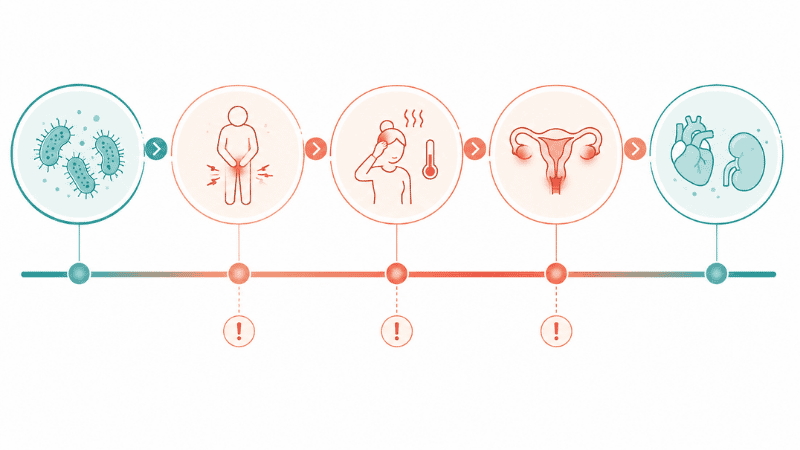
What Happens If Gonorrhea Is Left Untreated
The consequences of untreated gonorrhea share significant overlap with those of untreated chlamydia — but tend to develop more rapidly and carry additional risks.
In women, untreated gonorrhea can ascend to the upper reproductive tract and cause pelvic inflammatory disease (PID), with the same potential consequences as PID from chlamydia: chronic pelvic pain, ectopic pregnancy risk, and infertility from fallopian tube scarring. Gonorrhea-related PID may develop within weeks of infection in some cases.
In men, untreated gonorrhea can cause epididymitis — inflammation of the epididymis — producing testicular pain and, in severe cases, affecting fertility.
In both sexes, untreated gonorrhea can spread beyond the reproductive tract to cause disseminated gonococcal infection (DGI) — a systemic infection producing joint pain, skin lesions, and in rare cases meningitis or endocarditis. DGI is uncommon but serious, and warrants urgent medical attention.
During pregnancy, untreated gonorrhea can be transmitted to the newborn during delivery, causing neonatal eye infection (ophthalmia neonatorum) and, if untreated in the infant, potential blindness. This is why gonorrhea testing is a standard component of prenatal care.
The increased risk of HIV transmission associated with gonorrhea is also clinically significant. Gonorrhea causes genital inflammation that increases both the susceptibility to and the transmissibility of HIV — meaning that treating gonorrhea promptly is also relevant to HIV prevention.
Chlamydia vs Gonorrhea: Can You Have Both at the Same Time
Yes — and this is more common than most people realize. Co-infection with both chlamydia and gonorrhea occurs in an estimated 10–40% of cases. This is why healthcare providers typically test for both infections simultaneously when either is suspected, and may treat for both even when only one is initially confirmed.
If you test positive for gonorrhea, ensure that your provider also tests you for chlamydia — and vice versa. The CDC recommends treating for chlamydia concurrently with gonorrhea treatment when chlamydial infection has not been definitively excluded.
Treatment: What Is the Difference
Gonorrhea treatment — The current CDC recommendation for uncomplicated gonorrhea is a single intramuscular injection of ceftriaxone 500 mg. Oral antibiotics that were previously effective against gonorrhea — including ciprofloxacin and earlier generations of cephalosporins — are no longer recommended due to widespread resistance.
Chlamydia treatment — Chlamydia is treated with oral antibiotics: either a single dose of azithromycin or a seven-day course of doxycycline. Both are highly effective.
For co-infection, the CDC recommends treating for both simultaneously — ceftriaxone for gonorrhea plus doxycycline for chlamydia.
After treatment for either infection: Avoid unprotected sexual contact until treatment is complete and partners have also been treated. A follow-up test three months after treatment is recommended for both infections to rule out reinfection — which is the most common reason a follow-up test returns positive, rather than treatment failure.
If you only have 10 minutes: Use the CDC’s GetTested tool at gettested.cdc.gov to find a free or low-cost testing location near you. Testing for both gonorrhea and chlamydia can be done simultaneously, usually from a single urine sample or swab. The appointment takes under 30 minutes, and results are typically available within a few days.
Warning Signs: When to Seek Urgent Medical Attention
The following circumstances require prompt or urgent clinical evaluation rather than waiting for a routine appointment:
- Significant pelvic or lower abdominal pain in women — particularly if accompanied by fever — which may indicate PID requiring urgent antibiotic treatment
- Severe testicular pain or swelling in men — which may indicate epididymitis requiring prompt evaluation
- Joint pain, skin rash, or fever alongside gonorrhea — possible signs of disseminated gonococcal infection requiring systemic treatment
- Symptoms in a newborn following birth to a mother with untreated gonorrhea — including eye discharge — requiring immediate pediatric evaluation
- Any concern about HIV exposure alongside gonorrhea or chlamydia, which warrants discussion of PEP within 72 hours of exposure

Frequently Asked Questions
What is the main difference between gonorrhea and chlamydia? Both are common bacterial STIs transmitted through sexual contact, but they are caused by different bacteria, treated with different antibiotics, and differ in their rate of symptom production and antibiotic resistance. Gonorrhea tends to produce more noticeable symptoms in men and progresses to complications more quickly. Chlamydia is more frequently completely asymptomatic and is less affected by antibiotic resistance. Co-infection with both is common — 10–40% of cases involve both infections simultaneously.
Can you have gonorrhea without any symptoms? Yes. Gonorrhea is frequently asymptomatic, particularly in women. A significant proportion of women with gonorrhea have no noticeable symptoms at all. In men, gonorrhea is more likely to produce symptoms — but still presents silently in a meaningful proportion of cases. Routine testing is the only reliable means of detection.
How long does gonorrhea last without treatment? Without treatment, gonorrhea can persist indefinitely. Unlike chlamydia, which sometimes clears spontaneously through immune response, gonorrhea is less reliably self-resolving. Complications including pelvic inflammatory disease can develop within weeks in some cases — significantly faster than with untreated chlamydia.
Is gonorrhea harder to treat than chlamydia? Yes — gonorrhea has developed substantial antibiotic resistance over recent decades and now requires a specific injectable antibiotic (ceftriaxone) that must be administered in a clinical setting. Chlamydia remains treatable with oral antibiotics and has not developed the same resistance patterns. Completing the full prescribed treatment and attending follow-up testing is particularly important for gonorrhea.
What happens if gonorrhea is left untreated for a long time? Untreated gonorrhea can cause pelvic inflammatory disease in women, epididymitis in men, disseminated gonococcal infection affecting joints and skin in both sexes, and — in pregnant women — transmission to the newborn. Complications tend to develop faster with gonorrhea than with chlamydia. The infection also increases susceptibility to HIV.
Do I need to tell my partner if I test positive for gonorrhea or chlamydia? Yes. Any sexual partners from the past 60 days should be notified and encouraged to test and seek treatment. This interrupts transmission and prevents reinfection after your own treatment. If direct notification feels difficult, sexual health clinics can provide anonymous partner notification services, and online tools are available for anonymous notification.
Can gonorrhea and chlamydia both be cured? Yes. Both are fully curable with appropriate antibiotic treatment. Gonorrhea requires a specific injectable antibiotic due to resistance issues; chlamydia is cured with oral antibiotics. After treatment, a follow-up test at three months is recommended for both to rule out reinfection.
The Bottom Line
Gonorrhea and chlamydia are both common, both frequently silent, and both entirely curable — but they are not the same infection, and treating them requires different approaches. The most important thing either infection requires is that it be detected. And the only way to detect either reliably is to test.
If you have been sexually active with new or multiple partners and have not been tested in the past twelve months, you may be carrying one or both infections without knowing. A combined gonorrhea and chlamydia test — available through your primary care provider, a sexual health clinic, or the CDC’s GetTested tool — is the straightforward next step.
References
- Centers for Disease Control and Prevention. Next Steps After Testing Positive for Gonorrhea or Chlamydia. Updated April 2024. https://www.cdc.gov/sti/testing/next-steps-after-testing-positive-for-gonorrhea-or-chlamydia.html
- Centers for Disease Control and Prevention. Gonococcal Infections — STI Treatment Guidelines. https://www.cdc.gov/std/treatment-guidelines/gonorrhea-adults.htm
- Centers for Disease Control and Prevention. MMWR: Update to CDC’s Treatment Guidelines for Gonococcal Infection, 2020. https://www.cdc.gov/mmwr/volumes/69/wr/mm6950a6.htm
- Workowski KA, et al. Sexually Transmitted Infections Treatment Guidelines, 2021. MMWR Recommendations and Reports. 2021;70(4):1–187.
- Annals of Family Medicine. Treatment of Chlamydia and Gonorrhea in Primary Care. 2025;23(2):136. https://www.annfammed.org/content/23/2/136