

There is a particular kind of exhaustion that comes from being told, repeatedly, that your pain is normal. That periods are supposed to hurt. That you are being dramatic. That the pain during sex is anxiety, or tension, or something you need to relax through.
For women with endometriosis, this experience is not an edge case — it is the norm. The average time between the onset of symptoms and a confirmed endometriosis diagnosis is seven to ten years. Seven to ten years of pain being normalized, minimized, and attributed to everything except what is actually causing it.
If you have been living with symptoms that do not add up — periods that floor you, deep pelvic pain during sex, back pain that arrives like clockwork with your cycle, bowel symptoms that your doctor cannot explain — this guide is for you. It covers what endometriosis is, how to recognize it, how it affects sexual health and fertility, and what your options are for getting the care you deserve.
Key Takeaways
- Endometriosis affects an estimated 1 in 10 women of reproductive age worldwide — approximately 190 million people globally, according to the World Health Organization.
- The average time from symptom onset to diagnosis is seven to ten years, primarily because symptoms are frequently normalized or attributed to other causes.
- Endometriosis painful sex (dyspareunia) is one of the most characteristic symptoms and affects an estimated 50–70% of women with the condition, according to research published in Human Reproduction Update.
- Endometriosis and pregnancy are directly connected — the condition affects fertility in approximately 30–50% of women who have it, though many women with endometriosis do conceive, with or without treatment.
- There is no cure for endometriosis, but effective management is possible. Hormonal treatment, laparoscopic surgery, pain management, and pelvic floor physical therapy all have evidence bases and can significantly improve quality of life.
What Is Endometriosis
Endometriosis is a chronic condition in which tissue similar to the endometrium — the lining of the uterus — grows outside the uterus. This tissue responds to the hormonal cycle in the same way as the uterine lining: it builds up, breaks down, and bleeds each month. But unlike the uterine lining, it has nowhere to go.
The result is internal bleeding, inflammation, scar tissue formation (adhesions), and — over time — the structural changes that can affect the function of the reproductive organs, bowel, bladder, and surrounding structures.
Endometriosis most commonly affects the ovaries, fallopian tubes, and the tissue lining the pelvis. It can also grow on the bowel, bladder, rectum, and — in rare cases — more distant sites. The extent of the disease does not reliably predict the severity of symptoms: some women with widespread endometriosis have minimal pain, while others with limited disease experience debilitating symptoms.
This unpredictability is part of what makes endometriosis so difficult to diagnose and manage — symptoms vary enormously between individuals, and there is no blood test or imaging study that can definitively confirm or exclude it without surgical investigation.
Signs of Endometriosis: What to Look For
The most important thing to understand about endometriosis symptoms is that they mimic so many other conditions — which is why misdiagnosis and delayed diagnosis are so common. The following symptoms, particularly when they occur together or are cyclically related to the menstrual cycle, should prompt clinical investigation.
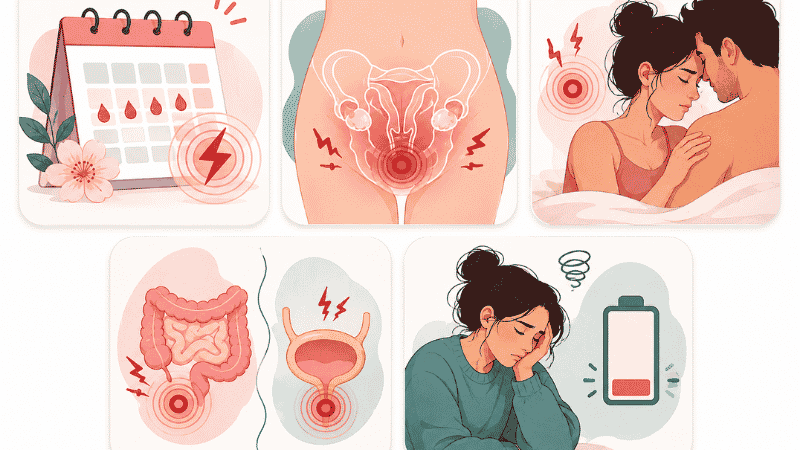
Menstrual Pain Beyond the Ordinary
Dysmenorrhoea — painful periods — is the most commonly reported endometriosis symptom. The key distinguishing feature is severity: endometriosis-related period pain is characteristically more severe than the discomfort most women experience, frequently requiring prescription analgesia, disrupting daily functioning, and not adequately responding to standard over-the-counter pain relief.
Pain that begins one to two days before menstruation and continues throughout the period is particularly characteristic. Pain that has worsened progressively over time — each cycle more difficult than the last — is another clinical signal worth taking seriously.
The editor’s honest observation: being told your periods are “just bad” for years on end is not adequate clinical care. Severe menstrual pain that disrupts work, social life, or daily function warrants investigation — not normalization.
Pelvic Pain Outside of Menstruation
Chronic pelvic pain — pain in the lower abdomen and pelvis that is present outside of menstruation — affects a significant proportion of women with endometriosis. It may be constant or intermittent, dull or sharp, and is often worsened by physical activity, prolonged standing, or ovulation.
Endometriosis back pain — specifically, pain in the lower back that is cyclically related to menstruation or ovulation — is another underrecognized symptom. The proximity of endometriosis lesions to the sacral nerves and pelvic ligaments can produce pain that radiates into the lower back, buttocks, and down the legs.
Bowel and Bladder Symptoms
When endometriosis affects the bowel or bladder — which occurs in a subset of cases — it can produce symptoms including:
- Pain during or after bowel movements, particularly around menstruation
- Diarrhea, constipation, or alternating bowel habits that worsen cyclically
- Blood in the stool during menstruation (in bowel endometriosis)
- Pain or urgency during urination
- Blood in the urine during menstruation (in bladder endometriosis)
These symptoms are frequently attributed to irritable bowel syndrome or urinary tract infections before endometriosis is considered — contributing significantly to diagnostic delay.
Fatigue
Chronic fatigue is reported by a high proportion of women with endometriosis and is often underweighted in clinical assessment. It appears to be driven by the systemic inflammatory process associated with the condition, disrupted sleep from pain, and the hormonal environment that characterises endometriosis. It is not simply tiredness — it is a specific, pervasive exhaustion that does not resolve with rest.
Endometriosis and Sex: How the Condition Affects Sexual Health
Sexual health is one of the most significantly affected — and most inadequately addressed — dimensions of life with endometriosis. The impact operates through multiple overlapping mechanisms.
Endometriosis Painful Sex: The Most Characteristic Sexual Symptom
Deep dyspareunia — pain during or after sexual intercourse, felt internally rather than at the vaginal entrance — is experienced by an estimated 50–70% of women with endometriosis. It is considered one of the most diagnostically significant symptoms of the condition.
The pain typically occurs with deep penetration and is caused by endometriosis lesions in specific locations: the uterosacral ligaments, the posterior cul-de-sac (the space between the uterus and rectum), or the ovaries. When these structures are disturbed during penetrative activity, the result is a sharp, deep, aching, or burning pain that may persist for hours after intercourse has ended.
This is not pain that lubricant resolves. It is not pain that relaxation techniques address. It is structural and requires clinical investigation and, in many cases, surgical treatment.
The impact of endometriosis painful sex extends well beyond the physical experience. Anticipation of pain leads to avoidance. Avoidance reduces intimacy. Reduced intimacy affects relationships. And because endometriosis painful sex is so rarely discussed or acknowledged — many women do not raise it, and many providers do not ask — it is carried quietly, often for years, producing effects on self-esteem, body image, and relationships that compound the physical experience.
Endometriosis Sex Drive: Desire and the Hormonal Environment
Reduced sexual desire is common in women with endometriosis, operating through several pathways simultaneously.
Hormonal treatments used to manage endometriosis — including combined oral contraceptives, progestogens, and GnRH analogues — can suppress estrogen and testosterone, both of which contribute to sexual desire. The disease process itself is associated with chronic inflammation and pain that depletes the physiological and psychological resources that support desire.
The psychological dimension is substantial. Anticipating pain during sex changes the relationship with one’s own body and with intimacy. Chronic pain affects mood, motivation, and the sense of embodied well-being that supports sexual interest. And the experience of repeatedly raising pain concerns that are not taken seriously affects the broader self.
These are not separate issues requiring separate treatment — they are connected dimensions of a single condition that deserves comprehensive clinical attention.
How to Know If You Have Endometriosis
The diagnostic challenge with endometriosis is real: definitive diagnosis requires laparoscopy — a surgical procedure in which a camera is inserted through the abdomen to directly visualise the pelvic organs. No blood test, ultrasound, or MRI can definitively confirm or exclude endometriosis, though imaging can identify certain types of lesions (particularly ovarian endometriomas) and inform clinical decision-making.
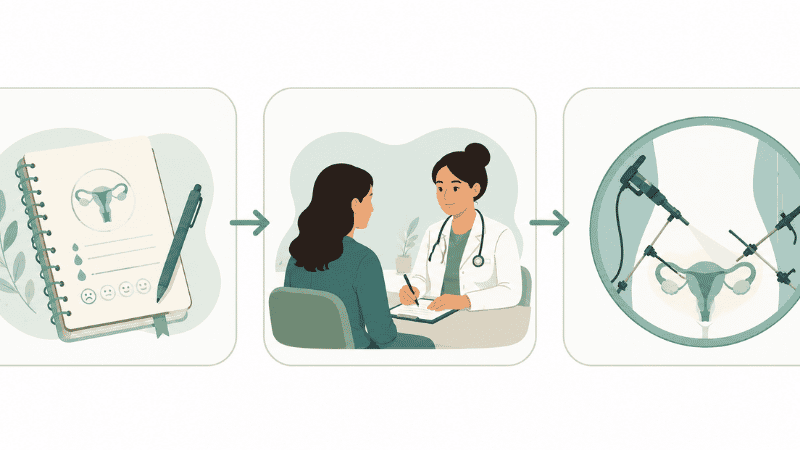
Recognising the Pattern
The most valuable diagnostic tool available before surgical investigation is pattern recognition. The following combination of symptoms should trigger a clinical conversation about endometriosis:
- Severe menstrual pain that disrupts functioning and does not respond adequately to standard analgesia
- Chronic pelvic pain outside of menstruation
- Deep pain during or after sexual intercourse
- Cyclically worsening bowel or bladder symptoms
- Unexplained infertility
- Fatigue that worsens around menstruation
None of these symptoms alone is diagnostic. Together — particularly when cyclically related to the menstrual cycle — they constitute a clinical picture that warrants thorough investigation.
Advocating for Yourself in Clinical Settings
Many women with endometriosis report that their symptoms were dismissed, normalised, or attributed to anxiety before they received appropriate investigation. This is a systemic problem in how menstrual health is managed — but it also means that self-advocacy is a practical necessity.
Some approaches that help:
Track your symptoms systematically. A detailed symptom diary — noting pain severity, timing relative to your cycle, impact on daily functioning, and all associated symptoms — provides the kind of longitudinal data that makes clinical conversations more productive.
Name the specific impact. Rather than describing pain in general terms, being specific about functional impact (“I cannot work during the first two days of my period,” “I have been avoiding sex for six months because of pain”) communicates severity more effectively.
Request a referral if needed. If your primary care provider is not investigating your symptoms appropriately, requesting a referral to a gynaecologist with specific interest in endometriosis is reasonable and appropriate.
If you have tried lifestyle changes and they have not helped: Pain that is not adequately controlled by over-the-counter analgesia, hormonal contraception, or other first-line approaches warrants specialist assessment. This is the signal to escalate — not to accept continued inadequate management.
Endometriosis and Pregnancy: What the Evidence Shows
The relationship between endometriosis and pregnancy is complex, and the evidence is more nuanced than “endometriosis causes infertility” — which is the message many women receive, without the context they need.
Endometriosis affects fertility in approximately 30–50% of women who have it — meaning that 50–70% of women with endometriosis are not significantly impaired in their fertility. The mechanism through which endometriosis affects fertility varies by disease severity and location: it may affect ovarian reserve (particularly with endometriomas), disrupt tubal anatomy through adhesions, alter the uterine environment, or affect egg and sperm quality through inflammatory changes.
A 2024 systematic review published in the Journal of Personalized Medicine confirmed that endometriosis is associated with increased risks of certain pregnancy complications — including miscarriage, preterm birth, placenta praevia, and caesarean delivery — when conception occurs. However, the review also confirmed that many women with endometriosis do conceive and deliver healthy pregnancies, with appropriate monitoring and care.
For women with endometriosis considering pregnancy:
Laparoscopic surgery to remove endometriosis lesions — particularly ovarian endometriomas — can improve fertility outcomes in selected cases. Assisted reproductive technologies (ART), including IVF, are effective options when natural conception has not occurred. Specialist reproductive medicine input is appropriate for any woman with endometriosis who is trying to conceive without success after six months (or immediately in cases of known significant disease).
The most important message: an endometriosis diagnosis is not the same as an infertility diagnosis. Many women with endometriosis conceive naturally. For those who require support, effective interventions exist.
Management and Treatment: What Are Your Options
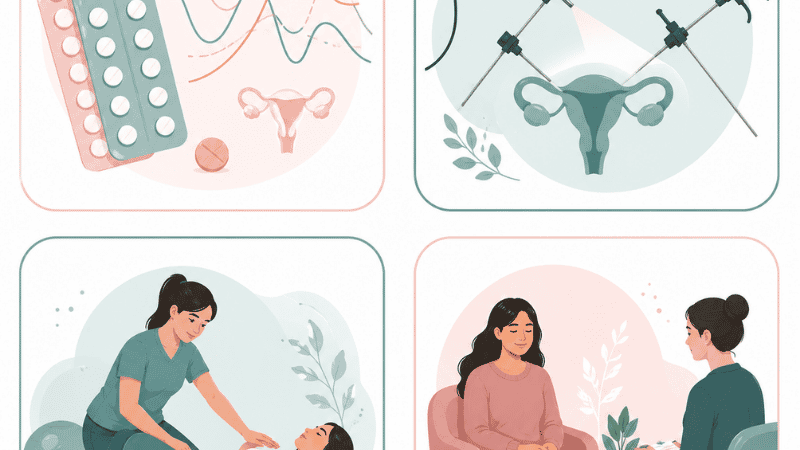
There is no cure for endometriosis, but effective management is achievable for most women with access to appropriate specialist care. Treatment is tailored to individual symptoms, disease severity, and reproductive goals.
Hormonal management — combined oral contraceptives, progestogens, and GnRH analogues (with or without hormonal add-back therapy) suppress ovulation and reduce the hormonal stimulation that drives endometriosis activity. They do not eliminate existing lesions but can significantly reduce pain and slow disease progression. They are not compatible with active attempts to conceive.
Laparoscopic surgery — the only treatment that removes endometriosis lesions directly. Surgical excision (removal) of lesions has a stronger evidence base than ablation (burning) for long-term symptom relief. For ovarian endometriomas and severe disease, surgery may also improve fertility outcomes. Recurrence rates after surgery are significant — supporting the role of hormonal management following surgery.
Pain management — non-steroidal anti-inflammatory drugs (NSAIDs) remain the first-line analgesic for endometriosis pain. For more severe pain, specialist pain management including nerve blocks, neuromodulation, and other approaches may be appropriate.
Pelvic floor physical therapy — for women with endometriosis painful sex, pelvic floor physical therapy addresses the muscular component of pain — the hypertonic (overtense) pelvic floor response that frequently develops alongside endometriosis-related pain. It does not treat the underlying disease but can significantly improve sexual comfort alongside other treatments.
Psychological support — chronic pain conditions of any kind benefit from psychological support, and endometriosis is no exception. Cognitive behavioural therapy (CBT) adapted for chronic pain, mindfulness-based approaches, and individual or couples therapy for the relational impacts of the condition are all evidence-supported options.
Warning Signs: When to Seek Urgent or Prompt Clinical Attention
- Severe acute pelvic pain that is significantly worse than your usual symptoms — which may indicate a ruptured endometrioma or other acute complication
- Pain during intercourse that is new, rapidly worsening, or accompanied by other symptoms such as fever or unusual discharge
- Urinary symptoms including blood in the urine that are new or worsening — particularly if cyclically related to menstruation
- Unexplained infertility after six months of trying to conceive (or immediately with known significant disease)
- Symptoms that are significantly affecting quality of life and have not been investigated by a specialist
Frequently Asked Questions
What are the most common symptoms of endometriosis? The most characteristic symptoms are severe menstrual pain (dysmenorrhoea) that disrupts daily functioning, deep pelvic pain during or after sexual intercourse, chronic pelvic pain outside of menstruation, cyclically worsening bowel or bladder symptoms, and unexplained fatigue. The key pattern is symptoms that are related to the menstrual cycle and that are more severe than typical menstrual discomfort.
Why does endometriosis cause painful sex? Deep dyspareunia in endometriosis is caused by endometriosis lesions in locations that are disturbed during sexual activity — most commonly the uterosacral ligaments, the posterior cul-de-sac, and the ovaries. When these affected structures are compressed or moved, the result is deep, often severe pain that may persist for hours after intercourse. It is structural in origin and requires clinical — not behavioural — management.
Does endometriosis always cause infertility? No. Endometriosis affects fertility in approximately 30–50% of women with the condition — meaning the majority are not significantly impaired in fertility. The impact depends on disease severity and location. Many women with endometriosis conceive naturally; those who require support have access to effective interventions including surgery and assisted reproductive technologies.
How long does it take to get an endometriosis diagnosis? The average time from symptom onset to diagnosis is seven to ten years — a figure that reflects the normalization of menstrual pain in healthcare settings and the lack of a non-invasive diagnostic test. Definitive diagnosis requires laparoscopy. Women who are persistent in seeking investigation — tracking symptoms, naming functional impact, and seeking specialist referral when needed — are more likely to receive timely diagnosis.
Can endometriosis be cured? There is currently no cure for endometriosis. Laparoscopic surgery removes visible lesions but does not prevent recurrence; hormonal treatments suppress disease activity but do not eliminate it. Effective management — significantly reducing pain, improving sexual function, and supporting fertility where desired — is achievable for most women with access to appropriate specialist care.
How does endometriosis affect relationships? Endometriosis affects relationships through multiple pathways: painful sex reduces or eliminates physical intimacy, chronic pain affects mood and energy for relational engagement, fertility concerns create shared anxiety, and the experience of being undiagnosed or dismissed for years can produce emotional complexity that spills into intimate relationships. Open communication with partners — and where needed, couples support — is consistently associated with better relational outcomes.
The Bottom Line
Endometriosis is common, underdiagnosed, and undertreated. The seven-to-ten-year diagnostic delay is not inevitable — it is a consequence of symptoms being normalised, patients not being believed, and conditions not being investigated. It can be shortened by recognising the pattern, naming the impact, and advocating persistently for appropriate clinical attention.
The signs of endometriosis are real. The pain during sex is real. The fatigue is real. The fertility concerns are real. None of these are things you need to manage in silence or accept as your baseline.
If this guide has helped you recognise a pattern that matches your experience, the next step is a clinical conversation — with your GP, a gynaecologist, or an endometriosis specialist — where you bring your symptom history and ask, directly, for investigation.
You deserve a diagnosis. You deserve treatment. And you deserve to feel well.
References
- World Health Organization. Endometriosis. Updated March 2023. https://www.who.int/news-room/fact-sheets/detail/endometriosis
- Tsikouras P, et al. The Impact of Endometriosis on Pregnancy. Journal of Personalized Medicine. 2024;14(1):126. https://pmc.ncbi.nlm.nih.gov/articles/PMC10820275/
- Ferrero S, et al. Quality of sex life in women with endometriosis and deep dyspareunia. Fertility and Sterility. 2005;83(3):573–579.
- Nnoaham KE, et al. Impact of endometriosis on quality of life and work productivity: a multicenter study across ten countries. Fertility and Sterility. 2011;96(2):366–373.
- American College of Obstetricians and Gynecologists. Endometriosis. Practice Bulletin No. 114. Updated 2022. https://www.acog.org
Related Articles on PureInti
- Pain During Sex: Causes, When to Seek Help, and Evidence-Based Solutions
- Women’s Reproductive Health: A Complete Guide for Adults
- Weak Pelvic Floor Symptoms: Signs, Causes and Exercises
- Low Libido in Women: Causes, Hormones, and Evidence-Based Solutions
- How to Communicate in a Relationship: A Practical Guide