

You have been meaning to get tested. Maybe for a while. You know it is the responsible thing to do, and yet every time you think about actually making the appointment, something stops you — the uncertainty of not knowing what to ask for, the concern about privacy, the discomfort of bringing it up with a provider, or simply not knowing what the process actually involves.
That hesitation is remarkably common. And it is one of the main reasons STIs go undetected — not because people do not care about their health, but because the path from “I should get tested” to “I have an appointment” is full of unanswered questions that nobody ever properly addresses.
This guide answers those questions. What STI testing involves, who should be tested and how often, what happens at an appointment, how accurate the results are, and what your options are if a clinical visit feels like a barrier. Grounded in current CDC guidelines and written for anyone who wants clear, practical, judgment-free information.
Key Takeaways
- According to the Centers for Disease Control and Prevention (CDC), STIs often produce no symptoms — meaning testing is the only reliable way to know your status, regardless of how you feel.
- The CDC recommends that everyone between the ages of 13 and 64 be tested for HIV at least once as a baseline, with more frequent testing recommended based on individual risk factors.
- All sexually active women under 25 should be tested for chlamydia and gonorrhea annually — two of the most commonly reported STIs in the United States, both of which are frequently asymptomatic.
How accurate are STI testsis one of the most searched questions on this topic — and the answer depends on which infection is being tested and when. Most modern STI tests are highly accurate when timed correctly relative to the exposure window period.How often should you get tested for STIsdepends on your specific risk factors, not a universal schedule — but once per year is the minimum baseline for sexually active adults with any new or multiple partners.
Why STI Testing Matters — Even Without Symptoms
The most important thing to understand about STIs is that the absence of symptoms does not mean the absence of infection. Many of the most common sexually transmitted infections — including chlamydia, gonorrhea, and early-stage syphilis — produce no noticeable symptoms in a significant proportion of people who carry them.
Chlamydia, the most commonly reported STI in the United States with over 1.6 million cases reported to the CDC in 2022, is asymptomatic in approximately 70–90% of women and 50% of men who are infected. Gonorrhea similarly produces no symptoms in many cases. HPV, which is the most common sexually transmitted infection overall, frequently resolves without any symptoms at all — and yet certain strains carry a meaningful risk of cervical cell changes if undetected.
This is why STI testing is described in clinical guidelines as a routine health behavior, not a response to a suspected problem. Testing regularly does not imply anything about your choices, your character, or your number of partners. It is simply the mechanism through which silent infections are identified before they cause more serious health consequences or are unknowingly transmitted to others.
Who Should Get an STI Test — CDC Screening Recommendations
The CDC publishes clinical screening recommendations that specify who should be tested, for which infections, and how frequently. These are the current guidelines for sexually active adults:
HIV Testing
Everyone between the ages of 13 and 64 should be tested for HIV at least once as part of routine healthcare, regardless of perceived risk. Adults with risk factors — including multiple partners, a partner with HIV, or a history of injection drug use — should be tested at least annually, and in some cases more frequently.
Chlamydia and Gonorrhea
All sexually active women under 25 should be tested for chlamydia and gonorrhea every year. Women 25 and older with new or multiple partners, or a partner with a known STI, should also test annually. Men who have sex with men (MSM) should be tested at least annually, and every three to six months if they have multiple or anonymous partners.
Syphilis
Most sexually active adults should be tested for syphilis based on their geographic location and individual risk factors. Syphilis rates have increased significantly in the United States in recent years, and the CDC recommends testing for anyone with new or multiple partners or a partner with a confirmed diagnosis.
Pregnant Women
Pregnant women should be tested for syphilis, HIV, hepatitis B, and hepatitis C at the start of pregnancy. Those with additional risk factors may need testing for chlamydia and gonorrhea as well, and repeat testing later in pregnancy.
General Principle
If you are sexually active with new or multiple partners and have not been tested in the past 12 months, STI testing is clinically appropriate regardless of whether you have symptoms.
What Is Included in a Standard STI Panel Test
One of the most common sources of confusion around STI testing is what a standard test actually screens for. There is no single universal STI panel — what is included depends on your provider, your location, and your specific risk factors.
A comprehensive STI panel test typically includes:
- Chlamydia — usually tested via urine sample or swab
- Gonorrhea — same sample as chlamydia in most cases
- Syphilis — blood test
- HIV — blood test or oral swab
- Hepatitis B and C — blood test
- Herpes (HSV-1 and HSV-2) — blood test, though routine screening is not universally recommended and is context-dependent
Notably, HPV is not tested through blood work — it is detected through cervical screening (Pap smear and HPV co-test) in women, and there is currently no approved HPV test for most men. This is why cervical screening is a separate and essential component of women’s sexual health care.
When you make an appointment, it is worth being specific about what you want to be tested for rather than assuming a general “full panel” covers everything. Asking your provider directly — “Can I have a full STI screening including HIV, chlamydia, gonorrhea, syphilis, and hepatitis?” — ensures nothing is omitted.
How Often Should You Get Tested for STIs
Testing frequency is not one-size-fits-all. The right schedule depends on your individual circumstances, and the CDC guidelines reflect this by providing recommendations based on specific risk factors rather than a universal rule.
Once per year is the minimum baseline recommendation for sexually active adults with any new or multiple partners. This frequency ensures that asymptomatic infections — which may have been acquired at any point during the year — are identified and treated before causing further health consequences.
Every three to six months is the recommendation for men who have sex with men with multiple or anonymous partners, and for anyone whose circumstances represent higher ongoing exposure risk.
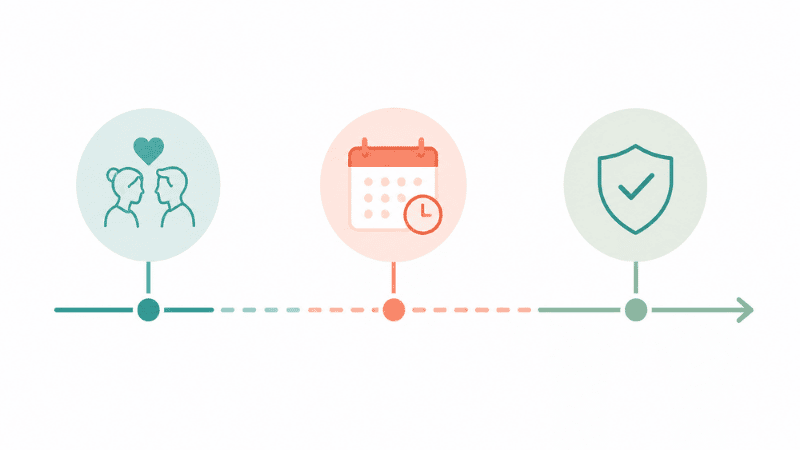
After any new sexual partner is a clinically reasonable approach for adults who want a comprehensive baseline before or after a new relationship. Some clinicians recommend testing both before and after a new relationship begins — particularly in long-term committed relationships where both partners want to establish a shared baseline.
Immediately, regardless of schedule, if you have been notified that a sexual partner has tested positive for an STI, if you notice any new genital symptoms including unusual discharge, sores, or discomfort during urination, or if you have had a potential exposure you are concerned about.
If you have only 10 minutes right now: The most actionable step is to locate your nearest sexual health clinic or check whether your primary care provider offers STI testing, and book an appointment. The logistics take less time than the hesitation. Most appointments are straightforward and take under 30 minutes.
How Accurate Are STI Tests
Accuracy in STI testing depends on two key variables: which test is being used, and when it is performed relative to the potential exposure. This is the concept of the window period — the time between exposure to an infection and when a test can reliably detect it.
Chlamydia and gonorrhea tests (nucleic acid amplification tests, or NAATs) are highly accurate — with sensitivity above 90% — and can typically detect infection within one to two weeks of exposure.
HIV testing accuracy depends heavily on the type of test. Fourth-generation combination antigen/antibody tests — the standard in most clinical settings — can detect HIV within 18–45 days of exposure. Most people will test positive within 23–90 days of exposure if infected. Testing too soon after a potential exposure may produce a false negative result, not because the test is inaccurate, but because the window period has not elapsed.
Syphilis antibody tests are generally accurate within three to six weeks of exposure, though some cases may take longer to produce a detectable antibody response.
Herpes (HSV) blood tests detect antibodies rather than the virus itself, and are less reliable in the early stages of infection. They can also produce false positives, which is one reason routine herpes screening is not universally recommended in the absence of symptoms or known exposure.
The practical implication: if you are testing after a specific potential exposure, discuss the timing with your provider so they can advise whether a repeat test after the relevant window period has elapsed is appropriate.
Where and How to Get Tested for STIs
STI testing is available through multiple channels, and finding one that works for your circumstances removes the main practical barrier.
Primary care physician or family doctor — the most straightforward option for most adults. Testing can be requested during a routine appointment, and results are handled through your existing medical record. If you feel uncomfortable raising the topic, you can frame it simply: “I’d like to include STI screening in this appointment.”
Sexual health clinic or GUM clinic — clinics specializing in sexual health offer comprehensive STI testing, often with shorter wait times, greater expertise in this area, and a non-judgmental clinical environment. Many operate on a walk-in basis.
Planned Parenthood and community health centers — offer STI testing on a sliding fee scale, making them accessible regardless of insurance status. Free STI testing is available in many areas through publicly funded programs.
At-home STI test kits — commercially available test kits allow you to collect a sample at home and mail it to a laboratory for analysis. These are a legitimate option for certain infections — particularly chlamydia, gonorrhea, HIV, and syphilis — and are increasingly accurate and convenient. They do not require an in-person appointment and results are typically returned within a few days. If a result is positive, follow-up with a clinical provider is required for confirmation and treatment.
If cost or insurance is a concern: The CDC’s GetTested tool (gettested.cdc.gov) allows you to search for free or low-cost testing locations by zip code. Many sexual health clinics offer anonymous testing without requiring insurance.
What to Expect at an STI Testing Appointment
For many people, uncertainty about what the appointment itself involves is a significant barrier. The reality is considerably more straightforward than the anticipation.
A typical STI testing appointment involves a brief conversation with your provider about your sexual history and any specific concerns — this is a routine clinical conversation, not a judgment. Based on your circumstances, the provider will recommend which tests are appropriate.
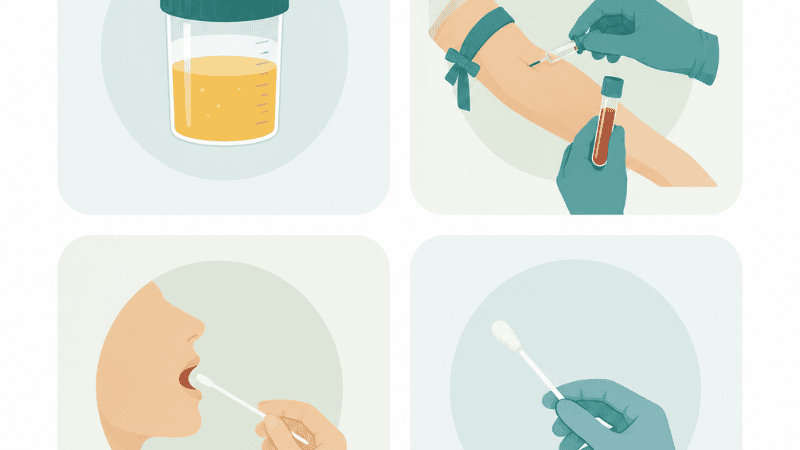
Depending on what is being tested, you may provide a urine sample, have a blood draw, have swabs taken from relevant sites, or some combination. The process is quick, and most appointments are complete within 20–30 minutes. Results are typically available within a few days to a week, depending on the clinic and the tests ordered.
If any results are positive, your provider will contact you to discuss next steps — including treatment options, which for bacterial infections like chlamydia and gonorrhea are straightforward and highly effective. A positive result is not a crisis. It is clinical information that allows you and your provider to take appropriate action.
Warning Signs That Warrant Immediate Testing
While routine testing on a scheduled basis is always appropriate, the following situations warrant testing without waiting for your next scheduled screen:
- You have been notified that a current or recent sexual partner has tested positive for an STI
- You notice new or unusual genital symptoms — including discharge, sores, blistering, unusual odor, or burning during urination
- You have had a potential exposure you are concerned about and want to establish a baseline
- You are starting a new sexual relationship and want to confirm your status
- You are pregnant, or planning to become pregnant
- You have not been tested in over a year and have been sexually active with new or multiple partners
None of these circumstances require an emergency presentation. A scheduled appointment with your primary care provider or a sexual health clinic is the appropriate next step.

Frequently Asked Questions
Do I need to get tested if I have no symptoms? Yes. Many of the most common STIs — including chlamydia, gonorrhea, and early HIV — produce no symptoms in a significant proportion of infected people. The CDC explicitly states that STI testing is important precisely because infections often have no symptoms. Feeling well does not confirm a negative status.
How accurate are STI tests? Most modern STI tests are highly accurate when performed after the relevant window period has elapsed. Chlamydia and gonorrhea NAATs have sensitivity above 90%. HIV fourth-generation tests are highly accurate from 45 days post-exposure onward. Testing too soon after potential exposure can produce a false negative — which is a timing issue, not a test accuracy issue.
How often should you get tested for STIs? At minimum, annually if you are sexually active with any new or multiple partners. Every three to six months for men who have sex with men with multiple partners. After any new sexual partner if you want a reliable baseline. Immediately if a partner has tested positive or you have new symptoms.
What STIs are included in a standard test? There is no single universal panel. A comprehensive screening typically covers chlamydia, gonorrhea, syphilis, HIV, and hepatitis B and C. HPV is detected through cervical screening in women, not a blood test. Herpes is tested via blood antibody test but is not included in all routine panels. Always ask your provider explicitly what is being tested.
Can I get tested anonymously? Yes. Many sexual health clinics and community health centers offer anonymous or confidential testing — meaning results are not linked to your name or shared with your insurance provider. At-home test kits also provide a degree of privacy that clinical settings may not.
Is free STI testing available? Yes. The CDC’s GetTested tool (gettested.cdc.gov) allows you to find free or low-cost STI testing locations by zip code. Planned Parenthood and many community health centers offer sliding-scale fees. Some areas also offer free at-home test kits through public health programs.
What happens if I test positive? A positive result means you have access to treatment. Bacterial STIs including chlamydia, gonorrhea, and syphilis are curable with antibiotics. Viral STIs including HIV and herpes are manageable with medication. Your provider will explain your specific results, discuss treatment options, and advise on partner notification. A positive result is clinical information — not a verdict.
The Bottom Line
STI testing is one of the most straightforward and impactful things you can do for your sexual health — and for the health of your partners. It is a routine clinical behavior, not an emergency response or an admission of risk.
The primary barrier for most people is not access. It is the accumulated discomfort around asking for it, the uncertainty about what the process involves, and the habit of postponing what feels like an awkward conversation. This guide exists to remove those barriers.
If you are sexually active and have not been tested in the past year, the next step is simply to make an appointment. The conversation is easier than you expect. The process is quicker than you think. And knowing your status — whatever it turns out to be — is genuinely worth it.
References
- Centers for Disease Control and Prevention. Getting Tested for STIs. Updated March 2026. https://www.cdc.gov/sti/testing/index.html
- Centers for Disease Control and Prevention. STI Surveillance Report 2022. https://www.cdc.gov/std/statistics/2022/default.htm
- Centers for Disease Control and Prevention. HIV Testing. https://www.cdc.gov/hiv/testing/index.html
- Workowski KA, et al. Sexually Transmitted Infections Treatment Guidelines, 2021. MMWR Recommendations and Reports. 2021;70(4):1–187.
- National Institutes of Health. Sexually Transmitted Infections. https://www.niaid.nih.gov/diseases-conditions/sexually-transmitted-diseases