

You notice something feels different — maybe an unfamiliar smell, a change in discharge, unexpected itching, or irritation that was not there before. It is natural to start searching for answers and wonder: Is this BV, a yeast infection, or something else?
The confusing part is that bacterial vaginosis (BV) and yeast infections can sometimes feel similar, even though they happen for completely different reasons. One involves a shift in vaginal bacteria, while the other is caused by an overgrowth of yeast — and each requires a different type of care.
Guessing can lead to frustration. A yeast infection treatment will not fix BV, and using the wrong approach may delay getting the relief you actually need.
This guide breaks down the key differences in symptoms, causes, treatment options, and prevention — so you can better understand what your body is telling you and make informed choices with confidence.
Quick Answer: Is It BV or a Yeast Infection?
BV and yeast infections can cause similar discomfort, but they usually have different warning signs.
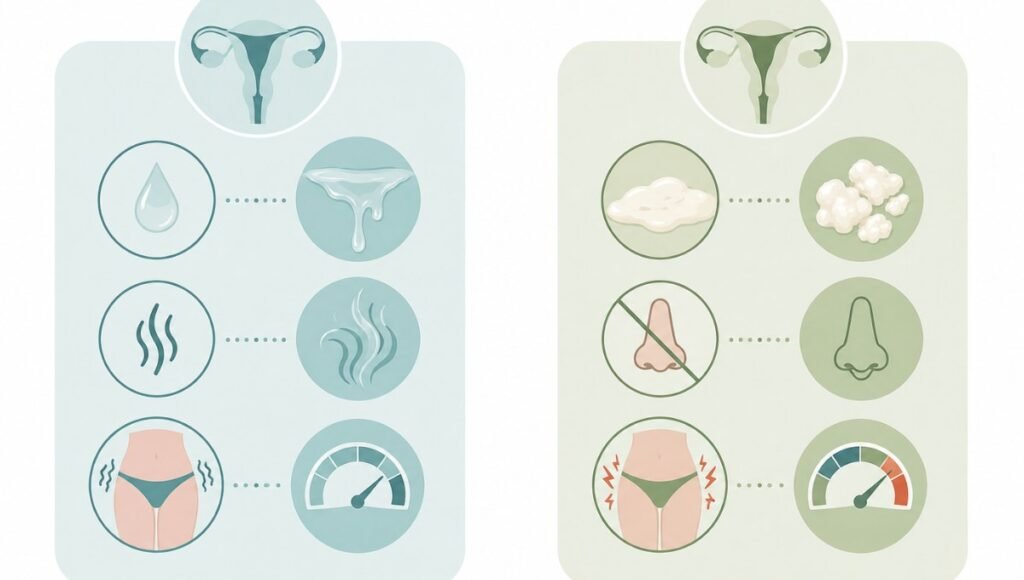
BV is more likely if you notice:
✓ Thin, watery, gray or white discharge
✓ A strong fishy smell, especially after sex
✓ Mild irritation rather than intense itching
✓ Symptoms that appear after changes in vaginal balance
A yeast infection is more likely if you notice:
✓ Thick, white, cottage-cheese-like discharge
✓ Intense itching or burning
✓ Redness, swelling, or soreness
✓ Little to no noticeable smell
The only way to know for sure is through proper testing. Because BV and yeast infections need different treatments, identifying the cause matters more than treating quickly.
Key Takeaways
- BV and yeast infections are caused by completely different organisms — a bacterial imbalance versus a fungal overgrowth — and require different treatments that cannot be swapped.
- The most reliable distinguishing feature is the combination of discharge texture and odour: BV produces thin, grey discharge with a fishy smell; yeast infections produce thick, white, cottage-cheese-like discharge with little to no odour.
- Having BV or a yeast infection does not mean you did something wrong. Both are common changes in vaginal balance, and understanding the cause helps you choose the right care.
- Treating BV with over-the-counter yeast infection cream is one of the most common self-treatment errors, and it delays appropriate treatment while allowing the bacterial imbalance to persist.
- Both conditions are extremely common, have nothing to do with poor hygiene, and respond well to appropriate treatment.
BV vs Yeast Infection: The Quick Difference You Need to Know
Before going deeper, here is the most useful quick reference.
What Is Bacterial Vaginosis (BV)?
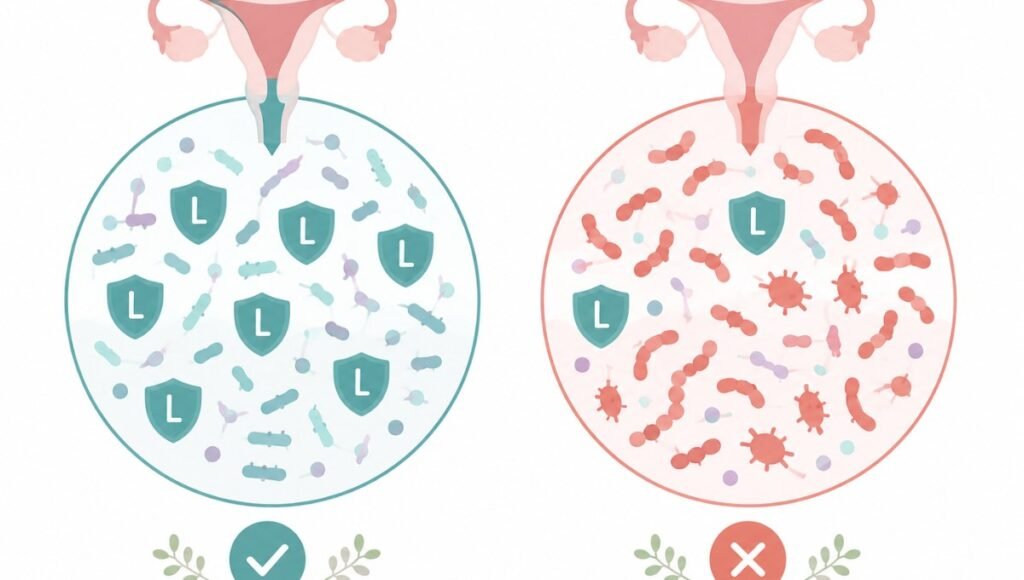
Bacterial vaginosis is not caused by a single bad bacterium that entered from outside. It is a disruption of the vaginal microbiome — specifically, a reduction in the Lactobacillus bacteria that normally dominate a healthy vaginal environment, and an overgrowth of anaerobic bacteria in their place.
Lactobacillus produces lactic acid, which keeps vaginal pH acidic (around 3.8–4.5) and creates an environment where most harmful microorganisms cannot thrive. When Lactobacillus populations fall, pH rises, and anaerobic bacteria — which produce the compounds responsible for BV’s characteristic smell — multiply. This is not a hygiene failure. It is a microbiome shift, and it happens to many women for reasons that are not always predictable or preventable.
What Is a Yeast Infection?
A vaginal yeast infection (vulvovaginal candidiasis) is caused by an overgrowth of Candida — a fungus that normally lives in small amounts in the vaginal environment without causing problems. When the vaginal microbiome is disrupted — most commonly by antibiotics, hormonal changes, high blood sugar, or a period of immune suppression — Candida populations can multiply beyond normal levels, producing the inflammation, itching, and discharge that characterise a yeast infection.
Same site, completely different organism, completely different treatment.
BV vs Yeast Infection: Side-by-Side Comparison
| Factor | BV | Yeast Infection |
|---|---|---|
| Cause | Bacterial imbalance — reduced Lactobacillus | Candida fungal overgrowth |
| Discharge | Thin, watery, homogeneous | Thick, clumpy, cottage cheese-like |
| Colour | Grey or white | White |
| Smell | Fishy — intensifies after sex | None or mild |
| Itching | Mild or absent | Intense — often the main symptom |
| Burning | Sometimes | Yes — especially during urination and sex |
| Vulvar redness/swelling | Usually absent | Yes — often visible inflammation |
| Vaginal pH | Elevated (above 4.5) | Normal (3.8–4.5) |
| Common triggers | Sex, douching, antibiotics, menstruation | Antibiotics, hormones, high blood sugar |
| Treatment | Antibiotic (prescription) | Antifungal (OTC or prescription) |
Symptom Checker: Is It BV or a Yeast Infection?
If You Notice a Fishy Smell
A fishy odour is the most characteristic sign of BV — and one of the most diagnostically reliable features that distinguishes it from a yeast infection. The smell is produced by amine compounds released by the anaerobic bacteria responsible for BV.
Two things make it stronger: sex and menstruation. Semen is alkaline and raises vaginal pH, which increases amine production — which is why many women with BV notice the smell most intensely after sexual activity. Similarly, blood is alkaline, which is why the odour may be more noticeable during or after a period.
If the main symptom is an unusual smell — particularly one that intensifies after sex — BV is significantly more likely than a yeast infection.
If It Feels Extremely Itchy or Irritated
Intense itching, burning, redness, and swelling of the external vulva and vaginal opening are the hallmarks of a yeast infection. The inflammation is caused by the immune response to Candida overgrowth in vaginal tissue — and it is hard to miss. Many people assume that any itching in the vaginal area means a yeast infection, but BV can occasionally cause mild irritation too.
The key distinction: if the itching is intense and the primary complaint — particularly if it is accompanied by visible redness and swelling — yeast infection is more likely. If the discomfort is relatively mild and the main issue is a change in discharge or smell, BV is more likely.
Understanding Discharge Changes Without Panic
Discharge changes are what most people notice first, and they are also the most anxiety-producing symptom — partly because there is so much misinformation about what “normal” looks like.
White, thick, clumpy discharge — resembling cottage cheese and with little to no odour — is characteristic of a yeast infection. Thin, watery, grey or white discharge with a noticeable smell is more characteristic of BV. Both represent changes from your personal normal baseline, and both warrant attention — but they are pointing in completely different directions clinically.
Can BV and a Yeast Infection Feel Similar?
Yes — and this is the core of the problem. Both can cause some degree of vaginal discomfort and discharge change. Both can involve mild burning during urination. Both can occur after a course of antibiotics. And symptoms can overlap enough that even people with significant experience managing these conditions can be uncertain which they are dealing with.
This is not a reason to feel embarrassed about not knowing. It is a reason to get a confirmed diagnosis before treating — which is genuinely quicker and simpler than most people assume.
Why Do BV and Yeast Infections Happen?
Everyday Habits That May Disrupt Vaginal Balance
Several common habits can disturb the vaginal microbiome in ways that increase susceptibility to both BV and yeast infections:
Scented products and douching — vaginal douches, scented soaps, and feminine hygiene sprays introduced internally disrupt pH and reduce Lactobacillus populations. This is the single most consistent behavioural risk factor for BV. The vagina is self-cleaning and does not require internal washing.
Antibiotics — broad-spectrum antibiotics reduce not only the target bacteria but also the Lactobacillus that protect vaginal balance, creating conditions favourable for both BV and Candida overgrowth. This is why yeast infections commonly follow antibiotic courses.
Tight synthetic underwear and prolonged moisture — create warm, humid conditions that favour Candida growth. Cotton underwear and changing out of wet clothing promptly both reduce this risk.
Hormonal changes — oestrogen affects vaginal microbiome composition. Hormonal contraception, the menstrual cycle, pregnancy, and menopause all influence the vaginal environment in ways that can shift microbial balance.
Can Diet, Stress, or Lifestyle Play a Role?
These factors matter more than most clinical resources acknowledge.
High blood sugar — in people with diabetes or prediabetes, elevated glucose in vaginal secretions provides fuel for Candida growth, increasing susceptibility to recurrent yeast infections.
Chronic stress — sustained high cortisol suppresses immune function, reducing the body’s ability to maintain normal Lactobacillus populations and control Candida growth.
Diet — emerging research suggests that diets supporting healthy gut Lactobacillus populations — including fermented foods and probiotic-rich options — may also support vaginal microbiome resilience. The evidence is less definitive than for gut health, but the connection is biologically plausible.
The honest editor’s view: if you are getting recurrent infections and cannot identify a clear trigger, a broader look at stress, sleep, and blood sugar is worth including in the picture — not because these are the primary cause, but because they are the parts of the picture that most clinical conversations skip.
Why Recurring Infections Happen
If you find yourself thinking “I keep getting BV” or “my yeast infection keeps coming back,” you are describing a pattern that affects a significant proportion of women — and one that is consistently undertreated because most clinical encounters focus on treating the current episode rather than addressing the underlying pattern.
Recurrent BV — three or more episodes per year — affects an estimated 50–70% of women who have had one episode. Recurrent yeast infections — four or more per year — affect approximately 8% of women. Both have specific clinical management strategies beyond treating each episode individually, and both warrant a conversation with a provider about long-term management rather than another prescription for the same short-term treatment.
Are BV and Yeast Infections Sexually Transmitted?
Is BV an STI?
Bacterial vaginosis is not classified as a sexually transmitted infection. It can occur in women who have never been sexually active, and it is not caused by a single pathogen introduced by a partner. However, sexual activity is a consistent risk factor — likely through disruption of vaginal pH (semen is alkaline), introduction of new bacteria, and reduced Lactobacillus populations. Consistent condom use is associated with lower BV rates.
Is a Yeast Infection Contagious?
Yeast infections are generally not considered sexually transmitted. Candida is a normal part of many people’s microbiome. However, Candida can be transmitted through sexual contact, and in some cases — particularly in people with recurrent yeast infections — a partner may be asymptomatically carrying Candida and contributing to reinfection after treatment.
Does My Partner Need Treatment Too?
For most cases of BV and uncomplicated yeast infections, treating the partner is not routinely recommended. However, for recurrent infections — particularly recurrent yeast infections — it is worth discussing with a provider whether the partner may be a contributing factor.
One question that deserves a direct answer: does BV mean my partner cheated? No. BV is caused by a microbiome shift, not by the introduction of a new pathogen from a new partner. It can occur in people who have been in monogamous relationships for years. This is one of the most anxiety-producing misunderstandings about BV, and it causes real relational harm — including people not discussing their symptoms out of fear of what their partner will think. BV is not evidence of infidelity.
Can You Test for BV or a Yeast Infection at Home?
Sometimes at-home tests can provide clues, but they cannot always give a complete answer.
Are Vaginal pH Tests Accurate?
Vaginal pH tests may help identify changes linked to BV because BV usually raises vaginal pH above the normal acidic range.
However, pH alone cannot diagnose every condition. A yeast infection can happen even when vaginal pH stays within the normal range.
When Home Testing Is Not Enough
Consider professional testing if:
- this is your first time having symptoms
- symptoms keep coming back
- treatment does not work
- you have pain, bleeding, or unusual symptoms
A simple test can prevent weeks of guessing — especially because BV and yeast infections are often mistaken for each other.
Treatment Differences: Why Guessing Can Make Things Worse
How BV Is Usually Treated
BV requires antibiotic treatment — most commonly metronidazole (oral or vaginal gel) or clindamycin (vaginal cream or oral). Both are prescription medications in most countries. The vaginal gel or cream formulations are often preferred as they deliver the antibiotic locally with fewer systemic side effects.
Completing the full course matters. BV recurrence rates are high — approximately 50% within three months — and incomplete treatment increases resistance and the likelihood of recurrence.
How Yeast Infections Are Usually Treated
Yeast infections are treated with antifungal medications — most commonly fluconazole (oral, available by prescription) or clotrimazole, miconazole, or tioconazole (topical, available over the counter in many countries). For uncomplicated yeast infections in women with a previously confirmed diagnosis, over-the-counter treatment is reasonable. For first-time symptoms, or for symptoms that are unusual or have not responded to previous treatment, clinical confirmation is warranted.
The Risk of Treating BV Like a Yeast Infection
This is where most self-treatment errors happen — and it is worth being direct about why it matters.
If you have BV and treat it with an over-the-counter antifungal cream, nothing will happen to the bacterial imbalance causing your symptoms. The antifungal medication has no effect on bacteria. You will continue to have symptoms, may start to believe you have a treatment-resistant yeast infection, and may continue applying antifungal cream while the BV persists — or potentially worsens.
Some antifungal treatments can also affect vaginal pH in ways that further disrupt the microbiome, potentially compounding the bacterial imbalance. This is why diagnosis — which is quick and straightforward at a GP or sexual health clinic — matters more than speed of treatment.
If you have tried over-the-counter treatment and symptoms have not resolved: This is the signal to seek clinical evaluation rather than try a different OTC product. Symptoms that persist after appropriate treatment are telling you the diagnosis may be wrong.
Common Mistakes People Make When Treating BV or Yeast Infections
Knowing what not to do is sometimes just as important as knowing what to do.
Mistake #1: Assuming Every Itch Means a Yeast Infection
Itching is common with yeast infections, but symptoms can overlap.
Using antifungal treatments repeatedly without knowing the cause may delay proper BV treatment.
Mistake #2: Trying to “Clean Away” the Problem
Many people reach for scented washes, sprays, or internal cleansing products when something feels different.
But the vagina maintains its own balance, and harsh products may disrupt the microbiome even more.
Mistake #3: Ignoring Symptoms That Keep Returning
Recurring BV or yeast infections are not something you simply have to tolerate.
Repeated symptoms may mean there is an underlying trigger, lifestyle factor, or treatment plan that needs a closer look.
How to Support a Healthy Vaginal Microbiome
Habits That Support Balance
- Wear breathable cotton underwear and change out of wet or damp clothing promptly
- Clean the external vulva gently with water or a fragrance-free, pH-appropriate product — no internal washing
- Use condoms consistently, which reduces the pH disruption caused by semen and limits introduction of new bacteria
- Take probiotics containing Lactobacillus rhamnosus and L. reuteri during and after antibiotic courses
- Stay well hydrated — adequate fluid intake supports urinary and vaginal mucosal health
Habits That May Increase Irritation
- Vaginal douching — one of the most consistently documented risk factors for BV
- Scented soaps, wipes, sprays, or gels used internally or directly on the vulva
- Staying in wet swimwear or exercise clothing for extended periods
- Tight synthetic underwear worn continuously
What to Do After Sex to Reduce Irritation Risk
Urinating promptly after sex helps clear bacteria from the urethral area — the primary mechanism for UTI prevention — but does not directly prevent BV or yeast infections. Gentle external washing with water is appropriate. Avoid the impulse to douche or use strong products after sex, as this disrupts rather than supports vaginal balance.
Open communication with partners about vaginal health — including discussing symptoms without shame and using condoms during active infections — is part of healthy intimate life, not an exception to it.
When Should You See a Healthcare Provider?

Please do not wait through any of the following:
- First time experiencing these symptoms — get a confirmed diagnosis before treating
- Symptoms during pregnancy — BV in pregnancy is associated with increased risk of preterm birth and requires prompt treatment
- Symptoms that do not resolve after completing appropriate treatment — may indicate misdiagnosis, antibiotic resistance, or co-infection
- Pelvic pain, fever, or unusual bleeding alongside vaginal symptoms — these may indicate pelvic inflammatory disease or another condition requiring urgent evaluation
- Three or more episodes in twelve months — warrants a clinical conversation about long-term management rather than another course of the same treatment
- Any uncertainty about whether you are dealing with BV or a yeast infection — a single appointment establishes this definitively in minutes
Frequently Asked Questions
Can you have BV and a yeast infection at the same time? Yes. Co-infection occurs more commonly than most people realise, which is part of why self-diagnosis based on symptoms alone is unreliable. If you have been treated for one condition and symptoms persist or change, co-infection is one of the possibilities worth discussing with a provider.
How do I know if my discharge is from BV or a yeast infection? Texture and smell are the most useful distinguishing features. Thick, white, clumpy discharge with little odour suggests yeast infection. Thin, watery, grey or white discharge with a fishy smell — particularly one that intensifies after sex — suggests BV. But symptoms overlap, and neither self-assessment nor visual inspection is as reliable as a clinical test.
What happens if I use yeast infection medicine for BV? Nothing helpful. Antifungal medications have no effect on the bacterial imbalance that causes BV. Your symptoms will persist, potentially worsen, and the underlying condition will remain untreated. Some antifungal preparations may further disrupt vaginal pH. This is one of the most important reasons to confirm the diagnosis before treating.
Does BV mean my partner cheated? No. BV is a microbiome imbalance, not an infection introduced by a new sexual partner. It can occur in people who have been in long-term monogamous relationships, in people who have never been sexually active, and spontaneously without any identifiable trigger. It is not diagnostic of infidelity and should not be interpreted that way.
Can BV or a yeast infection go away on its own? Mild yeast infections occasionally resolve spontaneously as the immune system restores balance. BV is less likely to self-resolve — and even when symptoms disappear without treatment, the underlying microbiome imbalance may persist, increasing susceptibility to recurrence and complications. Treatment is generally recommended for both conditions.
Why do I keep getting BV after sex? Semen is alkaline, which temporarily raises vaginal pH after sexual activity — creating conditions that favour the bacterial overgrowth responsible for BV. This is why BV recurrence is associated with sexual activity. Consistent condom use reduces this pH disruption. For women with recurrent post-coital BV, extended antibiotic regimens or other management strategies are available and worth discussing with a provider.
Should my partner be treated if I have BV or a yeast infection? For most uncomplicated cases, partner treatment is not routinely recommended. For recurrent yeast infections specifically, it is worth discussing whether the partner may be asymptomatically carrying Candida and contributing to reinfection. For BV, partner treatment is not standardly recommended, though the mechanism by which sexual activity contributes to BV remains an area of ongoing research.
Can antibiotics trigger yeast infections? Yes — this is one of the most common triggers. Antibiotics reduce Lactobacillus populations alongside the target bacteria, creating conditions in which Candida can overgrow. Taking oral probiotics containing Lactobacillus strains during and after an antibiotic course may help mitigate this effect.
The Bottom Line
Your body changes, and sometimes those changes show up as unexpected symptoms — a different smell, unusual discharge, irritation, or simply a feeling that something is not quite normal.
That does not mean you did anything wrong. BV and yeast infections are common signs that your natural balance has shifted, and understanding the difference is the first step toward choosing the right care.
The goal is not to guess, over-clean, or silently worry. It is to listen to what your body is telling you, get the right information, and take action when you need support.
Healthy intimate care is not about perfection — it is about awareness, confidence, and building a better relationship with your own body.
🌿 PureInti Health Notes: The Science Behind This Guide
Better vaginal health starts with understanding balance — not blame.
BV and yeast infections may feel similar, but research shows they happen for different reasons: BV is linked to changes in vaginal bacteria and pH balance, while yeast infections involve Candida overgrowth.
This guide is based on research covering:
🦠 Vaginal Microbiome & BV
Studies on Lactobacillus bacteria, vaginal pH, and bacterial balance.
Sources include CDC BV Guidelines and vaginal microbiome research.
🍄 Yeast Infection & Treatment
Research on Candida overgrowth, antifungal treatments, and recurring infections.
Sources include CDC Candidiasis Guidelines and clinical studies.
❤️ Prevention & Sexual Health
Evidence-based guidance on lifestyle habits, partner questions, and maintaining a healthy vaginal environment.
Sources include CDC, NIH, and women’s health organizations.
Because vaginal health is not about perfection.
It is about understanding your body, protecting your balance, and making confident health decisions.
Related Articles on PureInti
- Yeast Infection vs BV: How to Tell the Difference and What to Do About Each
- Vaginal Health: Understanding pH Balance, Discharge, and Daily Care
- UTI After Sex: Causes, Prevention, and Whether It’s Safe to Have Sex With a UTI
- STI Testing: When to Get Tested and What to Expect
- Women’s Reproductive Health: A Complete Guide for Adults
At PureInti, we believe intimate health should be discussed with clarity, care, and respect — because knowing your body is one of the most important parts of caring for yourself.
About Our Review Process
At PureInti, every health guide is created using evidence-based medical sources and reviewed for accuracy, clarity, and practical usefulness.
Our goal is to make intimate health information easier to understand — without fear, shame, or confusion.
Written by:
Dr. Sarah Mills
Women’s Health & Sexual Wellness Writer