

You noticed something is off. Maybe it is the itching that started yesterday, or the discharge that looks different than usual, or a smell you cannot quite place. You open a browser tab, type in your symptoms, and find yourself somewhere between two diagnoses — yeast infection or bacterial vaginosis — trying to figure out which one you are actually dealing with.
This is one of the most common and most genuinely confusing self-diagnosis situations in women’s health. Both conditions involve vaginal discomfort. Both involve changes in discharge. Both are extremely common — three in four women will have a yeast infection at some point in their lives, and bacterial vaginosis is the most common vaginal condition in women of reproductive age. And yet they are caused by completely different organisms, treated with completely different medications, and treating the wrong one not only fails to resolve the problem but can sometimes make the other condition worse.
This guide covers how to distinguish between the two, what causes each, how they are treated, when you should not be diagnosing yourself at all, and what to do when they keep coming back.
Key Takeaways
- Yeast infections are caused by fungal overgrowth — most commonly Candida albicans. Bacterial vaginosis is caused by a bacterial imbalance — a reduction in protective Lactobacillus and overgrowth of anaerobic bacteria. These are completely different organisms requiring completely different treatments.
- The most reliable distinguishing features are discharge texture and odour: yeast infections produce thick, white, cottage cheese-like discharge with little to no odour; BV produces thin, grey or white discharge with a characteristic fishy odour that intensifies after sex.
- Treating yourself for a yeast infection when you actually have BV — or vice versa — is counterproductive. Antifungal medications do not treat bacterial infections, and some BV treatments can disrupt vaginal pH in ways that encourage yeast overgrowth.
- According to the CDC, BV affects an estimated 21 million women aged 14–49 in the United States — and over half have no symptoms at all, meaning self-diagnosis based on symptoms alone is inherently unreliable.
- Recurrent infections — whether yeast or BV — warrant clinical evaluation rather than repeated self-treatment. Both have specific management strategies for recurrence that go beyond treating each episode individually.
Yeast Infection vs BV: The Core Difference
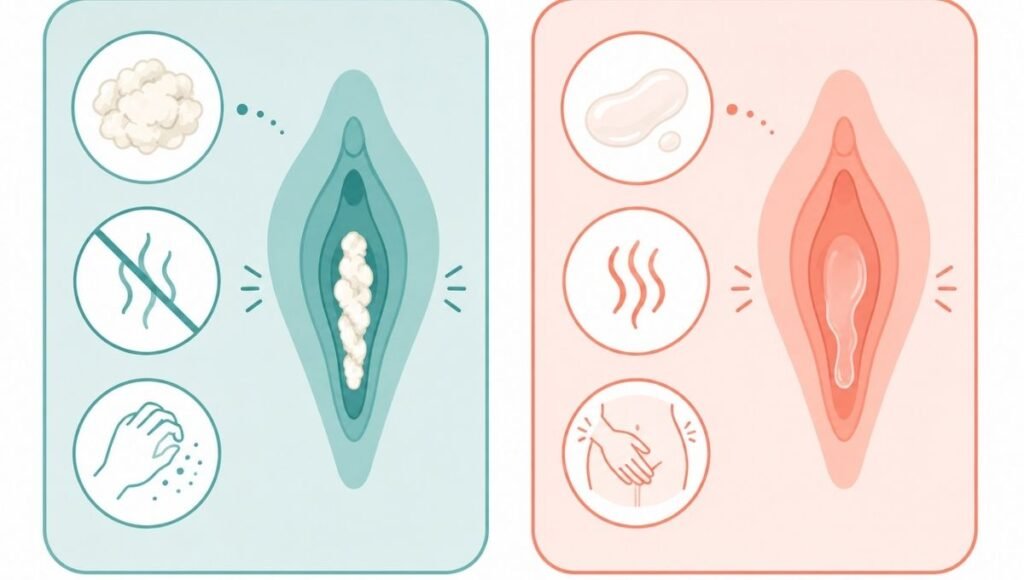
The fundamental distinction between these two conditions is their cause.
Yeast infections (vaginal candidiasis) are caused by an overgrowth of Candida — a fungus that normally lives in small amounts in the vaginal environment without causing problems. When the vaginal microbiome is disrupted — by antibiotics, hormonal changes, high blood sugar, or other factors — Candida populations can multiply beyond normal levels, causing the characteristic symptoms of a yeast infection.
Bacterial vaginosis is not caused by a single pathogenic bacterium introduced from outside. It is a disruption of the vaginal bacterial balance — specifically, a reduction in the protective Lactobacillus bacteria that normally dominate a healthy vaginal microbiome, and an overgrowth of anaerobic bacteria including Gardnerella vaginalis and others. When Lactobacillus populations decline, the vaginal pH rises, creating conditions in which anaerobic bacteria thrive.
This distinction explains why the treatments are completely different and non-interchangeable. Antifungal medications target fungal cell membranes — they have no effect on bacteria. Antibiotics target bacteria — they have no effect on Candida, and can actually worsen yeast overgrowth by further reducing the Lactobacillus populations that normally keep Candida in check.
What Does a Yeast Infection Look Like: Symptoms and Signs
Yeast infection symptoms are driven by the inflammatory response to Candida overgrowth in the vaginal tissue.
Discharge: The most characteristic feature of a yeast infection is thick, white, clumpy discharge — often described as resembling cottage cheese. It does not have a strong odour, which is one of the key distinguishing features from BV.
Itching: Typically intense and the most prominent symptom. The itching affects both the vaginal opening and the external vulva.
Redness and swelling: Inflammation of the vulva and vaginal opening is common — the skin may appear red, swollen, and irritated. This visible inflammation is more characteristic of yeast infections than BV.
Burning: A burning sensation during urination and during sexual activity, caused by friction and pressure on inflamed tissue.
Soreness: General soreness and sensitivity of the vulvar and vaginal area.
What is notably absent: A strong or fishy odour. If the most prominent feature of your symptoms is an unusual smell, BV is more likely than a yeast infection.
Bacterial Vaginosis Symptoms: What BV Feels Like
BV symptoms are driven by the chemical byproducts of anaerobic bacterial overgrowth, particularly amines — volatile compounds that produce the characteristic odour.
Discharge: Thin, watery, and typically grey or white in colour — quite different in texture from the thick, clumpy discharge of a yeast infection. The volume may be increased.
Odour: A fishy smell is the most characteristic feature of BV. It is caused by amine byproducts from anaerobic bacteria, and it typically intensifies after sexual activity — because semen is alkaline and raises vaginal pH, which increases amine production. If you notice a stronger smell after sex, BV is significantly more likely than a yeast infection.
Itching and burning: Present in some women with BV but typically less intense than with a yeast infection.
What is notably absent: The thick, cottage cheese-like discharge and significant external vulvar inflammation that characterise yeast infections. BV discharge is thin and watery.
The silent majority: An estimated 50–84% of women with BV have no symptoms at all, according to research published in Clinical Infectious Diseases. BV is often discovered incidentally during a routine examination or when testing for other reasons.
Yeast Infection vs BV: Side-by-Side Comparison
| Feature | Yeast Infection | Bacterial Vaginosis |
|---|---|---|
| Cause | Candida fungal overgrowth | Bacterial imbalance — reduced Lactobacillus |
| Discharge texture | Thick, white, clumpy (cottage cheese) | Thin, watery, homogeneous |
| Discharge colour | White | Grey or white |
| Odour | None or mild | Fishy, intensifies after sex |
| Itching | Intense, prominent | Mild or absent |
| Vulvar inflammation | Yes — redness, swelling | Usually absent |
| Burning during urination | Yes | Sometimes |
| Pain during sex | Yes | Mild or absent |
| Vaginal pH | Normal (3.8–4.5) | Elevated (above 4.5) |
| Treatment | Antifungal medication | Antibiotic medication |
What Causes Each Condition
Yeast Infection Causes
Antibiotics are the most common trigger. By reducing Lactobacillus populations alongside the targeted bacteria, antibiotics create conditions in which Candida — normally kept in check by the healthy microbiome — can overgrow. This is why yeast infections following antibiotic courses are so common.
Hormonal changes — including pregnancy, hormonal contraception containing oestrogen, and the hormonal shifts of the menstrual cycle — can alter vaginal pH and glycogen levels in ways that favour Candida growth.
Elevated blood sugar — in people with diabetes or prediabetes, higher glucose levels in vaginal secretions provide fuel for Candida growth.
Weakened immune function — conditions or medications that suppress immune function increase susceptibility to Candida overgrowth.
Tight, non-breathable clothing — creates warm, moist conditions that favour fungal growth.
BV Causes
BV causes are less fully understood than yeast infection causes — which is part of why it is more difficult to prevent. Known contributing factors include:
New or multiple sexual partners — sexual activity is associated with BV, though BV is not technically classified as an STI. The introduction of new bacteria or semen (which is alkaline) can disrupt vaginal pH and microbiome balance.
Douching — one of the most consistent risk factors for BV. Douching removes Lactobacillus populations and disrupts vaginal pH, creating conditions that favour anaerobic bacterial overgrowth.
Hormonal changes — menstruation, pregnancy, and menopause all affect vaginal pH and microbiome composition in ways that can trigger BV.
Absence of condom use — consistent condom use is associated with lower BV rates, likely because it reduces semen-related pH disruption.
Can You Have Sex With a Yeast Infection
The short answer is that it is not recommended — and here is why it matters.
During an active yeast infection, the vaginal tissue and vulva are inflamed and sensitive. Sexual activity creates friction on already-irritated tissue, which intensifies discomfort and can worsen inflammation. It can also slow healing.
Additionally, Candida can be transmitted through sexual contact — though sexual partners typically do not develop symptomatic infections, they can harbour the organism and potentially reintroduce it, contributing to recurrence after treatment.
The practical recommendation: Wait until treatment is complete and symptoms have fully resolved before resuming sexual activity. For oral antifungal treatment (fluconazole), this typically means 48–72 hours. For topical treatments, wait until the full course is complete and symptoms are gone.
The same guidance applies to BV: sexual activity during active BV can worsen symptoms and potentially reintroduce bacteria after treatment.
Treatment: What Works for Each
Yeast Infection Treatment
Over-the-counter antifungal medications are effective for uncomplicated yeast infections in women who have previously been diagnosed with a yeast infection and recognise their symptoms. Options include:
- Topical treatments: Clotrimazole, miconazole, and tioconazole creams and suppositories, available in one-day, three-day, and seven-day courses. The seven-day course is often preferred for more complete treatment.
- Oral medication: Fluconazole (Diflucan) — a single oral tablet available by prescription in most countries, highly effective for uncomplicated yeast infections.
Important caveat: Over-the-counter treatment is appropriate for women with a confirmed previous diagnosis who are confident they recognise their symptoms. If you have never been diagnosed before, if symptoms are unusual, or if a previous course of treatment did not resolve the infection, clinical evaluation is warranted before self-treating.
BV Treatment
BV requires antibiotic treatment — antifungal medications have no effect on bacterial imbalances. The standard treatments are:
- Metronidazole — available as oral tablets (typically a seven-day course or a single two-gram dose) or as a vaginal gel (applied for five nights). The vaginal gel formulation is often preferred as it minimises systemic side effects.
- Clindamycin — available as a vaginal cream or oral capsules.
Both are prescription medications in most countries. Completing the full course is important — BV recurrence rates are high, and incomplete treatment increases resistance.
If you only have 10 minutes: If you have symptoms that are new or ambiguous, book a same-day or next-day appointment with your GP or a sexual health clinic. Both yeast infections and BV can be diagnosed quickly with a simple examination — and getting the right diagnosis takes less time than self-treating the wrong condition.
Why Do I Keep Getting Yeast Infections: Recurring Infections

Recurrent yeast infections — defined as four or more episodes per year — affect approximately 8% of women and represent a distinct clinical entity from occasional yeast infections.
Common contributors to recurrence:
Incomplete treatment of previous infections. Antibiotic use for other conditions. Hormonal contraception. Poorly controlled blood sugar. An immune system that is persistently less effective at keeping Candida in check. And — notably — a sexual partner who is carrying Candida without symptoms, creating repeated reinfection.
Management options for recurrent yeast infections:
Extended antifungal treatment — typically a six-month course of weekly oral fluconazole — has the strongest evidence base for reducing recurrence. This is a prescription approach that requires clinical assessment and is significantly more effective than treating each episode individually.
Probiotic supplementation — specifically Lactobacillus rhamnosus and L. reuteri — has emerging evidence for supporting vaginal microbiome recovery after antifungal treatment.
Recurring BV is also extremely common — up to 50% of women treated for BV experience recurrence within three months. Extended antibiotic regimens, boric acid vaginal suppositories (for confirmed recurrent BV, under clinical guidance), and vaginal probiotics are management options for recurrence.
If you are self-treating repeatedly without clinical confirmation: This is the scenario in which it is most important to seek evaluation. Recurrent symptoms that have been self-treated multiple times may not all be the same condition. BV and yeast infections can coexist. Symptoms that persist or recur after appropriate treatment may indicate another cause.
Warning Signs: When Not to Self-Diagnose or Self-Treat
- First-time symptoms — get a confirmed diagnosis before treating
- Symptoms that do not resolve after a complete course of appropriate treatment
- Severe symptoms — extensive inflammation, significant pain, systemic symptoms including fever
- Pregnancy — both BV and yeast infections in pregnancy require clinical management
- Symptoms that could indicate an STI — particularly unusual discharge with pelvic pain, which may indicate chlamydia, gonorrhoea, or pelvic inflammatory disease
- Three or more episodes per year — warrants clinical evaluation and a discussion about management strategies for recurrence
- Any uncertainty about which condition you have — a laboratory test can confirm within a single appointment
Frequently Asked Questions
How do I know if I have a yeast infection or BV? The most reliable distinguishing features are discharge texture and odour. Yeast infection discharge is thick, white, and clumpy, with little or no odour. BV discharge is thin and watery, typically grey or white, with a fishy odour that intensifies after sex. Significant external itching and vulvar redness are more characteristic of yeast infections. If you are uncertain — particularly if this is your first experience with either condition — a clinical examination is the most reliable approach.
Can you have a yeast infection and BV at the same time? Yes. Co-infection is possible and is more common than most people realise. This is one of the reasons why self-diagnosis based on symptoms alone is inherently limited — and why symptoms that do not respond to treatment for one condition may reflect the presence of the other.
Is BV an STI? BV is not classified as a sexually transmitted infection. It is not caused by a single externally introduced pathogen, and it can occur in women who have never been sexually active. However, sexual activity — particularly with new or multiple partners — is a significant risk factor, likely through disruption of vaginal pH and microbiome balance. Consistent condom use is associated with lower BV rates.
Can a yeast infection go away on its own? Mild yeast infections occasionally resolve without treatment as the immune system restores balance. More significant infections — particularly those with pronounced itching and inflammation — are unlikely to resolve spontaneously and warrant treatment. Waiting without treating risks symptom persistence and potential worsening.
Why does BV smell worse after sex? Semen is alkaline (pH approximately 7.2–8.0), which temporarily raises vaginal pH when introduced into the vaginal environment. The higher pH increases the production of amines — volatile compounds produced by the anaerobic bacteria responsible for BV — which produce the characteristic fishy odour. This intensification of odour after sex is one of the most reliable clinical indicators of BV specifically.
What happens if BV is left untreated? Untreated BV increases susceptibility to STIs including HIV and HSV-2, increases the risk of pelvic inflammatory disease, and in pregnancy is associated with increased risk of preterm birth and low birth weight. It does not always produce symptoms, but the absence of symptoms does not mean the absence of health implications.
The Bottom Line
Yeast infection vs BV is a genuinely confusing comparison — the symptoms overlap enough that self-diagnosis is unreliable, and treating the wrong condition delays resolution and can worsen the underlying issue. The most important thing is getting the right diagnosis, which is simpler and faster than most people expect.
If you have symptoms that clearly match your previous experience of a confirmed yeast infection, over-the-counter treatment is a reasonable first step. If there is any uncertainty — if the symptoms are new, unusual, or have not responded to previous treatment — a clinical evaluation takes 15–20 minutes and provides the clear answer that self-diagnosis cannot.
Recurring infections of either type deserve more than repeated treatment of individual episodes. Effective management strategies exist for both recurrent yeast infections and recurrent BV — but they require a clinical conversation to access.
References
- Centers for Disease Control and Prevention. Bacterial Vaginosis. Updated March 2024. https://www.cdc.gov/std/bv/stdfact-bacterial-vaginosis.htm
- Sobel JD. Recurrent vulvovaginal candidiasis. American Journal of Obstetrics and Gynecology. 2016;214(1):15–21.
- Koumans EH, et al. The prevalence of bacterial vaginosis in the United States, 2001–2004. Sexually Transmitted Diseases. 2007;34(11):864–869.
- Workowski KA, et al. Sexually Transmitted Infections Treatment Guidelines, 2021. MMWR Recommendations and Reports. 2021;70(4):1–187.
- American College of Obstetricians and Gynecologists. Vaginitis in Nonpregnant Patients. ACOG Practice Bulletin No. 215. 2020.