

Seeing the word “abnormal” on a Pap smear report can be frightening. For many women, it immediately raises questions about cervical cancer, HPV, fertility, or even their relationship.
The good news is that an abnormal Pap smear is surprisingly common, and most abnormal results are not cancer. They simply mean that some cervical cells look different from normal and deserve a closer look or routine follow-up.
In this guide, we’ll walk you through what your results mean, explain common medical terms in plain English, and show you exactly what usually happens next—so you can replace uncertainty with clear, science-backed information.
Quick Reassurance
- Most abnormal Pap smear results are not cervical cancer.
- HPV is the most common cause, and most infections clear naturally.
- Many abnormal cell changes disappear without treatment.
- Regular follow-up helps detect problems long before they become cancer.
- Understanding your results is the first step toward protecting your health—not a reason to panic.
Quick Result Guide
| Your Result | What It Usually Means | How Concerned Should You Be? | What Usually Happens Next |
|---|---|---|---|
| Normal | No abnormal cervical cells were found. | 🟢 Low | Continue routine screening based on your age. |
| Unsatisfactory | The sample didn’t contain enough cells to evaluate accurately. | 🟢 Low | Repeat the Pap smear in a few months. |
| ASC-US | Mild cell changes that are often linked to HPV or temporary inflammation. | 🟢 Usually Low | HPV testing or a repeat Pap smear in 1 year. |
| LSIL | Low-grade cell changes, commonly caused by HPV. Many return to normal naturally. | 🟡 Low to Moderate | Repeat testing or a colposcopy depending on age and HPV results. |
| HSIL | More significant abnormal cells that deserve closer evaluation. | 🟠 Moderate to High | Colposcopy and possibly a biopsy are usually recommended. |
| AGC | Abnormal glandular cells that require additional investigation. | 🟠 Higher | Colposcopy and sometimes further testing of the uterus or cervix. |
What Is a Pap Smear and Why Does It Matter
<cite index=”23-1″>A Pap smear screens for cervical cancer. The test checks for abnormal cells on your cervix that are cancerous or have the potential to become cancerous and may also detect certain infections and inflammation. During a Pap smear, your healthcare provider takes cells from your cervix to examine under a microscope.</cite>
The test is named for Dr. George Papanicolaou, the American physician who developed it in the early twentieth century. Since its introduction, cervical cancer mortality has declined by more than 50% in countries with widespread screening programs — making it one of the most impactful preventive health interventions in the history of medicine.
Understanding why the test matters helps with the motivation to keep up with it. Cervical cancer develops slowly — typically over years, from cellular changes that progress through recognisable stages before becoming invasive cancer. A Pap smear catches these changes at the stage when intervention is straightforward and outcomes are excellent. By the time symptoms develop, the disease has often progressed significantly.
This is why the Pap smear is described as cancer prevention rather than cancer detection. Its power lies in finding changes before they become a problem — which is precisely why regular attendance matters more than testing only when something feels wrong.
How Often Should You Get a Pap Smear: Current Guidelines
Screening frequency recommendations have evolved over the past decade as the evidence for longer intervals between screenings has grown — and many people are working with outdated information about how frequently they need to be tested.
Ages 21–29: A Pap smear alone every three years. HPV testing is not routinely recommended for this age group because HPV infections are very common in younger adults and usually clear on their own without causing long-term changes.
Ages 30–65: The preferred approach is a Pap smear combined with an HPV co-test every five years. A Pap smear alone every three years is also acceptable if the co-test is not available or preferred.
After 65: Routine cervical screening can typically be stopped if you have had adequate prior screening with normal results and are not otherwise at elevated risk. Your provider will advise on the appropriate point to stop based on your individual screening history.
If you have had a hysterectomy: If the hysterectomy included removal of the cervix (total hysterectomy) and you have no history of high-grade cervical changes or cervical cancer, routine Pap smears are no longer necessary. If the cervix was not removed (partial hysterectomy), screening should continue.
Higher-risk situations: More frequent screening may be recommended if you have a history of cervical cancer, were exposed to diethylstilbestrol (DES) before birth, have a weakened immune system (including HIV), or have had previous high-grade abnormal Pap results. Your provider will advise on the appropriate schedule for your circumstances.
How to Prepare for a Pap Smear
Preparation is straightforward and the steps are designed to ensure the sample collected gives the most accurate result possible.
Timing relative to your period: <cite index=”25-1″>A Pap smear can be performed at any point in the menstrual cycle, though the results may be easier to read if you are not menstruating.</cite> Light spotting is generally not a concern. Heavy menstrual flow can make the sample harder to interpret, and many providers prefer to reschedule in that case — but it is worth calling ahead rather than cancelling the appointment.
In the 48 hours before your test:
- Avoid vaginal intercourse
- Avoid inserting anything vaginally — including tampons, menstrual cups, lubricants, or vaginal medications
- Avoid douching or vaginal washing
These precautions are not about hygiene — they are about ensuring the cervical cell sample is not disrupted by other substances before collection.
Practical preparation:
- Empty your bladder beforehand for comfort
- If you tend to find the speculum uncomfortable, taking an over-the-counter pain reliever such as ibuprofen 30–60 minutes before the appointment may help
- Wear clothing that is easy to remove from the waist down
- If you have had a difficult previous experience — whether due to discomfort, anxiety, or a history of pelvic trauma — telling your provider before the appointment starts allows them to adjust their approach
Can you have a pap smear on your period? Yes, in most cases. Light bleeding does not prevent the test from being performed. Heavy flow may interfere with the sample quality, and some providers prefer to reschedule if your period is heavy on the day of the appointment. If you are unsure, call ahead — it is a common and entirely reasonable question.
What Happens During a Pap Smear: Step by Step

Knowing exactly what to expect removes most of the anxiety that people carry into this appointment.
The appointment typically takes 15–20 minutes in total, including the conversation with your provider before and after. The collection itself takes approximately two to three minutes.
Step 1 — You will be asked to undress from the waist down and lie on the examination table, typically with your feet in stirrups or resting on the table edge. A sheet is provided for privacy.
Step 2 — Your provider will insert a speculum into the vagina. The speculum is a smooth instrument that gently holds the vaginal walls open so the cervix is visible. This is the step most people find uncomfortable — there is typically a sensation of pressure and stretching. It should not be painful. If you experience pain rather than pressure, tell your provider immediately.
Step 3 — Your provider will collect cells from the cervix using a small soft brush and a flat scraping device. You may feel a brief cramping or mild scraping sensation — this is the actual cell collection and lasts only a few seconds.
Step 4 — The speculum is removed and the appointment is essentially complete. You may have very light spotting for a day or two afterward — this is normal and not a cause for concern.
Communicating during the procedure: You are always entitled to ask your provider to stop, slow down, or adjust what they are doing. If the speculum is causing pain rather than pressure, saying so allows your provider to try a smaller size or adjust the angle. Providers perform this procedure regularly — there is nothing you could say that they have not heard before.
Pap Smear vs HPV Test: What Is the Difference
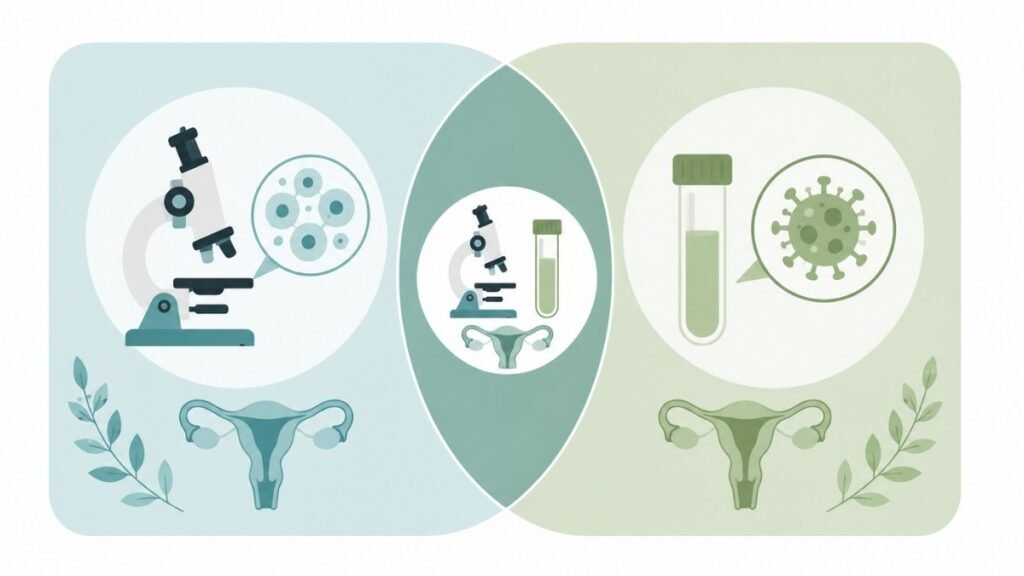
These two tests are related but distinct, and understanding the difference helps make sense of your results and your screening schedule.
A Pap smear looks at cervical cells directly — it identifies cellular changes (called dysplasia or CIN, cervical intraepithelial neoplasia) that may indicate precancerous changes. It does not look for the virus itself.
An HPV test looks for the presence of high-risk HPV strains — particularly HPV 16 and 18 — in cervical cells. It does not assess the cells themselves for abnormality. A positive HPV test means a high-risk strain is present; it does not mean cancer is present.
An HPV/Pap co-test combines both in a single appointment using the same sample. This is the preferred approach for people aged 30–65 because it provides a more complete picture than either test alone.
<cite index=”30-1″>If your HPV test results are normal, you should retest every five years. You may need more frequent screenings if you’ve tested positive for HPV in the past or if you have a condition that weakens your immune system.</cite>
Why both matter: A Pap smear can detect cellular changes caused by HPV strains not covered by the HPV test. An HPV test can identify high-risk viral infection before cellular changes have developed. Used together, they catch a wider range of situations than either alone.
Abnormal Pap Smear: What Your Results Actually Mean
An abnormal Pap smear result is the source of more unnecessary anxiety than almost any other routine test result — largely because “abnormal” sounds alarming when most abnormal results require nothing more than monitoring.
<cite index=”24-1″>If your Pap test comes back with an abnormal result, your first instinct may be to panic that you have cervical cancer. But your doctor will first want to do a careful evaluation to determine whether there’s truly cause for concern.</cite>
Here is what the main result categories actually mean:
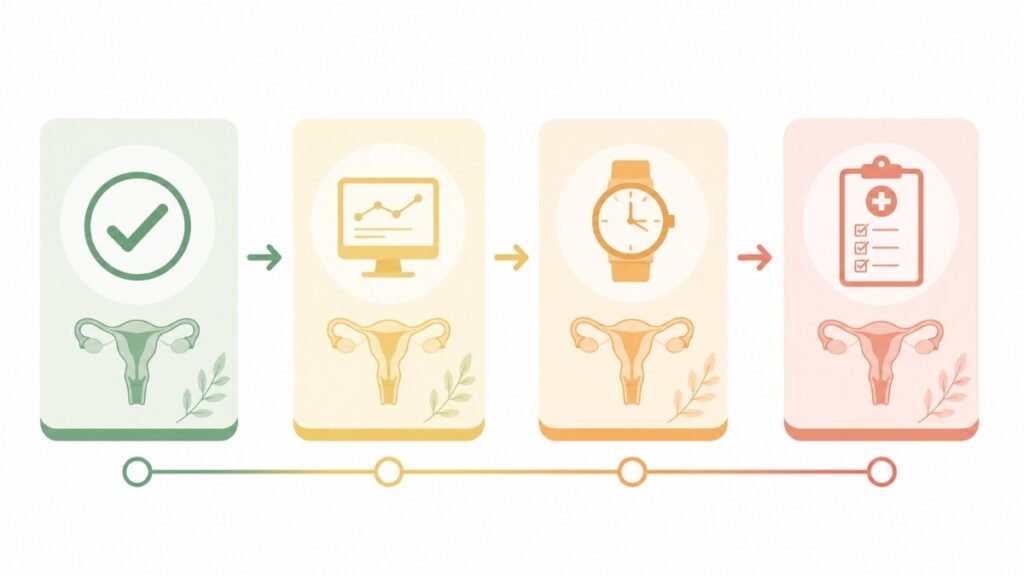
Normal (Negative)
No abnormal cells were found. Your next Pap smear or co-test is due at the standard interval for your age group.
Unsatisfactory
The sample did not contain enough cells to be properly evaluated — not because something is wrong, but because the sample was insufficient for technical reasons. A repeat test is needed, typically in two to four months.
ASC-US (Atypical Squamous Cells of Undetermined Significance)
The most common abnormal result. It means some cells look slightly unusual, but the significance is unclear. This does not mean cancer or even precancer — it often reflects minor inflammatory changes or a transient HPV infection that will clear on its own.
The standard follow-up is usually an HPV test (if not already done) or a repeat Pap smear in one year. Most people with ASC-US return to normal results at their next test.
LSIL (Low-Grade Squamous Intraepithelial Lesion)
Indicates mild cellular changes consistent with HPV infection. Most LSILs resolve on their own without treatment, particularly in younger women. Monitoring with a repeat Pap smear or co-test in one year is typical.
HSIL (High-Grade Squamous Intraepithelial Lesion)
Indicates more significant cellular changes that have a higher likelihood of progressing if left untreated. HSIL warrants closer evaluation — typically a colposcopy, which allows the cervix to be examined in detail.
Colposcopy: What Happens Next After an Abnormal Result
<cite index=”22-1″>A colposcopy is a fairly simple procedure — examining the cervix in detail with a pair of high-tech binoculars. The whole thing usually takes no more than 10 to 15 minutes. First, the doctor or nurse will talk to you about your Pap results, explain the procedure, and get your consent. Next, the doctor will put in a speculum, just like for a Pap test, and then bring the colposcope into place. The colposcope might look pretty intimidating, but it stays outside of you.</cite>
If abnormal tissue is found during colposcopy, a small biopsy may be taken for laboratory analysis. <cite index=”22-1″>Your doctor will make a plan with you based on the biopsy results. If the results are consistent with low-grade changes or less, the plan will likely be to repeat the Pap smear in one year.</cite>
The Most Important Thing to Know About Abnormal Results
<cite index=”27-1″>It is also possible to receive a false-positive result, in which your results appear abnormal but there are no precancerous or cancerous cells.</cite> Conversely, a false-negative can occur when results appear normal but precancerous changes are present — which is one reason regular screening at the recommended intervals matters more than any single result.
The progression from initial cellular changes to invasive cervical cancer typically takes years. This means the window for detection and intervention is wide — and the vast majority of women with abnormal Pap results never develop cervical cancer.
After the Appointment: What to Expect
Results timing: Results are typically available within one to two weeks. <cite index=”22-1″>”My advice to women is to find out how long it will be before the results are in, and call the office if you haven’t heard in a reasonable amount of time,”</cite> says one Cleveland Clinic gynaecologist.
After the test: You may have very light spotting for one to two days. This is normal. There are no restrictions on activity after a Pap smear.
If you have not heard: Do not assume no news is good news. Follow up with your provider if results have not arrived within the expected window.
Warning Signs: When to Seek Prompt Attention
The following warrant a clinical conversation before your next scheduled Pap smear:
- Any abnormal vaginal bleeding — between periods, after sex, or after menopause
- Unusual vaginal discharge — changes in colour, volume, or odour
- Pelvic pain that is new, persistent, or worsening
- Pain during sexual intercourse that is new or worsening
- Any symptom that concerns you, even if you cannot clearly describe why
These are symptoms that warrant evaluation independently of where you are in the cervical screening schedule.
Frequently Asked Questions
How often do I need a Pap smear? Every three years if you are aged 21–29. Every five years from ages 30–65 with a combined HPV co-test, or every three years with a Pap smear alone. After 65, routine screening can typically stop if you have had adequate prior normal results. Your provider will advise on the right schedule for your individual circumstances.
Does an abnormal Pap smear mean I have cancer? Almost certainly not. The vast majority of abnormal results — particularly ASC-US and LSIL — reflect minor cellular changes that either resolve on their own or require monitoring rather than treatment. HSIL warrants closer evaluation, but even this does not mean cancer is present. An abnormal result is information that guides the next step, not a diagnosis.
What is the difference between a Pap smear and an HPV test? A Pap smear looks directly at cervical cells for abnormal changes. An HPV test looks for the presence of high-risk HPV strains in those cells. A co-test combines both. They are related but different, and both contribute useful information — which is why the co-test is the preferred approach for people aged 30–65.
Can I get a Pap smear if I am a virgin? Yes. Cervical cancer risk factors other than sexual activity exist, and the current guidelines recommend beginning screening at age 21 regardless of sexual history. The speculum used for the procedure is typically adjusted for individuals who have not had penetrative sex.
Why was my Pap smear result unsatisfactory? An unsatisfactory result means the sample did not contain enough cells to be properly evaluated — not that something is wrong. It happens for technical reasons unrelated to your health. A repeat test, typically in two to four months, resolves this.
I am overdue for my Pap smear. Is it too late? No. Cervical changes develop slowly — the average progression from HPV infection to invasive cervical cancer takes years. If you are overdue for screening, making the appointment now is what matters. There is no benefit to further delay.
The Bottom Line
An abnormal Pap smear result can bring a wave of questions—but it shouldn’t leave you feeling powerless. Most abnormal results are not cervical cancer, and many cervical cell changes either return to normal on their own or can be treated long before cancer develops.
What matters most is knowing what your results mean, following your healthcare provider’s recommendations, and staying consistent with future screening. Cervical cancer is one of the most preventable cancers because these changes are usually found early, when they are easiest to monitor or treat.
Knowledge doesn’t change your test result—but it can change how confidently you take the next step.
🌸 PureInti Editorial Notes: Why We Created This Guide
An abnormal Pap smear result can feel overwhelming—but confusion shouldn’t stand between you and your health.
That’s why this guide focuses on clear explanations instead of complicated medical language, helping you understand what your results mean, what usually happens next, and when you should seek follow-up care.
This guide is built around four essentials:
- 🩺 Understanding Your Results — Learn what terms like ASC-US, LSIL, HSIL, and AGC actually mean in everyday language.
- 🦠 HPV Without Stigma — Understand why HPV is incredibly common, why it doesn’t define your health or relationships, and why an abnormal result doesn’t automatically mean someone was unfaithful.
- 📋 Knowing Your Next Steps — From repeat testing to colposcopy and biopsy, know what to expect before your appointment.
- 🌿 Protecting Your Cervical Health — Discover practical habits that support long-term cervical health while you wait for follow-up care.
Because the goal isn’t simply to understand a lab report.
It’s to replace fear with knowledge—and help you make confident decisions about your health.
Continue Learning About Cervical Health
Your Pap smear is only one part of protecting your long-term reproductive health. These guides can help you better understand prevention, HPV, and routine care:
- HPV Symptoms in Women and Men: A Complete Guide
- HPV Vaccine: Schedule, Age, Side Effects, and Who Should Get It
- STI Testing: When to Get Tested and What to Expect
- Women’s Reproductive Health: A Complete Guide for Adults
- Sexual Health: A Complete Guide for Adults
🌸 A Final Word from PureInti
At PureInti, we believe that sexual and reproductive health should never be surrounded by fear, shame, or confusion. Everyone deserves clear, evidence-based information presented with respect, compassion, and without judgment.
Whether you’re reading this because of an unexpected test result, a new symptom, or simply a desire to understand your body better, we hope this guide has helped replace uncertainty with knowledge and confidence.
Your health is not defined by a diagnosis, a lab report, or a single moment. It’s shaped by the informed decisions you make today—and the care you continue to give yourself tomorrow.
Thank you for trusting PureInti to be part of that journey.