

Vaginal atrophy often begins with small changes that are easy to dismiss. Vaginal dryness, discomfort during sex, mild burning, or frequent urinary irritation can develop gradually, leaving many women wondering why something suddenly feels different. These symptoms are common, yet many people delay seeking help because they assume they’re simply part of aging or feel uncomfortable talking about them.
In reality, vaginal atrophy is a well-understood medical condition caused primarily by declining estrogen levels, and effective treatment is available. Doctors now increasingly use the broader term Genitourinary Syndrome of Menopause (GSM) because these hormonal changes affect more than the vagina—they can also involve the vulva, urethra, and bladder. Understanding what vaginal atrophy is, what causes it, and which treatments actually work can make it much easier to find relief and improve everyday comfort.
Quick Answer: What You Need to Know
- Vaginal atrophy is caused primarily by declining estrogen levels.
- It commonly leads to dryness, burning, pain during sex, urinary urgency, and symptoms that can mimic recurrent UTIs.
- Doctors increasingly use the term GSM because the condition affects multiple pelvic tissues, not just the vagina.
- Early treatment can significantly improve comfort, urinary health, and sexual well-being — there’s rarely a reason to wait it out.
What Is Vaginal Atrophy? Why Doctors Now Use the Term GSM
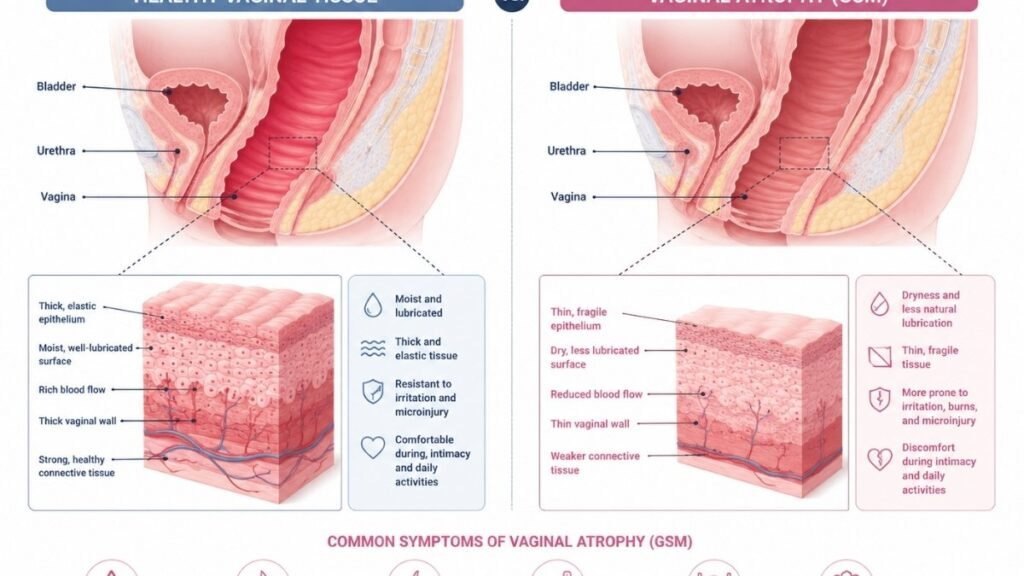
Vaginal atrophy develops when declining estrogen causes the vaginal tissue to become thinner, drier, and less elastic. These changes often happen gradually, so symptoms such as dryness, burning, discomfort during sex, or urinary irritation may seem easy to overlook at first. Today, many healthcare providers use the broader term Genitourinary Syndrome of Menopause (GSM) because low estrogen affects not only the vagina but also the vulva, urethra, and bladder.
What happens when estrogen declines
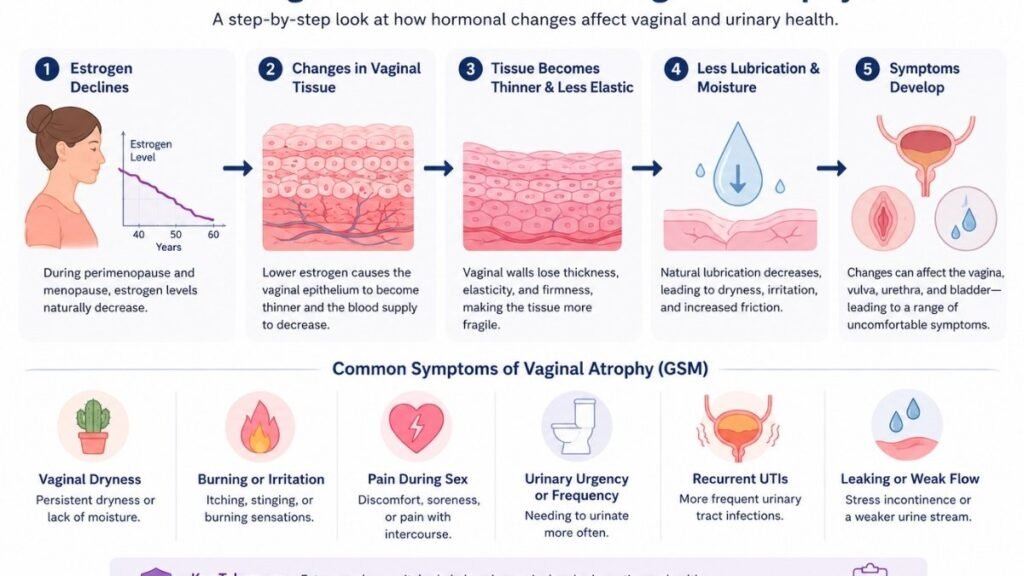
Lower estrogen reduces blood flow to vaginal tissue, decreases natural lubrication, and causes the vaginal walls to become thinner and less flexible. These changes don’t happen overnight — they tend to develop gradually, which is one reason symptoms are sometimes dismissed or overlooked at first.
Vaginal Atrophy vs. GSM
Genitourinary Syndrome of Menopause (GSM) is the more current medical term, and it reflects something important: estrogen decline doesn’t just affect the vagina. It can also affect the vulva, urethra, and bladder — which explains why urinary symptoms often show up alongside vaginal ones. GSM isn’t a different condition; it’s a more accurate way of describing the full picture.
Vaginal Atrophy vs. GSM
| Vaginal Atrophy | GSM | |
|---|---|---|
| Definition | Thinning and drying of vaginal tissue due to low estrogen | Broader syndrome covering vaginal, vulvar, and urinary changes from low estrogen |
| Areas affected | Vagina | Vagina, vulva, urethra, bladder |
| Symptoms included | Dryness, burning, painful sex | All of the above, plus urinary urgency, frequency, and recurrent UTI-like symptoms |
| Why the term is used | Older, narrower terminology | Reflects current understanding of how estrogen loss affects the whole genitourinary system |
This is a well-documented medical condition tied to a hormonal change, not a sign that something is wrong with you or that you’ve let your health slip. Framing it this way tends to make it much easier to seek care without unnecessary embarrassment.
Key Takeaway: Vaginal atrophy is now understood as part of the broader condition called GSM, which better reflects how estrogen decline affects multiple pelvic tissues.
What Causes Vaginal Atrophy? Common Risk Factors and Triggers
Vaginal atrophy develops when estrogen levels remain too low to keep vaginal tissue healthy.Breastfeeding, certain cancer treatments, medications that lower estrogen, and surgical removal of the ovaries can all lead to the same tissue changes, even in younger women.
Menopause-related causes
- Natural menopause: the most common cause, as estrogen production gradually decreases.
- Perimenopause: estrogen fluctuates in the years leading up to menopause, and symptoms can begin here too, sometimes before periods have even stopped.
- Surgical menopause: removal of the ovaries causes an abrupt drop in estrogen, often leading to more sudden and pronounced symptoms compared to natural menopause.
Causes in younger women
Vaginal atrophy isn’t limited to people going through menopause. It’s a common misconception that this only affects older women — in reality, several situations can lower estrogen at any age:
- Breastfeeding: prolactin suppresses estrogen, which can cause temporary vaginal dryness and thinning.
- Postpartum hormonal shifts: estrogen levels drop sharply after childbirth, regardless of breastfeeding status, and can take time to stabilize.
- Chemotherapy and radiation: certain cancer treatments significantly reduce estrogen production.
- Anti-estrogen medications: drugs used to treat certain cancers or endometriosis can produce similar effects.
- Hormonal birth control: in some individuals, particularly with certain low-estrogen formulations, symptoms of vaginal dryness can develop.
Who is at highest risk?
Risk tends to be higher for people who are postmenopausal, breastfeeding, undergoing cancer treatment, or taking medications that suppress estrogen. Smoking and lack of regular sexual activity or vaginal stimulation (which supports blood flow to the area) can also contribute to more pronounced symptoms.
Risk Factor Self-Assessment
- [ ] I am perimenopausal or postmenopausal
- [ ] I am currently breastfeeding or recently gave birth
- [ ] I’ve had my ovaries removed or undergone another surgery affecting hormone levels
- [ ] I’m undergoing or have completed chemotherapy or radiation
- [ ] I take medication that suppresses estrogen
- [ ] I smoke
- [ ] I’ve noticed dryness or discomfort that’s new for me, regardless of age
If several of these apply, it’s a good sign to bring the topic up at your next appointment, even if your symptoms feel mild so far.
For related hormonal changes that often overlap with these symptoms, see our guide on Perimenopause and Libido.
Vaginal Atrophy Symptoms: Early Signs to Watch For
Many women first notice mild dryness, discomfort during sex, or unexpected urinary symptoms rather than severe pain. Recognizing these early changes can help you start treatment sooner and prevent symptoms from becoming more disruptive.
Vaginal symptoms
- Dryness
- Burning or itching
- Reduced elasticity
- A feeling of tightness or irritation, especially during physical activity or sex
Urinary symptoms
- Urinary urgency
- Needing to urinate more frequently
- Symptoms that closely resemble a urinary tract infection, without an actual infection being present
Sexual health symptoms
- Pain during intercourse
- Light bleeding after intercourse
- Noticeable changes in sensation during sex
Early warning signs
One detail that surprises many people: urinary symptoms often appear before vaginal dryness becomes obvious. If you’ve been dealing with recurring urinary urgency or UTI-like symptoms with negative test results, it’s worth considering whether estrogen-related tissue changes could be part of the picture — this connection is frequently missed because the symptoms don’t seem related to vaginal health at all.
Symptoms, Possible Cause, and First Step
| Symptom | Likely Cause | First Step |
|---|---|---|
| Dryness | Low estrogen | Moisturizer |
| Burning | Tissue thinning | Medical evaluation |
| Painful sex | Reduced elasticity | Lubricant + treatment |
| Urinary urgency | GSM | Medical evaluation |
| Recurrent UTI-like symptoms | Tissue changes | Medical evaluation |
Symptom Tracker
Before your appointment, it can help to jot down:
- [ ] When symptoms started
- [ ] Which symptoms you notice most (vaginal, urinary, or sexual)
- [ ] Whether symptoms are constant or occur mainly during specific activities
- [ ] Any treatments you’ve already tried
- [ ] Whether you’ve had recent UTI testing, and what the results showed
For more detail on dryness specifically, see our guide to Vaginal Dryness.
How Is Vaginal Atrophy Diagnosed?
Diagnosing vaginal atrophy usually begins with a conversation about your symptoms and medical history, followed by a pelvic exam when needed. In most cases, healthcare providers can identify vaginal atrophy without complex testing, although additional tests may be recommended to rule out other conditions with similar symptoms.
What to expect during a pelvic exam
Your provider will typically start with a conversation about your symptoms and medical history, followed by a pelvic exam to look at the vaginal tissue directly. They may check vaginal pH, since elevated pH is common with estrogen-related tissue changes. In most cases, this is all that’s needed to confirm a diagnosis.
Conditions your doctor may rule out
Because some symptoms overlap with other conditions, your provider may also consider:
- Active urinary tract infections
- Yeast infections or bacterial vaginosis
- Skin conditions affecting the vulva
- Other causes of pelvic pain
Laboratory testing is generally reserved for situations where symptoms don’t clearly fit the typical pattern, or when ruling out an infection is necessary.
Questions to Ask Your Healthcare Provider
- [ ] Could my symptoms be related to something other than low estrogen?
- [ ] What treatment would you recommend as a starting point?
- [ ] Is localized vaginal estrogen an option for me?
- [ ] How long before I should expect to notice improvement?
- [ ] Are there any additional tests I should consider?
Discussing symptoms like dryness or painful sex with a clinician can feel awkward at first, but it’s an extremely common conversation for providers — there’s really no need to over-explain or apologize for bringing it up.
Vaginal Atrophy Treatment Options
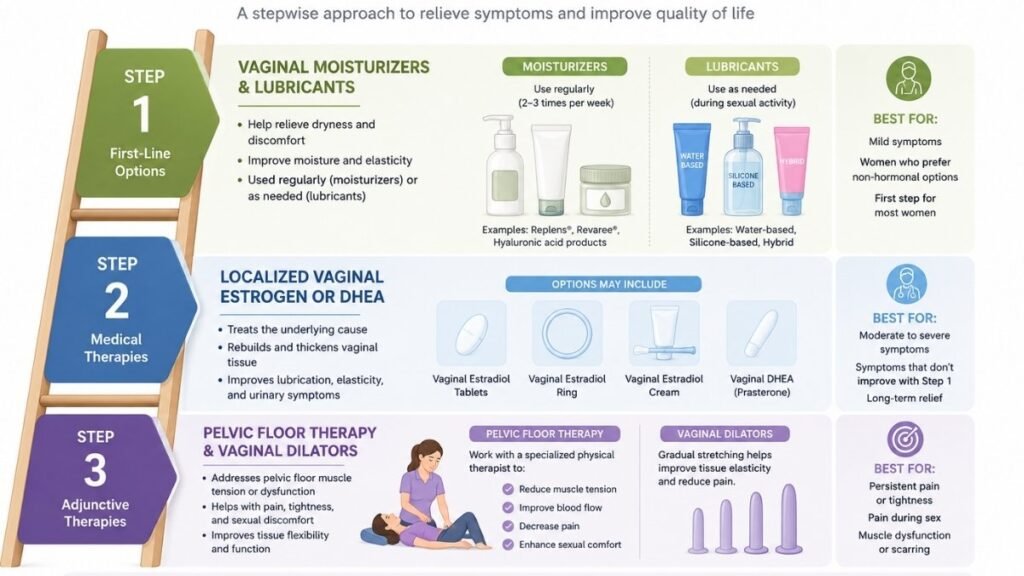
Mild symptoms often improve with vaginal moisturizers or lubricants, while moderate to severe symptoms may require localized vaginal estrogen or other prescription therapies.
Non-hormonal treatments
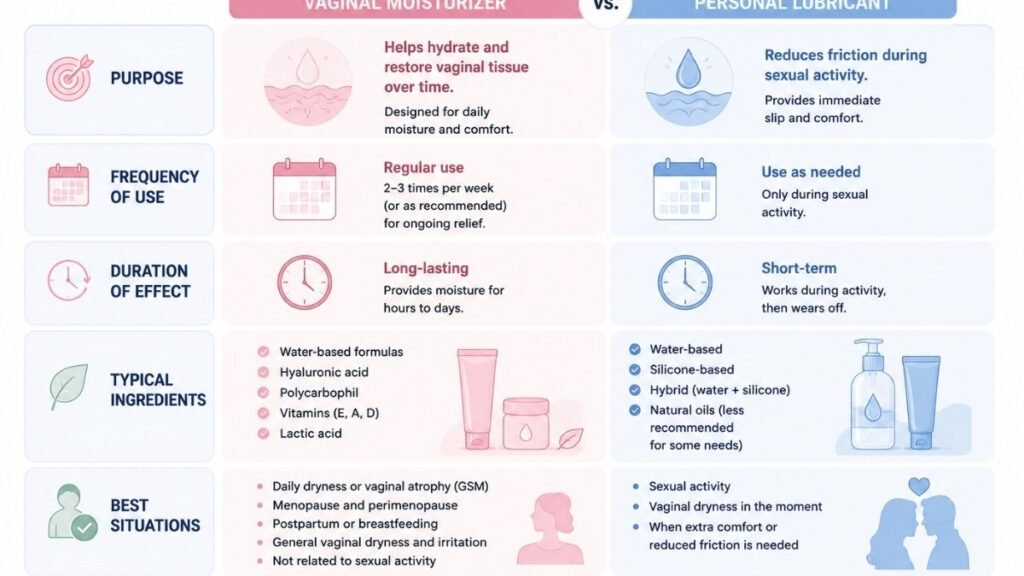
- Vaginal moisturizers: used regularly (not just before sex), these help maintain tissue moisture over time.
- Personal lubricants: used specifically during sexual activity to reduce friction and discomfort.
It’s worth being clear about a common point of confusion: moisturizers improve day-to-day comfort, but they don’t reverse tissue thinning. They manage symptoms rather than treat the underlying cause.
Water-Based vs. Silicone-Based Lubricants
| Water-Based | Silicone-Based | |
|---|---|---|
| Feel | Lighter, more natural feel | Longer-lasting, more slippery |
| Compatibility | Safe with condoms and most toys | Safe with condoms; check compatibility with silicone toys |
| Cleanup | Easier to wash off | Requires more thorough washing |
| Best for | Everyday use, sensitive skin | Longer sessions, less frequent reapplication |
When choosing a lubricant or moisturizer, it’s worth checking ingredient lists for fragrance, glycerin in high concentrations, or parabens, since these can irritate already-sensitive tissue.
Localized vaginal estrogen
For more persistent symptoms, localized vaginal estrogen is often the most effective option. Unlike systemic hormone therapy, it delivers estrogen directly to vaginal tissue with minimal absorption into the bloodstream. It comes in a few forms:
- Creams: applied directly to the vaginal tissue, typically a few times per week after an initial loading period.
- Tablets/inserts: placed inside the vagina using an applicator, usually a couple of times per week.
- Vaginal rings: inserted and left in place for about three months at a time, releasing a steady low dose.
Other prescription therapies
- DHEA (prasterone): a vaginal insert that the body converts into estrogen and other hormones locally.
- Ospemifene: an oral medication that acts on estrogen receptors in vaginal tissue without being a form of estrogen itself.
- Pelvic floor physical therapy: can help with muscle tension that sometimes develops alongside GSM symptoms.
- Vaginal dilators: gradual, gentle use can help maintain and improve vaginal flexibility, particularly for those experiencing tightness.
Comparing Treatment Options
| Option | Type | Best For | Considerations |
|---|---|---|---|
| Moisturizers | Non-hormonal | Mild, day-to-day dryness | Doesn’t reverse tissue changes |
| Lubricants | Non-hormonal | Comfort during sex | Not a treatment for underlying cause |
| Localized vaginal estrogen | Hormonal (local) | Moderate to significant symptoms | Minimal systemic absorption; requires consistent use |
| DHEA | Hormonal (local) | Moderate to significant symptoms | Alternative for those who prefer non-estrogen local therapy |
| Ospemifene | Non-estrogen oral medication | Those who prefer or need a non-vaginal option | Oral option; different side effect profile than local treatments |
Is localized vaginal estrogen safe?
For most people, localized vaginal estrogen is considered a low-risk treatment because so little of it enters the bloodstream compared to systemic hormone therapy (like estrogen patches or pills taken for broader menopause symptoms). That said, individual medical history matters, and this is a conversation worth having directly with your provider — particularly for breast cancer survivors, who may need a more individualized approach depending on their treatment history and oncology team’s guidance.
How to use vaginal estrogen correctly
- Cream: applied with an applicator, typically inserted at bedtime to allow better absorption overnight.
- Tablet: inserted using an applicator, usually positioned toward the upper vagina.
- Ring: placed similarly to a diaphragm and left in place continuously, replaced roughly every three months.
- External application: in some cases, a small amount of cream applied to the vulva externally is recommended alongside internal use, particularly for vulvar symptoms — follow your provider’s specific instructions rather than general guidance, since dosing varies by product.
Key Takeaway: The most effective treatment depends on symptom severity, medical history, and individual preferences — and it’s common to combine approaches.
Can Vaginal Atrophy Improve With Treatment?
Many women experience healthier vaginal tissue, improved lubrication, and less discomfort over time. The amount of improvement depends on the underlying cause, the severity of symptoms, and the treatment used.
Can vaginal tissue recover?
To a significant degree, yes. Treatments like localized vaginal estrogen can restore much of the tissue’s thickness, elasticity, and natural lubrication over time, though the degree of improvement varies by individual and by how long symptoms went untreated beforehand.
How long does treatment take?
Improvement is typically gradual rather than immediate. Many people notice some initial relief within a few weeks, with more complete improvement over two to three months of consistent use. This is a common source of frustration — it’s easy to expect faster results, so knowing upfront that steady, gradual improvement is the norm can help manage expectations.
What happens if treatment is stopped?
Because the underlying cause — low estrogen — doesn’t go away, symptoms often return if treatment is discontinued. This isn’t a sign that the treatment “stopped working”; it simply reflects that ongoing maintenance is usually part of managing this condition long-term, similar to how many chronic conditions require continued management rather than a one-time fix.
What Happens If Vaginal Atrophy Goes Untreated?
Without treatment, symptoms often become more persistent, increasing discomfort during daily activities, sexual intimacy, and urination. Early treatment can help prevent symptoms from becoming more difficult to manage.
Physical complications
Without treatment, tissue thinning and dryness generally continue to worsen over time, which can lead to increased irritation, small tears, and occasional bleeding, particularly with friction from activity or intercourse.
Sexual health consequences
Ongoing pain during intercourse can understandably lead some people to avoid sex altogether, which in turn can affect tissue elasticity further and add strain to relationships — a cycle that’s usually much easier to interrupt with early treatment than after symptoms have been present for years.
Urinary complications
Left unaddressed, urinary urgency, frequency, and recurrent infection-like symptoms can persist or worsen, sometimes leading to repeated rounds of unnecessary antibiotics when the real underlying cause is tissue-related rather than infectious.
None of this is meant to cause alarm — the point isn’t that untreated atrophy is dangerous, but that symptoms rarely improve on their own, and delaying care usually just means living with discomfort longer than necessary.
Daily Habits That Help Manage Vaginal Atrophy
Alongside medical treatment, a few daily habits can meaningfully reduce irritation and support overall comfort.
- Use plain water or a mild, unscented cleanser for external washing — avoid douching entirely.
- Skip scented soaps, sprays, and wipes near the vulva and vagina.
- Choose breathable, cotton-based underwear.
- Stay physically active, which supports circulation throughout the body, including pelvic tissue.
- Incorporate gentle stretching or pelvic floor exercises.
- Manage stress where possible, since chronic stress can affect hormone balance and overall well-being.
- Stay well-hydrated.
- If you smoke, quitting can meaningfully improve blood flow to vaginal tissue over time.
- Continue sexual activity when comfortable, since regular blood flow to the area can help maintain tissue health.
It’s surprisingly common for people to reach for stronger soaps or cleansing products when they notice irritation, assuming it will help — in most cases, this actually worsens symptoms by stripping away what little natural protection remains. Gentler is almost always better here.
Daily Vaginal Health Routine
- [ ] Wash with water or a mild, unscented cleanser only
- [ ] Avoid scented products near the vulva
- [ ] Wear breathable cotton underwear
- [ ] Stay physically active
- [ ] Manage stress through regular routines
- [ ] Stay hydrated
- [ ] Avoid smoking
Key Takeaway: Healthy daily habits support treatment and reduce irritation but do not replace medical therapy when symptoms are significant.
Sex, Intimacy, and Relationships
Ongoing pain or dryness may lead to frustration, reduced confidence, or hesitation about intimacy. Open communication and the right treatment can help many couples maintain a satisfying and comfortable sex life.
How to talk with your partner
Being direct and matter-of-fact tends to work better than avoiding the topic. Something like explaining that a hormonal change is causing physical discomfort — and that it’s treatable — helps a partner understand what’s going on without guessing or assuming it reflects a lack of attraction or interest.
How to resume sex comfortably during treatment
Using a generous amount of lubricant, taking more time for arousal, and choosing positions that reduce pressure on sensitive tissue can all help in the meantime, while treatment takes effect. Many people find that easing back into intimacy gradually, rather than expecting things to feel exactly as they did before, works better and reduces performance pressure on both sides.
When counseling may help
If pain has led to significant anxiety around sex, or if it’s created ongoing tension in the relationship, a counselor — either individually or as a couple — can help address the emotional layer alongside the physical treatment. This is a common and reasonable step, not a sign that something is “wrong” beyond the physical symptoms themselves.
Partner Conversation Checklist
- [ ] Choose a calm, private moment to bring it up — not right before or during sex
- [ ] Explain that it’s a hormonal, treatable condition
- [ ] Share what’s helping and what still feels uncomfortable
- [ ] Discuss adjustments that might help in the meantime
- [ ] Revisit the conversation as treatment progresses
Key Takeaway: Supportive communication and gradual adjustments help protect intimacy while symptoms improve.
When to See a Doctor for Vaginal Atrophy
Persistent pain, bleeding after sex, recurrent urinary problems, or symptoms that continue to worsen are all good reasons to schedule a medical evaluation.
Reach out to a provider if you experience:
- Symptoms that persist despite trying moisturizers or lubricants
- Bleeding after intercourse
- Severe pelvic pain
- Persistent urinary symptoms
- Recurrent UTIs, especially with negative test results
- Symptoms that are rapidly worsening
When to Seek Medical Care
- [ ] Symptoms haven’t improved after a few weeks of self-care
- [ ] You’ve noticed bleeding after sex
- [ ] Pain is severe rather than mild to moderate
- [ ] Urinary symptoms are frequent or persistent
- [ ] You’ve had repeated UTI-like symptoms without confirmed infection
Ongoing symptoms can be frustrating, especially when you’ve already tried treatment without the results you hoped for. A gynecologist or menopause specialist can offer a more detailed evaluation and additional treatment options to help you find lasting relief.
Frequently Asked Questions
What does vaginal atrophy actually feel like, and what are the early warning signs? Common early signs include dryness, mild burning or irritation, and sometimes urinary urgency or frequency before dryness becomes obvious. As symptoms progress, discomfort during sex and reduced elasticity tend to become more noticeable. Because symptoms develop gradually, many people don’t connect them to estrogen changes until they’re brought up during a medical visit.
Can you still have vaginal atrophy if you produce natural lubrication during sex? Yes. Lubrication and tissue elasticity are related but not identical — some people still produce adequate lubrication while the tissue itself has become thinner or less flexible, which can still cause discomfort, irritation, or pain during sex. Lubrication levels alone aren’t a reliable way to rule out atrophy.
When should I start using localized vaginal estrogen to prevent tissue atrophy? There’s no single “right” time that applies to everyone — this depends on your symptoms, risk factors, and personal preference, and it’s a decision best made with your provider. Some people start treatment as soon as mild symptoms appear during perimenopause, while others wait until symptoms become more noticeable. Starting earlier can sometimes make symptoms easier to manage, but delaying isn’t harmful as long as you’re monitoring your symptoms.
Can vaginal atrophy happen to younger women in their 20s or 30s? Yes. While it’s more common after menopause, breastfeeding, certain medications, cancer treatment, and other causes of lowered estrogen can lead to similar symptoms at any age. This is a common misconception worth correcting, since younger women experiencing these symptoms are sometimes told they’re “too young” for it to be atrophy.
Is localized vaginal estrogen safe for long-term use, and does it carry systemic risks? For most people, localized vaginal estrogen is considered low-risk because only a small amount is absorbed into the bloodstream, unlike systemic hormone therapy. Long-term use is common and generally well-tolerated, though individual risk factors — including personal or family history of certain cancers — should be discussed directly with your provider to determine what’s appropriate for your situation.
Why does vaginal atrophy cause frequent urinary urgency and fake UTI symptoms? Estrogen affects the tissue lining the urethra and bladder, not just the vagina. As this tissue thins, it can become more sensitive and irritated, producing symptoms that closely mimic a urinary tract infection even when no infection is present. This is one of the more commonly overlooked connections, since these symptoms don’t seem obviously related to vaginal health at first glance.
How do you correctly apply vaginal estrogen cream for optimal results? Cream is typically applied using the provided applicator, inserted into the vagina, most often at bedtime to allow better overnight absorption. Your provider will typically recommend a more frequent initial “loading dose” for the first couple of weeks, followed by a lower maintenance frequency. Following the specific dosing schedule your provider gives you — rather than a generic online guideline — will give the most consistent results.
Why is my systemic HRT patch or pill not relieving my vaginal atrophy symptoms? Systemic hormone therapy treats broader menopause symptoms like hot flashes, but it doesn’t always deliver enough estrogen directly to vaginal tissue to fully resolve local symptoms. It’s common for people on systemic HRT to still need localized vaginal estrogen in addition, since the two treatments address different aspects of estrogen decline rather than one replacing the other.
📝 Editor’s Note
Talking about vaginal atrophy isn’t always easy. Many women spend months—or even years—assuming the dryness, irritation, or discomfort they’re experiencing is simply part of getting older. Others hesitate to bring it up because the symptoms feel too personal or embarrassing.
That’s exactly why we created this guide.
Our editorial team reviewed current clinical guidelines, trusted medical research, and the questions women ask most often to build a resource that’s practical, accurate, and easy to understand. Instead of overwhelming you with medical jargon, we focus on clear explanations, realistic expectations, and advice you can actually use.
Our hope is simple: that this guide helps you feel informed, reassured, and confident enough to take the next step toward feeling comfortable again—whether that means trying self-care strategies or starting a conversation with your healthcare provider.
🌸 Continue Learning About Women’s Sexual Health
Understanding vaginal atrophy is one step toward protecting your long-term sexual and reproductive health. These related guides can help you better understand common conditions, improve comfort, and make informed decisions about your body and well-being.
- Pain During Sex — Learn about the most common causes of painful intercourse, how it’s diagnosed, and the treatment options that can help restore comfort and intimacy.
- Low Testosterone in Women — Discover how low testosterone may affect libido, energy, mood, and sexual well-being, and when it’s worth discussing testing with your healthcare provider.
- Women’s Reproductive Health — Explore essential information about hormonal health, reproductive wellness, and preventive care throughout every stage of life.
- Pelvic Floor Dysfunction — Understand how pelvic floor disorders can contribute to pelvic pain, urinary symptoms, and discomfort during sex, along with available treatment options.
Each bold article title should link to its corresponding guide.
❤️ A Final Note
Good sexual health begins with trusted information, open conversations, and informed choices.
At PureInti, we believe everyone deserves access to clear, science-based sexual health education—free from judgment, misinformation, and stigma. Whether you’re looking for answers about your body, relationships, prevention, or overall well-being, our goal is to make reliable health information easier to understand and easier to apply in everyday life.
We’re here to help you build knowledge with confidence, care for yourself with greater peace of mind, and make healthier decisions at every stage of life.