

You leak a little when you sneeze. You have learned to plan your route with bathrooms in mind. Or perhaps it is the opposite — you strain with every bowel movement, feel pressure low in your pelvis after standing for too long, or notice that sex has become uncomfortable in a way that is hard to describe and harder to raise with anyone.
These experiences are common. They are also consistently under-reported, under-diagnosed, and under-treated — in part because they occupy an area of the body that feels too private to discuss, and in part because they are frequently normalised as inevitable consequences of childbirth, aging, or simply being female.
They are not inevitable. Pelvic floor dysfunction has identifiable causes, clear symptoms, and effective treatment — primarily through pelvic floor physical therapy, which has a strong evidence base and produces significant improvement in the majority of people who access it.
This guide covers what pelvic floor dysfunction actually is, how to recognise it, how to strengthen the pelvic floor, and when professional support makes the difference between managing symptoms and resolving them.
Key Takeaways
- Pelvic floor dysfunction affects an estimated one in three women at some point in their lives, according to the National Institutes of Health — making it one of the most common and most underreported women’s health conditions.
- The pelvic floor can dysfunction in two directions: weakness (insufficient muscle tone, leading to leakage and prolapse) and hypertonia (excessive tension, leading to pain, difficulty with bowel movements, and painful sex). Both are treatable, and both require different approaches.
- Pelvic floor physical therapy — not Kegel exercises alone — is the gold standard evidence-based treatment for pelvic floor dysfunction. A specialist assesses which type of dysfunction is present and provides targeted, progressive rehabilitation.
- Pelvic floor dysfunction directly affects sexual health: in women, it is a leading cause of pain during sex; in men, it contributes to erectile difficulties and ejaculatory pain. Both are underrecognised in clinical settings.
- Most people with pelvic floor dysfunction can achieve significant improvement with appropriate treatment. The primary barrier is not the availability of treatment but the willingness to raise the issue with a healthcare provider.
What Is Pelvic Floor Dysfunction
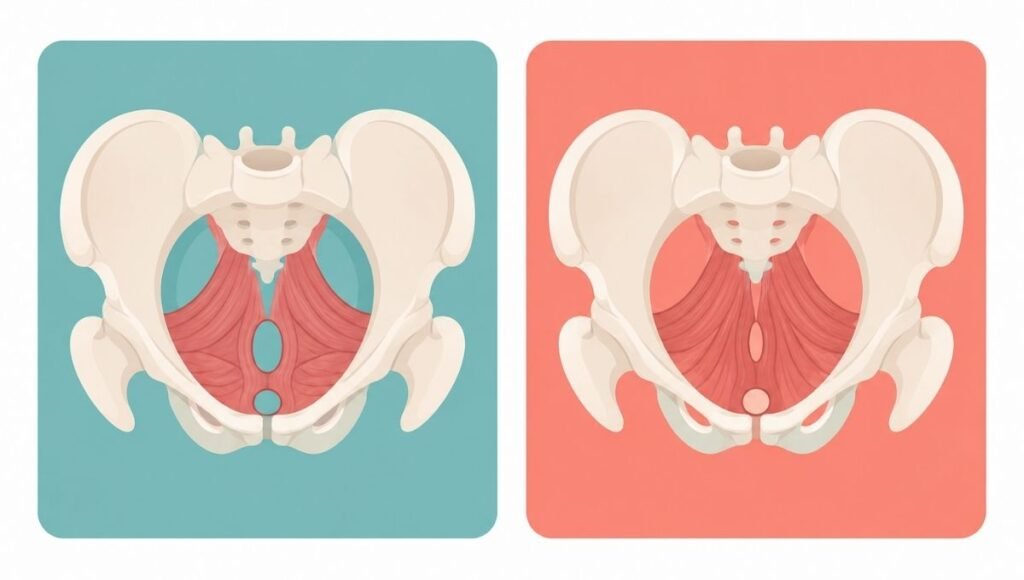
The pelvic floor is a group of muscles, ligaments, and connective tissues forming a hammock-shaped structure across the base of the pelvis. These muscles support the bladder, bowel, and uterus (in women) or prostate (in men), control the sphincters that manage bladder and bowel function, and play a direct role in sexual function and sensation.
Pelvic floor dysfunction occurs when these muscles fail to function normally — either because they are too weak to provide adequate support and control, or because they are chronically too tight to perform their functions effectively.
Hypotonicity (weakness) — the pelvic floor muscles lack sufficient tone and strength to provide adequate support. This leads to urinary or faecal leakage, pelvic organ prolapse (when pelvic organs descend due to inadequate support), and reduced sexual sensation.
Hypertonia (excessive tension) — the pelvic floor muscles are chronically tight or overactive, unable to relax appropriately. This leads to pelvic pain, pain during sex, difficulty with bowel movements, urinary urgency, and in some cases urinary retention.
Both types of dysfunction are common, and both are treatable — but with different approaches. This distinction is why self-directed Kegel exercises, which strengthen the pelvic floor, can actually worsen hypertonic dysfunction. A specialist assessment establishes which type is present before treatment begins.
Pelvic Floor Dysfunction Symptoms: Recognising the Signs
Pelvic floor dysfunction symptoms vary significantly depending on whether the dysfunction involves weakness or excessive tension — which is why the same condition can present very differently in different people.
Symptoms of Pelvic Floor Weakness
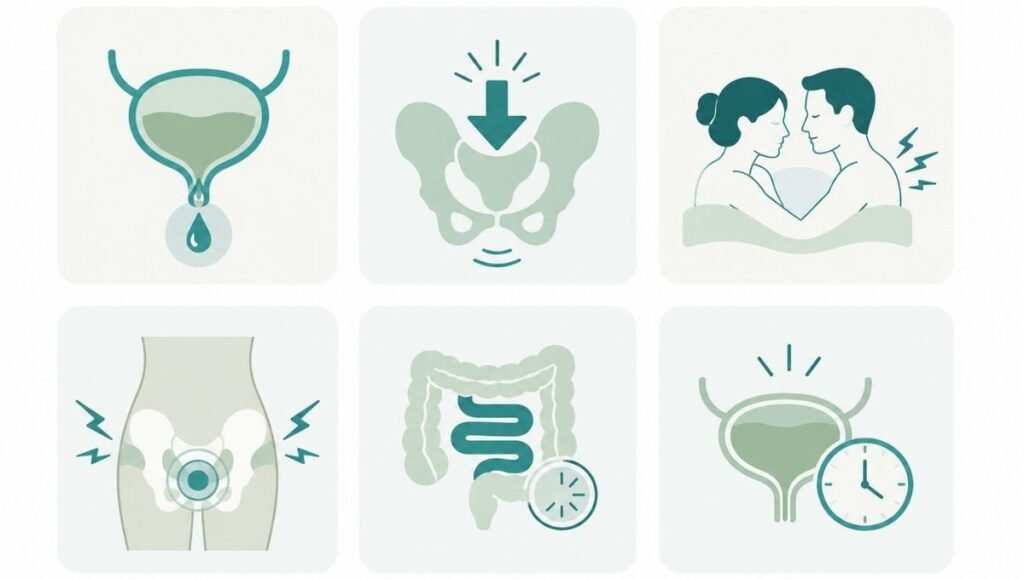
Urinary leakage is the most commonly recognised symptom. It manifests in two main patterns:
Stress incontinence — leakage triggered by physical exertion: sneezing, coughing, laughing, jumping, or lifting. The increased abdominal pressure exceeds the pelvic floor’s ability to maintain urethral closure. This is the most common type in women, particularly after childbirth.
Urge incontinence — a sudden, intense urge to urinate followed by leakage before reaching the bathroom. This involves both pelvic floor weakness and bladder overactivity.
Pelvic organ prolapse — the sensation of pressure, heaviness, or a bulge low in the pelvis or vagina. This occurs when one or more pelvic organs (bladder, uterus, or rectum) descend due to insufficient pelvic floor support. It is more common after vaginal delivery, menopause, and with chronic straining.
Reduced sexual sensation — the pelvic floor muscles play a direct role in sexual function. Weakness can reduce sensation, affect orgasmic capacity, and in some women contribute to difficulty achieving orgasm.
Faecal leakage or urgency — difficulty controlling bowel function, particularly urgency or incontinence with loose stools.
Symptoms of Pelvic Floor Hypertonia (Excessive Tension)
This type of dysfunction is less commonly recognised but equally significant — and frequently misidentified as something else.
Pelvic pain — chronic pain in the pelvis, lower back, hips, or tailbone. This pain is often described as aching, pressure, or a sense of heaviness, and may worsen with prolonged sitting, standing, or physical activity.
Pain during sex (dyspareunia) — deep pain during or after penetrative sexual activity is one of the most characteristic symptoms of hypertonic pelvic floor dysfunction in women. The involuntary muscle tension creates resistance that produces pain. This is often misattributed to anxiety, insufficient lubrication, or relationship dynamics, when the cause is musculoskeletal.
Difficulty with bowel movements — straining, incomplete evacuation, or pain during bowel movements despite adequate dietary fibre intake. A hypertonic pelvic floor prevents the muscles from relaxing to allow comfortable defaecation.
Urinary urgency or difficulty starting urination — the inability to fully relax the pelvic floor creates urethral tension that can make initiating urination difficult or cause a frequent sense of urgency without adequate bladder filling.
Vaginismus — the involuntary contraction of pelvic floor muscles around the vaginal entrance, making penetration painful or impossible. Vaginismus is a specific expression of pelvic floor hypertonia and responds well to pelvic floor physical therapy using graduated desensitisation techniques.
What Causes Pelvic Floor Dysfunction
Childbirth is the most significant risk factor for pelvic floor weakness in women. Vaginal delivery — particularly prolonged pushing, large babies, instrumental delivery (forceps or ventouse), and significant perineal tears — places substantial strain on pelvic floor structures. However, pregnancy itself also affects pelvic floor function through the mechanical load of the growing uterus and the hormonal changes that soften connective tissue. Caesarean delivery reduces but does not eliminate pelvic floor risk.
Hormonal changes — declining oestrogen during perimenopause and menopause reduces the elasticity and strength of pelvic floor tissue, increasing susceptibility to both weakness and prolapse. Many women who had minimal pelvic floor symptoms in their 30s and 40s notice more significant symptoms after menopause.
Chronic straining — repeated straining with constipation over years places cumulative downward pressure on pelvic floor structures, gradually weakening their support capacity.
High-impact exercise without adequate pelvic floor support — running, jumping, and heavy weightlifting generate significant downward forces. In women with pelvic floor weakness, these activities can worsen symptoms if performed without addressing underlying dysfunction first.
Trauma, surgery, or chronic pain — abdominal or pelvic surgery, trauma to the pelvic region, and conditions involving chronic pelvic pain can all produce protective muscle guarding that leads to hypertonia over time.
Psychological stress — chronic stress produces systemic muscle tension. The pelvic floor is among the muscle groups that tend to carry tension, and in people predisposed to hypertonia, psychological stress can significantly worsen symptoms.
How to Strengthen Pelvic Floor: Evidence-Based Approaches

Pelvic Floor Physical Therapy: The Gold Standard
Pelvic floor physical therapy — delivered by a trained pelvic floor physiotherapist — is the most effective evidence-based treatment for pelvic floor dysfunction of both types. It is significantly more effective than unsupervised exercise alone, and the only intervention that accurately identifies and addresses the specific type of dysfunction present.
A specialist assessment typically involves an internal examination to evaluate muscle tone, strength, coordination, and symmetry; identification of trigger points, scar tissue, and connective tissue restrictions; and the development of a personalised treatment plan.
Treatment for weakness typically involves progressive strengthening exercises (including properly performed Kegels with accurate technique, breath integration, and functional movement patterns), lifestyle modification, and bladder training where relevant.
Treatment for hypertonia typically involves internal and external manual therapy to release muscle tension, graduated desensitisation (particularly for vaginismus), breathing techniques, and postural work.
Most people see meaningful improvement within 8—12 weeks of consistent specialist-led treatment.
Pelvic Floor Exercises for Incontinence
For stress urinary incontinence specifically, supervised pelvic floor muscle training is recommended as the first-line treatment by clinical guidelines in the UK, USA, and Australia — before any medication or surgical intervention.
Correctly performed pelvic floor contractions — identifying the correct muscles, performing contractions at the appropriate intensity and duration, and integrating them with functional activities (the “knack” technique: contracting immediately before and during activities that trigger leakage) — produce significant reduction in leakage in the majority of women with stress incontinence.
The knack technique: Consciously contract the pelvic floor immediately before and during a sneeze, cough, or movement that typically causes leakage. This pre-emptive contraction provides the urethral closure pressure that the weakened resting pelvic floor is not providing automatically.
Pelvic Floor Exercises for Prolapse
For pelvic organ prolapse, pelvic floor physiotherapy is the primary conservative management approach and is effective at reducing symptoms, preventing progression, and in some cases improving the anatomical position of the prolapsed organ.
Exercise selection and load management are important: high-impact activities that generate significant downward pelvic pressure are modified or avoided in the early stages of rehabilitation. A physiotherapist guides the appropriate exercise progression.
Pelvic Floor Exercises After Birth
Postpartum pelvic floor rehabilitation is appropriate for all women after vaginal delivery, and for most women after caesarean delivery as well — as pregnancy itself, independently of delivery mode, affects pelvic floor function.
Gentle pelvic floor activation exercises can begin within days of delivery, even before the postpartum check-up. A formal pelvic floor physiotherapy assessment at six to twelve weeks postpartum is increasingly recommended as a standard component of postnatal care, rather than waiting for symptoms to develop.
For women who experienced significant perineal tears, instrumental delivery, or who have symptoms of leakage, pressure, or pain after delivery — a referral to a pelvic floor physiotherapist is appropriate at the earliest opportunity.
If you only have 10 minutes: Find your pelvic floor muscles correctly — the sensation is of lifting and squeezing inward, without holding your breath or tightening your buttocks, thighs, or abdomen. Practice ten slow contractions, holding each for three to five seconds, followed by full relaxation. Do this twice daily. If you are unsure whether you are contracting correctly, a single appointment with a pelvic floor physiotherapist will establish this definitively and prevent weeks of incorrectly performed exercises.
If exercises are not producing improvement after six to eight weeks: This is the signal to seek a specialist assessment rather than to continue self-directed practice. Exercises performed with incorrect technique, or applied to hypertonic rather than weak pelvic floor, will not produce improvement and may worsen some symptoms.
Pelvic Floor Dysfunction and Sexual Health
The connection between pelvic floor dysfunction and sexual health is direct and significant — and consistently underacknowledged in clinical settings.
In women: Pelvic floor weakness contributes to reduced sexual sensation and may affect orgasmic capacity. Pelvic floor hypertonia — and specifically vaginismus — is one of the most common causes of painful penetrative sex and is treatable with a high success rate through specialist physiotherapy.
In men: Pelvic floor dysfunction in men is less commonly discussed but clinically significant. Hypertonic pelvic floor dysfunction in men contributes to chronic pelvic pain, ejaculatory pain, and in some cases erectile difficulty. Pelvic floor physiotherapy for men with chronic pelvic pain syndrome has a meaningful evidence base.
The pelvic floor’s role in sexual function means that addressing dysfunction — whether through physiotherapy, appropriate exercise, or medical management — frequently improves sexual experience alongside other symptoms.
→ Related: Pain During Sex: Causes, When to Seek Help, and Evidence-Based Solutions → Related: Weak Pelvic Floor Symptoms: Signs, Causes and Exercises
Warning Signs: When to Seek Prompt Clinical Attention
- New onset of urinary or faecal leakage following childbirth, surgery, or injury
- A visible or palpable bulge in the vaginal area or a sensation of “something coming down” — which may indicate prolapse
- Significant pain during sexual activity that has not responded to lubricant use and relaxation techniques
- Complete inability to achieve penetration (vaginismus) — which responds reliably to specialist physiotherapy
- Urinary retention — inability to fully empty the bladder
- Pain during bowel movements that is severe, blood-stained, or associated with other bowel symptoms
- Any pelvic floor symptoms that are affecting quality of life and have not improved with self-directed exercise over six to eight weeks
Frequently Asked Questions
What are the main symptoms of pelvic floor dysfunction? Symptoms depend on the type of dysfunction. Weakness produces urinary or faecal leakage, a sensation of pelvic heaviness or pressure, and prolapse symptoms. Hypertonia produces pelvic pain, pain during sex, difficulty with bowel movements, and urinary urgency or difficulty. Both types are common and both respond to appropriate treatment — which is why specialist assessment matters more than self-directed exercise for persistent symptoms.
How do I know if my pelvic floor is too tight or too weak? Self-assessment is unreliable for this distinction. A pelvic floor physiotherapist can establish which type is present through internal assessment and design treatment accordingly. The distinction matters because exercises that strengthen the pelvic floor can worsen hypertonic dysfunction.
How long does it take to strengthen the pelvic floor? With correctly performed exercises under specialist guidance, most people notice meaningful improvement within 8—12 weeks. Unsupervised exercise with incorrect technique produces slower or no progress. Significant prolapse or severe dysfunction may require longer and more intensive rehabilitation.
Can pelvic floor dysfunction cause pain during sex? Yes — this is one of the most direct and consistent connections between pelvic floor dysfunction and sexual health. Both hypertonia and vaginismus produce pain during penetration. Weakness can affect sexual sensation and orgasmic capacity. Both are treatable, and raising pelvic pain during sex with a healthcare provider or pelvic floor physiotherapist is the appropriate next step.
Do men get pelvic floor dysfunction? Yes. Men have a pelvic floor and can experience both weakness and hypertonia. Pelvic floor dysfunction in men contributes to chronic pelvic pain, ejaculatory pain, and urinary symptoms. Pelvic floor physiotherapy for men is effective and available, though less commonly discussed and accessed.
Are Kegel exercises enough to treat pelvic floor dysfunction? Kegel exercises are beneficial for pelvic floor weakness when performed correctly. They are not appropriate for hypertonic dysfunction and may worsen it. They are also frequently performed incorrectly — using the wrong muscles, at the wrong intensity, or without adequate relaxation between contractions. A single assessment with a pelvic floor physiotherapist establishes correct technique and appropriate exercise prescription for your specific situation.
The Bottom Line
Pelvic floor dysfunction is common, significantly affects quality of life and sexual health, and is consistently under-treated — not because treatment is unavailable, but because too many people manage symptoms privately without knowing that effective help exists.
The pelvic floor dysfunction symptoms described in this guide — leakage, pressure, pain during sex, pelvic pain, difficulty with bowel movements — are not things to normalise or accommodate indefinitely. They have identifiable causes and, in most cases, effective treatment.
Pelvic floor physiotherapy is the most evidence-supported intervention for most presentations, and it consistently produces meaningful improvement. If you have been living with any of these symptoms, raising them with a healthcare provider and requesting a referral to a pelvic floor physiotherapist is the most useful next step available to you.
References
- National Institutes of Health, Office on Women’s Health. Pelvic Floor Disorders. Updated 2024. https://www.womenshealth.gov/a-z-topics/pelvic-floor-disorders
- Cleveland Clinic. Pelvic Floor Dysfunction: What It Is, Symptoms and Treatment. Updated January 2024. https://my.clevelandclinic.org/health/diseases/14459-pelvic-floor-dysfunction
- Bo K, et al. Evidence-Based Physical Therapy for the Pelvic Floor. Elsevier Health Sciences. 2015.
- Dumoulin C, et al. Pelvic floor muscle training versus no treatment, or inactive control treatments, for urinary incontinence in women. Cochrane Database of Systematic Reviews. 2018;(10):CD005654.
- American Urogynecologic Society. Pelvic Organ Prolapse: Clinical Practice Guidelines. 2019.